
This week saw the announcement of the submissions from several different countries for the Best International Film category at the Annual Academy Awards. India has chosen to submit Rang De Basanti, while Canada has submitted Water. There is speculation around whether Almodovar will make it as Spain's entry yet again for his Penelope Cruz starrer, Volver, while German movie The Lives of Others is a hot favourite for winning this year.
Water managed to make it through as a Canadian entry on a technicality. After last year's Italian entry, Private, was declared ineligible because it featured dialogue in Arabic & Hebrew, but not Italian, this year's rules have allowed films to use any language, so long as the primary language is not English. With this increased flexibility, and thanks to Deepa Mehta, the film's director, being a Canadian citizen, Water has been officially submitted as Canada's entry.
Alas, an Oscar nomination, or even an award, does not a good movie make. Water is a movie that started out with great hope, but ended up lacking impact. The real tragedy is that Water failed despite some excellent actors, good cinematography and a powerful soundtrack.
Set in pre-Independence India, Water focuses on the lives of widows in a charitable home in Varanasi, where they are sent, once their husbands die, to live lives of denial, penitence and restraint. The entry of a young & feisty child-widow, Chuhiya (played remarkably well by Sri Lankan child actor Sarala) throws the lives of the other residents into turmoil, challenging long standing convictions and traditions. The situation is further complicated by the arrival of a young idealist, who falls in love with one of the widows. Several complications & one dead body later, the movie ends with the child-widow being sent off with the idealist on a train where Mahatma Gandhi has been preaching to the masses.
Water was a movie with great promise, and could have been a great movie. It is let down by several factors - most strikingly the lead cast. Both Lisa Ray & John Abraham cannot communicate in Hindi, and when Hindi, especially the lilting cadence of eastern UP, is chosen as the language of the film, finding actors who are convincing is critical. Unfortunately, Ray's inability to articulate herself, or frankly emote, makes the movie appear completely trivial and amateurish. I was frankly surprised by Mehta's casting - its one thing to cast Ray in a movie like Bollywood Hollywood where not much regard for the craft of acting is necessary, but in movies purportedly as dramatic as Water, I would expected better casting.
This incredible goof up in casting is made even more infuriating by the presence of some excellent actors, whose craven under-utilisation makes your teeth grate in frustration. Actors like Seema Biswas, Kulbhushan Kharbanda & Raghubir Yadav make noteworthy appearances in the movie, but despite their heroic efforts are unable to save the movie from descending into abject inanity. The scene where Kalyani, played by Ray, chooses to drown herself in the river is totally devoid of any sentiment, primarily because I found it quite challenging to feel any emotion watching a mannequin swathed in white immersing itself in dark blue water.
What really grates is that it didn't have to be this way. Mehta is capable of making good movies. Earth, the second of her Elements trilogy and based on Bapsi Sidhwa's novel, Cracking Earth, was a good example of her abilities, as was her earlier venture, Sam & Me. Water, just goes to prove that no matter how politically controversial, only good filmmaking can make a good film. Mehta had originally cast the superb Nandita Das & Shabana Azmi in the lead roles, but after her first attempts to film in India were unsuccessful, she chose to recast the entire film. In an interview she claims this is because the original faces had become "too famous", something that made them unable to play her characters. Somehow, I'm not convinced, and methinks this was one fatal mistake.
Water - give it a miss, and pray that those Oscar walas do as well.
Saturday, September 30, 2006


Friday, September 29, 2006
What I'm Listening To
Another favourite - though this is of the "I just broke up with you and I will never find true love again" ilk. Listen to it at your own risk...
Snow Come Down
I think you feel, the way I feel
Though you don't want to say
I think you feel, the way I feel
Though it's not the easy way
Wouldn't you like to be with me
Watching the snow come down
Watching the snow come down
Watching the snow....
I don't want to cause you any pain
I just want to love you
I don't want to fuck up anything
I just want to love you
And, I know you think I'm kinda strange
I just want to love you
I just want to love you
I just want to love you
I just want to love you
Everytime I see your face
I can hardly breathe
Everytime I see your face
I feel stupid and happy
Wouldn't you like to be with me
Watching the snow come down
Watching the snow come down
Watching the snow....
I don't want to cause you any pain
I just want to love you
I don't want to fuck up anything
I just want to love you
And, I know you think I'm kinda strange
I just want to love you
I just want to love you
I just want to love you
I just want to love you
I'd sure like to be with you
Watching the snow come down
Watching the snow come down
Watching the snow....
I don't want to cause you any pain
I'd give you the world
I don't want to fuck up anything
I wanna be your girl
And, I know you think I'm kinda strange
I just want to love you
I just want to love you
I just want to love you
I just want to love you....
Ahhh---Watching the snow come down
Watching the snow come down
Watching the snow...
Lyrics by Lori Carson
Snow Come Down
I think you feel, the way I feel
Though you don't want to say
I think you feel, the way I feel
Though it's not the easy way
Wouldn't you like to be with me
Watching the snow come down
Watching the snow come down
Watching the snow....
I don't want to cause you any pain
I just want to love you
I don't want to fuck up anything
I just want to love you
And, I know you think I'm kinda strange
I just want to love you
I just want to love you
I just want to love you
I just want to love you
Everytime I see your face
I can hardly breathe
Everytime I see your face
I feel stupid and happy
Wouldn't you like to be with me
Watching the snow come down
Watching the snow come down
Watching the snow....
I don't want to cause you any pain
I just want to love you
I don't want to fuck up anything
I just want to love you
And, I know you think I'm kinda strange
I just want to love you
I just want to love you
I just want to love you
I just want to love you
I'd sure like to be with you
Watching the snow come down
Watching the snow come down
Watching the snow....
I don't want to cause you any pain
I'd give you the world
I don't want to fuck up anything
I wanna be your girl
And, I know you think I'm kinda strange
I just want to love you
I just want to love you
I just want to love you
I just want to love you....
Ahhh---Watching the snow come down
Watching the snow come down
Watching the snow...
Lyrics by Lori Carson
Back from Dubai
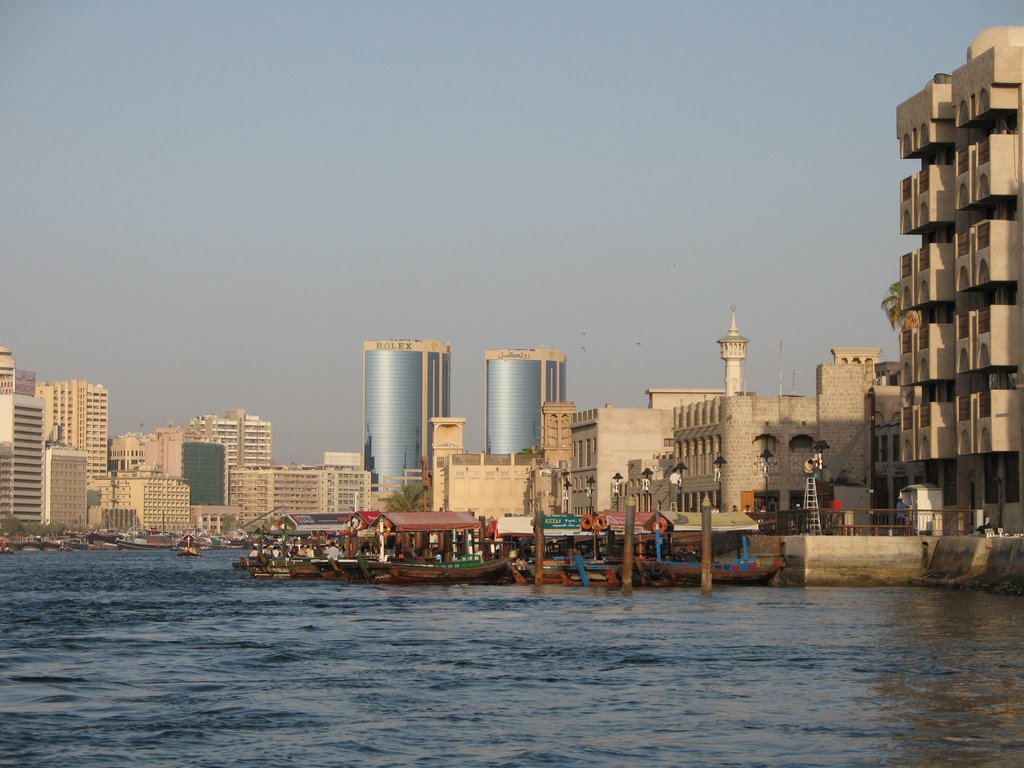
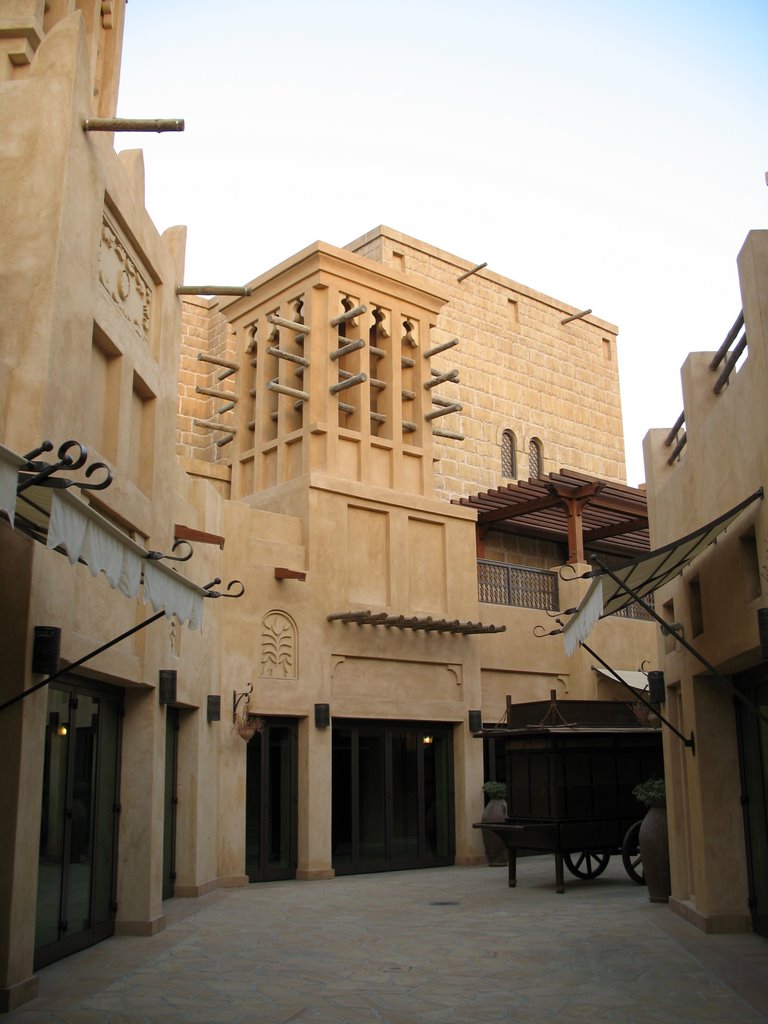
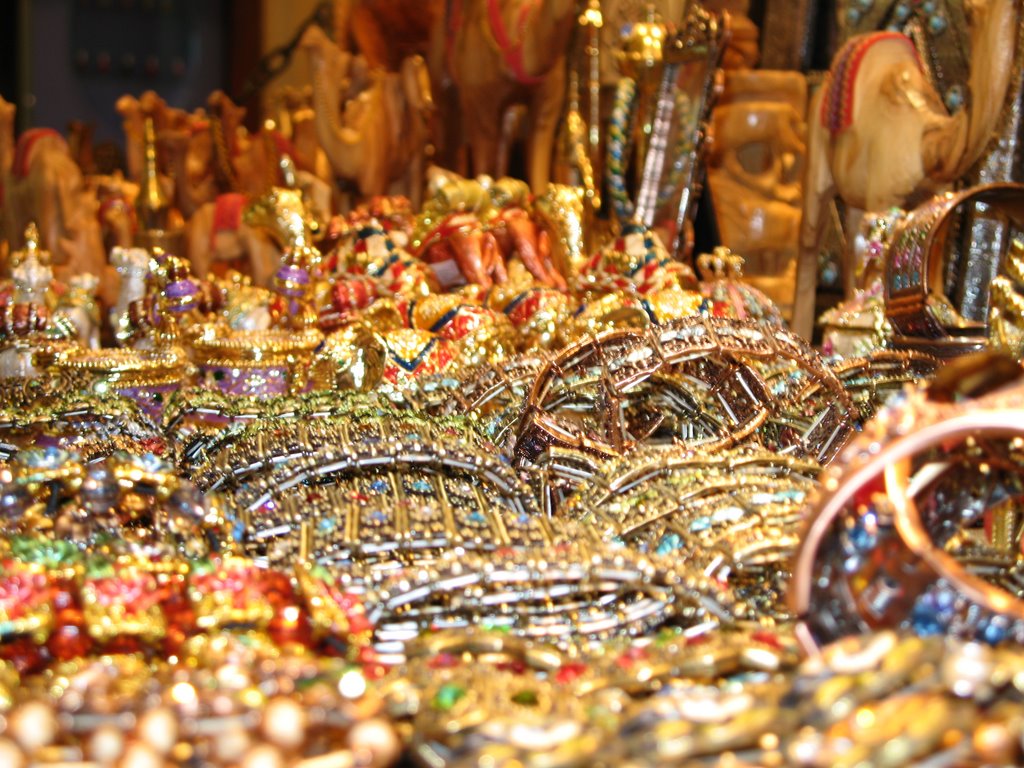
So I finally made it back to London from the world of sand, dust, shiny new buildings, and enough air conditioning to make the most moisturised Hollywood actress turn into a prune from dehydration. I can't believe how happy I am to be back in London - I guess I always forget when I'm away from this place how much of a home its slowly become for me. The only other place I feel that way for is Delhi...
Anyway - I will write a post on Dubai in a little while. Let's just say that being there reminded me a bit of Amitava Ghosh's novel, In an Antique Land, with its strange mix of Arab, Western & South Asian culture.


Anyway - I will write a post on Dubai in a little while. Let's just say that being there reminded me a bit of Amitava Ghosh's novel, In an Antique Land, with its strange mix of Arab, Western & South Asian culture.

Saturday, September 16, 2006
Off to far away lands
I'm en route to Dubai for work, so I doubt that I'll be able to get around to frequently posting. I'm hoping to be back in London by the end of next week, so keep visiting to read about my impressions of the Middle East, or at least the bright and shiny new side of it... the last time I was in Dubai was ages ago on a transit flight, so I'm looking forward to seeing what the bright new city state can offer.
Tuesday, September 12, 2006
That funny guy called Watanabe
It was probably during the winter of 2004 that I first discovered Murakami.
You could really blame it on an old friend of mine, whom I haven't seen in years. Despite our inability to meet up, we occasionally exchange rambling emails in which we talk about our lives, loves & losses, and which I will admit I save in the event that should someone ever try to publish a compendium of my more significant correspondences, these emails must surely be included. In these potentially historic emails, we often talk about the books we're reading at the moment, those we aspire to read, and those we strongly recommend the other stay away from. These emails have often provided both of us with some unexpected finds. I was able to redirect my friend to look up some more obscure Albanian writers, or that Kundera that is often overlooked on the bookshelf. In return, my friend mentioned Murakami.
In all honesty, he'd mentioned the name several times, but I hadn't really paid attention. I finally did make my way across to the local bookstore, where I couldn't help notice that Norwegian Wood was on sale. There really wasn't much of an excuse to not buy it, so I did.
To quote Casablanca, the movie, that was the beginning of a beautiful friendship. Norwegian Wood was perhaps the first book, after a long hiatus, where I actually felt the author speaking out to me from the pages. Very few books have that honesty in the narration that really stand out, to the point that you can almost hear them speak directly to you through their characters. Only a few books have that feel: Anil's Ghost by Michael Ondaatje, The Madwoman of Jogare by Sohaila Abdulali, Paula by Isabel Allende...
And so I was hooked. I went almost as soon as I finished Norwegian Wood to track down some other classics. I must have spent two weeks reading Murakamis from cover to cover: The Wind Up Bird Chronicle, Sputnik Sweetheart, The Wild Sheep Chase, and then Dance, Dance, Dance.
And then the agonising wait for Kafka on the Shore. It was hard to explain that frisson of anticipation that ran down my spine as soon as the posters came up on the Tube during autumn last year. All I could do was look forward to December, when his latest work would hit the bookstores in the UK, and I could go satiate my Murakami desire. Kafka, when it finally came out, did not disappoint. Perhaps the most mature of all his surreal works, the story was a poignant achievement in the art of telling a story of a young man coming of age.
So sometime back, when my sister asked me why I read so much Murakami, I had to sit back and really give it a lot of thought. Finally though (long after the sister had left) I came one with one word to explain it- simplicity.
Perhaps what I find most reassuring about picking up a new Murakami story, especially after having read so many, is that no matter what his story, no matter how or where or when he chooses to place his characters, there is a reassuring constancy about them. (It's almost like a Yash Chopra movie.) They are very different people from each other, but essentially they are gentle, gravely flawed human beings who just want to lead ordinary lives - have friends, fall in love, have sex, maybe have kids, be moderately successful, build fairly straightforward, simple, constant lives. Whether or not this comes to pass is not the issue - his characters always seem to hover at the margins of a classic story-book normal existence, but are somehow thrust towards the opposite direction, one where things are never simple, where complications arise and cannot be explained away, where things are never easy to understand or to resolve.
In a sense, the actual situations that the characters find themselves in are almost irrelevant in the grander scheme of things. Once we've determined that the person we're talking about is a middle aged man, who has had a few girlfriends, is in a job that pays reasonably, but with which he is somewhat dissatisfied (nothing serious, just that back of the head uncomfortable feeling), we don't need to worry whether we're talking about Toru Watanabe or K. The baseline is drawn - we know this character from before, and now that we have a friend of the landscape, we can see how he deals with his often very complicated problems. Once the similarities are recognised, the differences fade away. It no longer matters whether K is in love with a woman debating her own lesbian identity, or whether Toru is in a loveless marriage.
Perhaps this, then, is Murakami's greatest legacy. He has an innate ability to create characters that are so human that we can immediately recognise them - they are shorn free of any exotic trimming that can make them different enough from us to be removed from our own reality. No matter how much you love Harry Potter, you will never be an English adolescent orphan in a private (and secret) school of magic. You could, however, very easily be K - that shy, awkward guy who is painfully in love with his best friend, but cannot tell for a variety of reasons.
And so perhaps this is why I can read almost the entire canon of a single Japanese writer, and step away from it feeling as if he has written stories that could have happened to me, to my friends, or to any one of the thousands of people I have met in my lifetime. And that is probably why I will keep going back to read him, again & again, & again.
You could really blame it on an old friend of mine, whom I haven't seen in years. Despite our inability to meet up, we occasionally exchange rambling emails in which we talk about our lives, loves & losses, and which I will admit I save in the event that should someone ever try to publish a compendium of my more significant correspondences, these emails must surely be included. In these potentially historic emails, we often talk about the books we're reading at the moment, those we aspire to read, and those we strongly recommend the other stay away from. These emails have often provided both of us with some unexpected finds. I was able to redirect my friend to look up some more obscure Albanian writers, or that Kundera that is often overlooked on the bookshelf. In return, my friend mentioned Murakami.
In all honesty, he'd mentioned the name several times, but I hadn't really paid attention. I finally did make my way across to the local bookstore, where I couldn't help notice that Norwegian Wood was on sale. There really wasn't much of an excuse to not buy it, so I did.
To quote Casablanca, the movie, that was the beginning of a beautiful friendship. Norwegian Wood was perhaps the first book, after a long hiatus, where I actually felt the author speaking out to me from the pages. Very few books have that honesty in the narration that really stand out, to the point that you can almost hear them speak directly to you through their characters. Only a few books have that feel: Anil's Ghost by Michael Ondaatje, The Madwoman of Jogare by Sohaila Abdulali, Paula by Isabel Allende...
And so I was hooked. I went almost as soon as I finished Norwegian Wood to track down some other classics. I must have spent two weeks reading Murakamis from cover to cover: The Wind Up Bird Chronicle, Sputnik Sweetheart, The Wild Sheep Chase, and then Dance, Dance, Dance.
And then the agonising wait for Kafka on the Shore. It was hard to explain that frisson of anticipation that ran down my spine as soon as the posters came up on the Tube during autumn last year. All I could do was look forward to December, when his latest work would hit the bookstores in the UK, and I could go satiate my Murakami desire. Kafka, when it finally came out, did not disappoint. Perhaps the most mature of all his surreal works, the story was a poignant achievement in the art of telling a story of a young man coming of age.
So sometime back, when my sister asked me why I read so much Murakami, I had to sit back and really give it a lot of thought. Finally though (long after the sister had left) I came one with one word to explain it- simplicity.
Perhaps what I find most reassuring about picking up a new Murakami story, especially after having read so many, is that no matter what his story, no matter how or where or when he chooses to place his characters, there is a reassuring constancy about them. (It's almost like a Yash Chopra movie.) They are very different people from each other, but essentially they are gentle, gravely flawed human beings who just want to lead ordinary lives - have friends, fall in love, have sex, maybe have kids, be moderately successful, build fairly straightforward, simple, constant lives. Whether or not this comes to pass is not the issue - his characters always seem to hover at the margins of a classic story-book normal existence, but are somehow thrust towards the opposite direction, one where things are never simple, where complications arise and cannot be explained away, where things are never easy to understand or to resolve.
In a sense, the actual situations that the characters find themselves in are almost irrelevant in the grander scheme of things. Once we've determined that the person we're talking about is a middle aged man, who has had a few girlfriends, is in a job that pays reasonably, but with which he is somewhat dissatisfied (nothing serious, just that back of the head uncomfortable feeling), we don't need to worry whether we're talking about Toru Watanabe or K. The baseline is drawn - we know this character from before, and now that we have a friend of the landscape, we can see how he deals with his often very complicated problems. Once the similarities are recognised, the differences fade away. It no longer matters whether K is in love with a woman debating her own lesbian identity, or whether Toru is in a loveless marriage.
Perhaps this, then, is Murakami's greatest legacy. He has an innate ability to create characters that are so human that we can immediately recognise them - they are shorn free of any exotic trimming that can make them different enough from us to be removed from our own reality. No matter how much you love Harry Potter, you will never be an English adolescent orphan in a private (and secret) school of magic. You could, however, very easily be K - that shy, awkward guy who is painfully in love with his best friend, but cannot tell for a variety of reasons.
And so perhaps this is why I can read almost the entire canon of a single Japanese writer, and step away from it feeling as if he has written stories that could have happened to me, to my friends, or to any one of the thousands of people I have met in my lifetime. And that is probably why I will keep going back to read him, again & again, & again.
Monday, September 11, 2006
What I'm listening to
Another Leonard Cohen classic - I'm always amazed by how he manages to convey this despondency in his songs. There's a pathos that I think most people can immediately connect to at a totally primeval level. Anyway, another beautiful piece...
Take This Longing
Many men have loved the bells
you fastened to the rein,
and everyone who wanted you
they found what they will always want again.
Your beauty lost to you yourself
just as it was lost to them.
Oh take this longing from my tongue,
whatever useless things these hands have done.
Let me see your beauty broken down
like you would do for one you love.
Your body like a searchlight
my poverty revealed,
I would like to try your charity
until you cry, "Now you must try my greed."
And everything depends upon
how near you sleep to me
Just take this longing from my tongue
all the lonely things my hands have done.
Let me see your beauty broken down
like you would do for one your love.
Hungry as an archway
through which the troops have passed,
I stand in ruins behind you,
with your winter clothes, your broken sandal straps.
I love to see you naked over there
especially from the back.
Oh take this longing from my tongue,
all the useless things my hands have done,
untie for me your hired blue gown,
like you would do for one that you love.
You're faithful to the better man,
I'm afraid that he left.
So let me judge your love affair
in this very room where I have sentenced
mine to death.
I'll even wear these old laurel leaves
that he's shaken from his head.
Just take this longing from my tongue,
all the useless things my hands have done,
let me see your beauty broken down,
like you would do for one you love.
Like you would do for one you love.
Lyrics by Leonard Cohen
Take This Longing
Many men have loved the bells
you fastened to the rein,
and everyone who wanted you
they found what they will always want again.
Your beauty lost to you yourself
just as it was lost to them.
Oh take this longing from my tongue,
whatever useless things these hands have done.
Let me see your beauty broken down
like you would do for one you love.
Your body like a searchlight
my poverty revealed,
I would like to try your charity
until you cry, "Now you must try my greed."
And everything depends upon
how near you sleep to me
Just take this longing from my tongue
all the lonely things my hands have done.
Let me see your beauty broken down
like you would do for one your love.
Hungry as an archway
through which the troops have passed,
I stand in ruins behind you,
with your winter clothes, your broken sandal straps.
I love to see you naked over there
especially from the back.
Oh take this longing from my tongue,
all the useless things my hands have done,
untie for me your hired blue gown,
like you would do for one that you love.
You're faithful to the better man,
I'm afraid that he left.
So let me judge your love affair
in this very room where I have sentenced
mine to death.
I'll even wear these old laurel leaves
that he's shaken from his head.
Just take this longing from my tongue,
all the useless things my hands have done,
let me see your beauty broken down,
like you would do for one you love.
Like you would do for one you love.
Lyrics by Leonard Cohen
Saturday, September 09, 2006
Cameron in India - a retrospective
The past week hasn't been a good one for Tony Blair. Even for someone used to getting hauled over the coals on a regular basis, the past week has seen his own loyalists closing ranks with the Brownians (Brown-ites?) and baying for his head - Blair must go, the refrain has been in Labour circles.
Add to this more recent conflagrations in Iraq, strengthening Taliban forces in Afghanistan, George Bush's admission that CIA has been using "secret" prisons in the war on terror, and you have to agree that things haven't been good for Mr Blair.
It's therefore not unusual that most mainstream media commentators in the UK have managed to gloss over a rather interesting event concerning the UK & India - the recent trip made by Conservative leader and Leader of Opposition David Cameron to India over the past week.
Normally, Mr Cameron is not that different from his contemporaries in UK politics (or indeed global politics). He has however, shown slightly quirky behaviour in the recent past, which makes him a little more interesting than the usual ilk of dull as dirty dishwater Charlie Brown-esque characters that make up UK politics. His election to the head of the Tories was accompanied by widespread media speculation around his choice of underwear, which you could argue shouldn't have been of that much importance, though I guess given how critical the issue of "support" is in a democratic setup, this should not be totally unsurprising. I shudder to think of the day when Indian journalists speculate on the choice of our national leader's underwear... it conjures images that just don't need to enter my head! Cameron has also been known to make some rather unexpected remarks - such as how antisocial elements just needed to be loved (leading to the popular "Hug a Hoodie" refrain around England; "hoodies" here referring to the unruly masses that tend to lurk in inner city hell holes wearing sweats with hood pulled up)
Cameron is, despite these incongruencies, a fairly charismatic politician. He almost reminds me of Blair when he was younger, less supercilious and definitely less enamoured of the US and its troubling worldview. Cameron has that eager, fresh-faced "I'm here for the greater good" that most young Oxfam volunteers display while on gap year projects spent helping struggling communities in Africa build solar heaters. He is young, dynamic, educated and also quite erudite. You hear him speak and come away with the niggling feeling that you weren't watching the leader of a national party speak, but rather a sophomoric foppy haired Englishman at St. something College in Oxford/Cambridge participating in some major debating competition. Interestingly, that clipped English accent lends a sense of old world to his general aura.
So from this rather jumbled old-world-new-world melee that is the head of "new" Tory, it was to be expected that a political trip to visit the global hub of IT services would be met with a complimentary blog. For that is indeed what Mr Cameron chose to do - maintain a blog to share his experiences of a foreign land with an electorate back home.
The blog, pointedly titled "David Cameron in India" carried brief passages explaining the purpose behind the blog. Most of the content is in video format, with Google videos covering different facets of the MP's visit to India. These included discussions of a more abstract nature around how factory inaugurations in India tend to be different from those in the UK, random rides in a CNG auto rickshaw (somewhat misleadingly called a "tuk-tuk" on several occasions) through Lutyen's Delhi, and general interactions with local Indian passersby who seemed more bemused than impressed (perhaps they might have thought that he was thinking of marrying into Indian politics as well.) Cameron did goof up when he insisted on referring to Rashtrapati Bhawan as the "Viceroy's Palace" - he could have softened the legacy with an appropriately placed "former", but alas, his foppish Oxbridge debating style didn't allow that. The final post from India covered his visit to the Delhi metro, his discussions with university students on their way to North Campus, and the comforts of air conditioning on an underground (obviously a reference to London's Tube, which has sweltered for three months as temperatures soared above ground)
There are two key points to take away from this event. First, we are seeing a sudden resurgence in general interest in India from the UK. Government & industry are both recognising the need to engage with India more proactively than they have been doing in the past, if they are to be able to capitalise on India's predicted economic growth. For an economy that has plateaued in recent years, the urgency to be able to somehow get a share of India's predicted astronomical growth is critical. Cameron is only being pragmatic when he speaks of building on a past heritage to strengthen current relations. His visit to India, even as only Leader of Opposition, is an important statement of British foreign policy to build on relations with India.
However, what is more interesting, at least for me personally, is how Cameron has chosen to utilise a fairly new medium to spread a political message. By using a blog to communicate with his electorate, Cameron is adding a political seal of approval to a growing international phenomenon. Blogging has in a very short span of time managed to present a significant alternative to millions of readers and internet users out there. It has taken the power of communication, and thereby the power to control what is being communicated, out of the hands of big media conglomerates & publishing houses, and has allowed individuals to seize the narrative. Perhaps I am being too post-modernist, but blogging has allowed the individual to deconstruct the meta-narrative of mainstream media and present an alternative that is comprised of millions of infinitesimal micro-narratives.
So has Cameron managed to alter the way in which politicians will communicate with their electorates? I doubt that - blogging still has a long way to go before it will be able to overtake its mainstream, corporate counterparts. More importantly, blogging is only as good as the penetration of the internet - and internet connectivity remains an issue in many parts of the world (You can take a newspaper onto a plane, but can't log onto a website on most aircraft!) Similarly, in developing countries, internet connectivity remains a challenge.
This is not to say that I think Cameron's gesture to use a blog to speak "directly" to his voters will fall by the wayside, especially in the UK. He has managed to capture a very direct forum of communication, and rival British politicians would be very short sighted to let him, and the Tory's, claim that turf for their own without a challenge. It won't be long before we hear of a Blair blog or a Brown blog (a brog?) a green Blog (a grog?) and a French blog, which could most appropriately be called a frog...
And what of India? I struggle to believe that many Indian politicians would bother with using a blog to communicate with voters - can you imagine La senora choosing to write a blog? (Maybe she'd call it Just Janpath) The only Indian politician I could have imagined setting up a blog would have been Pramod Mahajan, but we all know that he's been a victim of fratricide quite recently. And I doubt the bambino Gandhi would either. However, this is a great opportunity for any political party out there that is looking to work its way into the minds of a younger, educated electorate. Unlike the UK, India's population is incredibly young, and any political establishment that can be seen to embrace new technology would go a long way in shedding the ageing, out of touch image that characterises the political class.
Check out David Cameron's blog here
Add to this more recent conflagrations in Iraq, strengthening Taliban forces in Afghanistan, George Bush's admission that CIA has been using "secret" prisons in the war on terror, and you have to agree that things haven't been good for Mr Blair.
It's therefore not unusual that most mainstream media commentators in the UK have managed to gloss over a rather interesting event concerning the UK & India - the recent trip made by Conservative leader and Leader of Opposition David Cameron to India over the past week.
Normally, Mr Cameron is not that different from his contemporaries in UK politics (or indeed global politics). He has however, shown slightly quirky behaviour in the recent past, which makes him a little more interesting than the usual ilk of dull as dirty dishwater Charlie Brown-esque characters that make up UK politics. His election to the head of the Tories was accompanied by widespread media speculation around his choice of underwear, which you could argue shouldn't have been of that much importance, though I guess given how critical the issue of "support" is in a democratic setup, this should not be totally unsurprising. I shudder to think of the day when Indian journalists speculate on the choice of our national leader's underwear... it conjures images that just don't need to enter my head! Cameron has also been known to make some rather unexpected remarks - such as how antisocial elements just needed to be loved (leading to the popular "Hug a Hoodie" refrain around England; "hoodies" here referring to the unruly masses that tend to lurk in inner city hell holes wearing sweats with hood pulled up)
Cameron is, despite these incongruencies, a fairly charismatic politician. He almost reminds me of Blair when he was younger, less supercilious and definitely less enamoured of the US and its troubling worldview. Cameron has that eager, fresh-faced "I'm here for the greater good" that most young Oxfam volunteers display while on gap year projects spent helping struggling communities in Africa build solar heaters. He is young, dynamic, educated and also quite erudite. You hear him speak and come away with the niggling feeling that you weren't watching the leader of a national party speak, but rather a sophomoric foppy haired Englishman at St. something College in Oxford/Cambridge participating in some major debating competition. Interestingly, that clipped English accent lends a sense of old world to his general aura.
So from this rather jumbled old-world-new-world melee that is the head of "new" Tory, it was to be expected that a political trip to visit the global hub of IT services would be met with a complimentary blog. For that is indeed what Mr Cameron chose to do - maintain a blog to share his experiences of a foreign land with an electorate back home.
The blog, pointedly titled "David Cameron in India" carried brief passages explaining the purpose behind the blog. Most of the content is in video format, with Google videos covering different facets of the MP's visit to India. These included discussions of a more abstract nature around how factory inaugurations in India tend to be different from those in the UK, random rides in a CNG auto rickshaw (somewhat misleadingly called a "tuk-tuk" on several occasions) through Lutyen's Delhi, and general interactions with local Indian passersby who seemed more bemused than impressed (perhaps they might have thought that he was thinking of marrying into Indian politics as well.) Cameron did goof up when he insisted on referring to Rashtrapati Bhawan as the "Viceroy's Palace" - he could have softened the legacy with an appropriately placed "former", but alas, his foppish Oxbridge debating style didn't allow that. The final post from India covered his visit to the Delhi metro, his discussions with university students on their way to North Campus, and the comforts of air conditioning on an underground (obviously a reference to London's Tube, which has sweltered for three months as temperatures soared above ground)
There are two key points to take away from this event. First, we are seeing a sudden resurgence in general interest in India from the UK. Government & industry are both recognising the need to engage with India more proactively than they have been doing in the past, if they are to be able to capitalise on India's predicted economic growth. For an economy that has plateaued in recent years, the urgency to be able to somehow get a share of India's predicted astronomical growth is critical. Cameron is only being pragmatic when he speaks of building on a past heritage to strengthen current relations. His visit to India, even as only Leader of Opposition, is an important statement of British foreign policy to build on relations with India.
However, what is more interesting, at least for me personally, is how Cameron has chosen to utilise a fairly new medium to spread a political message. By using a blog to communicate with his electorate, Cameron is adding a political seal of approval to a growing international phenomenon. Blogging has in a very short span of time managed to present a significant alternative to millions of readers and internet users out there. It has taken the power of communication, and thereby the power to control what is being communicated, out of the hands of big media conglomerates & publishing houses, and has allowed individuals to seize the narrative. Perhaps I am being too post-modernist, but blogging has allowed the individual to deconstruct the meta-narrative of mainstream media and present an alternative that is comprised of millions of infinitesimal micro-narratives.
So has Cameron managed to alter the way in which politicians will communicate with their electorates? I doubt that - blogging still has a long way to go before it will be able to overtake its mainstream, corporate counterparts. More importantly, blogging is only as good as the penetration of the internet - and internet connectivity remains an issue in many parts of the world (You can take a newspaper onto a plane, but can't log onto a website on most aircraft!) Similarly, in developing countries, internet connectivity remains a challenge.
This is not to say that I think Cameron's gesture to use a blog to speak "directly" to his voters will fall by the wayside, especially in the UK. He has managed to capture a very direct forum of communication, and rival British politicians would be very short sighted to let him, and the Tory's, claim that turf for their own without a challenge. It won't be long before we hear of a Blair blog or a Brown blog (a brog?) a green Blog (a grog?) and a French blog, which could most appropriately be called a frog...
And what of India? I struggle to believe that many Indian politicians would bother with using a blog to communicate with voters - can you imagine La senora choosing to write a blog? (Maybe she'd call it Just Janpath) The only Indian politician I could have imagined setting up a blog would have been Pramod Mahajan, but we all know that he's been a victim of fratricide quite recently. And I doubt the bambino Gandhi would either. However, this is a great opportunity for any political party out there that is looking to work its way into the minds of a younger, educated electorate. Unlike the UK, India's population is incredibly young, and any political establishment that can be seen to embrace new technology would go a long way in shedding the ageing, out of touch image that characterises the political class.
Check out David Cameron's blog here
Thursday, September 07, 2006
Kahaan Se Aaya, Main Hoon Kaun?!
 Almost a century after Max Mueller made Indology fashionable, the Germans have finally woken up from their slumber and looked eastwards again.
You could argue that the brief interlude that led to World War II and a lot of unpleasantness involving Austrian megalomaniacs called Hitler didn't let Germany lose the Indian touch (I mean, that whole swastika thing was hippy before the hippies were even around) but let's not go there. Recent events in India around shisha bars choosing Nazi themed decors has left a bad taste in a lot of mouths (and this without even trying the food there) so we could avoid that completely.
Getting back to the point - this post is all about how a new high gloss magazine has just recently been launched. Called, somewhat uninspiringly, "Indien Magazin", which translates literally into "India Magazine", published in German, it focuses exclusively on India & Bollywood.
The name is their only tragedy, so far as I can see (given that my knowledge of the German language is limited to a rusty one year at school, this is a totally ungrounded opinion, but hey, let's live dangerously) but you can't ignore the fact that at least their hearts are in the right place. The magazine purports to fill an important gap in contemporary German publishing - that for an informative periodical that targets a non-Indian German speaking readership wanting to learn more about India, its culture and its cinema. And as far as choosing a cover photo, you can't go wrong by picking the biggest name in the Indian fillum industry, Shah Rukh "King" Khan himself, in the biggest ever remake of the century, Don.
The magazine's first issue also has some DVD reviews, as well as retro pieces on classic cinema - there's a story about Umrao Jaan, as well as interview with Sanjay Dutt on his new movie (I'm guessing its Lage Raho Munnabhai) There also seems to be an article on the toy trains in Darjeeling (the title is a somewhat amateurish, "Full Steam Ahead into the Clouds", but the images it conjures are whimsical and definitely entertaining)
Fellow Bollywood blogger Michael already has a post on his site on it, but my German is too poor (and Altavista's Babelfish translator too random) to really make it work!
So let's see where "Indien Magazin" heads - so far, its a promising start. I'm going to see if I can figure out where to buy a copy to try to work my way through with a big dictionary and internet access readily available to run a Babelfish translation...
Check out the official magazine website here
Image from Indien Magazine
Sunday, August 27, 2006
What does a Scanner See?
I went last weekend to see the new Richard Linklater movie, A Scanner Darkly, with some friends at the ICA in London. The movie is actually really well made, and totally paisa vasool. The title of this post is also taken from the movie.
The story itself is based on the Philip. K. Dick novel of the same name, and is set in the USA of 2013 (at least in the movie - when Dick wrote the novel in 1977, the setting was 1994.) Said to be partially autobiographical, the movie deals with several complex issues, including dystopic drug abuse, state autocracy and curtailing human rights, as well as corporate totalitarianism.
A trailer of the movie that I found on YouTube....will write more about the movie, but in a slightly different context, soon.
The story itself is based on the Philip. K. Dick novel of the same name, and is set in the USA of 2013 (at least in the movie - when Dick wrote the novel in 1977, the setting was 1994.) Said to be partially autobiographical, the movie deals with several complex issues, including dystopic drug abuse, state autocracy and curtailing human rights, as well as corporate totalitarianism.
A trailer of the movie that I found on YouTube....will write more about the movie, but in a slightly different context, soon.
Saturday, August 26, 2006
Sati as a Literary Device
I'd promised you that we'd soon have a guest column on this blog, so here it is. Indian writer Sunny Singh writes about why she choosese to write about sati in her latest novel, With Krishna's Eyes, and also about how Indians living in our big city metros today are incredibly adept at juggling multiple realities in their daily lives.


As a writer and person, I have always been interested in how societies and communities deal with change – and not to handle it at a macro, huge level but to examine how individuals cope with changes. So when I began my new novel, With Krishna’s Eyes, I wanted to deal with the contradictions of being an urban contemporary Indian. And I wanted to write a novel about
As a child growing up in
All the characters in the book are people you may well run into while shopping in Dariba Kalan or at the India Habitat Centre or in Lajpat Nagar. They are Dilli-walas, but like many Dilli-walas, they also have their roots in a village that is geographically close to the capital but psychologically may as well be in another century. And my characters go back and forth as they juggle both realities. For me that is also

So my characters also juggle violence with urbane grace.
Strangely enough, when the book began to do the rounds, people focused in on the sati angle. The book has been called “provocative.” Another critic suggested that the characters choices “suggest a moral vacuum that is unacceptable today.” Why must fictional characters make acceptable choices? Or indeed why should human beings live their lives by making “acceptable” choices? And acceptable to whom? Imagine asking Dostoevsky or Camus to construct characters that would function morally. Even the choices made by Yudhisthar – the most righteous of all - in the Mahabharata are complex and never quite entirely moral.
Oddly enough, the sati angle was not that important for me while I was writing the book. I did realize that people make choices that seem self-destructive and violent. Yet to understand something is not to justify it or condone it. And that fascinates me. The choice to kill oneself for an ideology was very much in my mind also because the book was born in the rather tumultuous year of 2001. References to 9/11, the
In fact, for me Damayanti – the Miranda House-educated lawyer planning to be sati after her husband’s death - is a very complex person. One can’t understand her decision in terms of “poor, oppressed, superstitious.” In fact through out the novel, Damayanti is unable to articulate her own motives for choosing sati because they are far more complex than simply about devotion to her husband or religious faith or even evading the law.
There is a reason for her turning inarticulate when faced with her own actions. Human beings never take drastic action for one sole reason. So a Tamil Tigress doesn’t blow herself up because of a single motive. And people don’t fly airplanes into buildings as a result of a single monolithic ideology. Nor do people kill their brothers in an alleged “fit of anger” for one single reason. When we simplistically try to classify human actions as results of one sole motive, we refuse to understand the multi-causality of human behaviour and actions. And that means we refuse to understand human beings! As a writer, my intention is to make sense of who we are and why we behave the way we do. So Damayanti’s decision to be sati is something that is driven by a number of reasons, all of which are internally coherent. That doesn’t mean that I agree with those reasons or for that matter fully understand them. But it is important to explore them and at least try to reach some comprehension.
Some critics have alleged that
We must – as writers and thinkers – differentiate between understanding and justifying a phenomenon. And the first step to understanding is to realize that human beings are complex, and to recognize their humanity. Even if that means we are left with uncertain conclusions.
In my novel this means Damayanti is not a “madwoman”, or even a particularly oppressed one. She laughs and cries, loves and is afraid. In other words, she is human. Just as
And I truly believe that particular lesson is the hardest of all to learn, and to practice.
With Krishna's Eyes is out in India, in all major bookstores, published by Rupa Publications. It is also available in Spanish, with the title, La Mirada de Krishna, from Ediciones El Cobre.
Author photo courtesy Tarun Vishwa. Book jacket cover image courtesy Rupa Publications.
Friday, August 25, 2006
Some good news...
Some good news, both on a personal level, and for the blog as well. We're fortunate in that Indian writer Sunny Singh is going to be posting a piece on this blog - this is particularly hallowed ground, since she will become the first official guest contributor for The Buddha Smiled. You can read more about Sunny at her website here. I'm also especially pleased because that this blog is listed on her website as her favourite blog!
I haven't seen the piece that is to be posted just as yet, but from what I've been told by its author, it is a piece in which Sunny discusses her motivations for writing about the practice of sati in her latest novel, With Krishna's Eyes. She's clarified some of her reasoning here, but hopefully the article on our blog can shed more light on the matter.
I promise I'll post the article as soon as I get it.
Waiting ...
I haven't seen the piece that is to be posted just as yet, but from what I've been told by its author, it is a piece in which Sunny discusses her motivations for writing about the practice of sati in her latest novel, With Krishna's Eyes. She's clarified some of her reasoning here, but hopefully the article on our blog can shed more light on the matter.
I promise I'll post the article as soon as I get it.
Waiting ...
Tuesday, August 22, 2006
Lose a Raj, Gain a Nation
This post might seem to be a full week late, but that is wholly intentional. The week running up to India's Independence Day on the 15th of August has thousands of articles, quotes, photo essays, video clips, news stories, etc, related to Indianness. By choosing to put this post up now, I'm actually trying out the old, "Two birds, one stone" routine. Waiting that full week allows me to beat the hordes of articles out there and actually stand a chance of getting a readership, but it also gave me time to sit back and digest the events of my past week, which ended up being totally India specific.
Let me elaborate on that point a bit. London is no stranger to Indians - you will probably find that Indians make up one of the most significant communities here (we're the majority minority?) both in terms of strength and visibility. Despite that, its quite easy once you're going through the motions of daily life to forget just how visible and significant that community is, until its brought to your notice.
So last week, not inappropriately, ended up being about getting a taste of my Indianness again. It all started out with an impromptu dinner at the Bombay Brasserie, which is probably my favourite Indian restaurant in town - unlike the thousands of (predominantly) Bangladeshi curry houses, the Bombay Brasserie comes closest to replicating the Indian experience for me. The decor, somewhat reminiscent of The Imperial Hotel in New Delhi, doesn't hurt either when I'm nostalgic for life in Delhi. Normally, I don't go to Indian restaurants that frequently, and given the price tags on a meal at the Brasserie, its not quite the sort of place I'd go to regularly, so the impromptu meal was a great, if unexpected treat.
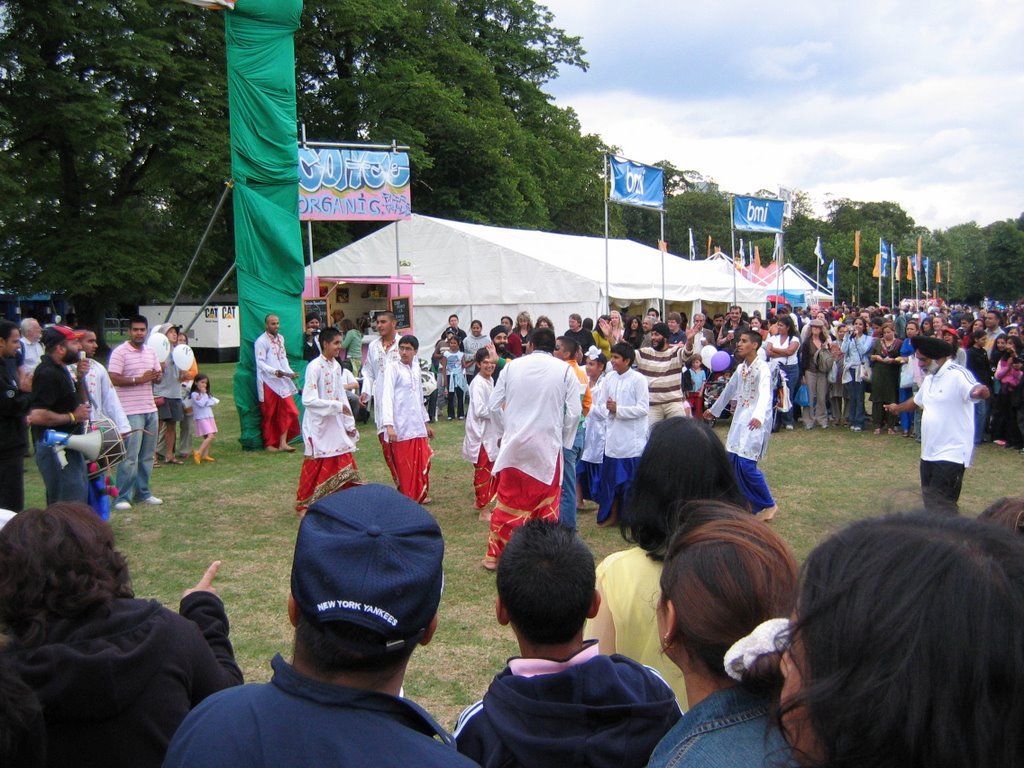
That Friday night meal was followed swiftly by another impromptu expedition out on the Sunday to the London Mela in Gunnersbury. Gunnersbury is a London suburb that has a massive Indian (especially Punjabi) community,, and the annual mela is now a big fixture on most Brit Asian calendars. I found out later that a fellow Bollywood blogger, Maja, was also there but we didn't manage to catch up.
 The Mela itself was great fun - I had gol gappas after a long time, and the chhole bhature, kebab rolls, nariyal pani and pista kulfi were pretty good as well. Like all true melas, there were several tents with musical performances, a lot of rides, and also random shops selling typical mela fair, as well as a (slightly bizarre) open air beauty parlour where if you weren't careful you could catch a glimpse of Mrs. Taneja getting her eyebrows threaded - not a good sight at all!
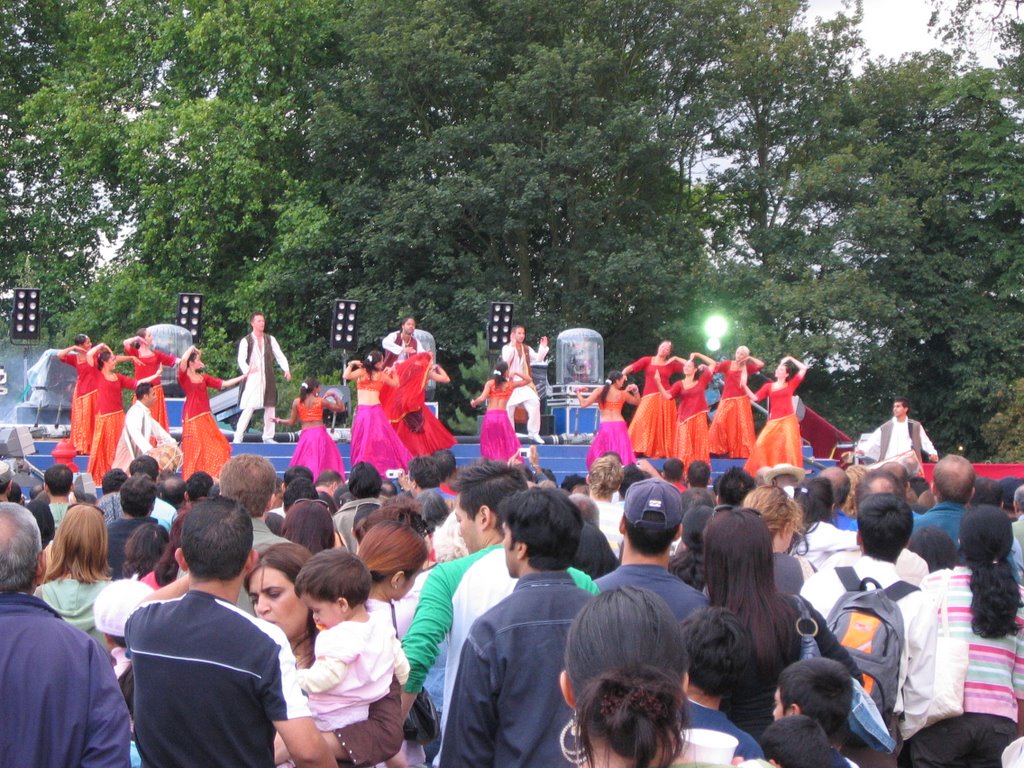
Perhaps the best part of the Mela were the Bollywood dancers - many of whom weren't Indian - and who put together a pretty impressive show, with well choreographed numbers, including Kajra Re & Dhadak Dhadak. Keeping with the Indian tradition, we went to the mela in a group of seven people - only four of our group were Europeans, two of whom barely speak English, and who had never stepped outside Florence, Italy, before that Friday. So for them, the entire experience was a complete culture shock, and the poor kids were really overwhelmed. By the end of the day, though, they seemed to have found their footing, enough for one to ask us how to dance Bhangra!
 Our hectic day at the Mela wasn't over - we then dashed off to go for a marathon emotional rollercoaster by going to see Kabhi Alvida Naa Kehna, only to find the hall packed full of Arab families, all waiting to have their heartstrings tugged viciously at by Mr Johar. I love it whenever I get to see a Bollywood movie in Central London; it's perhaps the best example of the Empire striking back. The international fan following isn't that out of the ordinary anymore either. The Monday edition of the Metro (the free morning newspaper that every London Tube commuter worth his salt will pick up at the station to read on the journey) had a short blurb about how in 2005, British releases in the UK were overtaken by Bollywood releases, while more Bollywood films made it to the UK top ten lists last year than British ones. Watch out Hollywood!
The final major Indian experience of the week was arguably a constructed one, but it was great fun nevertheless. By a strange coincidence of career planning, my two sisters & I have managed to end up living in the same city after a long time - usually we're in different continents. We'd been talking about organising joint drinks with our respective groups of friends, so we finally took the plunge last week and had that party. However, the irony of the situation was too good to let go of - three young, ambitious and reasonably aggressive Indians in London. The party theme was therefore, "Lose a Raj, Gain a Nation". We wanted to be inclusive you see - if you were imperialist, you could come to drink your sorrows away and we would commiserate with you on the loss of the Raj, whereas post - colonialists would be more than welcome to celebrate with us. Oddly enough, turnout being what it was, the three of us were the only Indians in a group of over 35 in a Mexican bar raising toasts to India's Independence in Covent Garden.
For one week in London, that's a lot of different Indian experiences rolled into one. Some very disparate events, very different areas and groups of people, but somehow with a lot of common themes that emerged only when I had a chance to reflect on the broader issue this weekend while lolling on a large white couch with the Financial Times Weekend. (My regular readers will detect a striking commonality to many of my epiphanies - the FT is always lurking near me at the time.)
India is fortunate to have two fantastic cultural ambassadors working for us - our cuisine & our films. My own experience of the world has led me to think that these two have earlier on worked in mutually exclusive geographies. Our cuisine is what got us a foothold in the developed West, while Bollywood has helped us build cultural links with a lot of the developing world. However, over the past decade, our food has started spreading to more countries, while the West has finally realised that they cannot sit back and not take Bollywood into notice. Indian restaurants are now almost necessities in most urban plans in the Western world, while the UK fascination for a good "curry" is legend. Compare this to Bollywood, which has built up a fan following in Latin America, Africa, the Middle East and South East Asia. Between those two, we've got the world covered!
Perhaps more importantly, and this is something I realised from the crowds I saw at the London Mela, is how the attitudes have changed. When many Indians immigrated to the UK, especially after Independence, they came in to fill blue collar roles. They were industrious and prudent, and by sheer effort built productive and economically sound lives (not unlike what the latest wave of Polish migrants is doing in the UK). Unlike the US, which saw highly educated professionals moving to take up roles in medicine, academics, engineering or finance, the UK migrant community has been incredibly segregated, isolationist and also financially weak. Given the time many of them left India, they did not speak from a position of strength.
Compare this mindset with that of the average Indian who travels each year. Many young Indians travelling globally these days do so for work or education. We are hard working - a result of our highly competitive education system. We are fiercely ambitious, often disconcertingly so for others, and are not ashamed of it. More importantly, I think Indians today are much more willing to take a stand for their country, and as our economy grows stronger and we begin to embed the value of merit in our system, this international "cockiness", as someone I know referred to it, will only grow.
Today, to be Indian means something in the world. No longer are we the country where the Beatles came to search for spirituality (though if you were from Liverpool, you'd probably need the time away as well), nor are we the country where thousands of people come to "see the elephants and tigers". Today, when people say India, they say "you guys are bloody good in maths", they'll say, "IT", and if they're French, they usually say "Mittal!"
 There's still a lot that needs to go right, but given our penchant for always talking about the bad stuff that needs fixing, we run the risk of overlooking the great achievements we've made. So let's take that little five minute tea break to celebrate where we've come, look back on the path we've been climbing, and then after the five minutes, look up to the summit where we're heading.
As they're saying in a little Mexican bar in Covent Garden, "Lose a Raj, Gain a Nation!"
All images are from the London Mela, held on 13th August, 2005)
Let me elaborate on that point a bit. London is no stranger to Indians - you will probably find that Indians make up one of the most significant communities here (we're the majority minority?) both in terms of strength and visibility. Despite that, its quite easy once you're going through the motions of daily life to forget just how visible and significant that community is, until its brought to your notice.
So last week, not inappropriately, ended up being about getting a taste of my Indianness again. It all started out with an impromptu dinner at the Bombay Brasserie, which is probably my favourite Indian restaurant in town - unlike the thousands of (predominantly) Bangladeshi curry houses, the Bombay Brasserie comes closest to replicating the Indian experience for me. The decor, somewhat reminiscent of The Imperial Hotel in New Delhi, doesn't hurt either when I'm nostalgic for life in Delhi. Normally, I don't go to Indian restaurants that frequently, and given the price tags on a meal at the Brasserie, its not quite the sort of place I'd go to regularly, so the impromptu meal was a great, if unexpected treat.
That Friday night meal was followed swiftly by another impromptu expedition out on the Sunday to the London Mela in Gunnersbury. Gunnersbury is a London suburb that has a massive Indian (especially Punjabi) community,, and the annual mela is now a big fixture on most Brit Asian calendars. I found out later that a fellow Bollywood blogger, Maja, was also there but we didn't manage to catch up.
 The Mela itself was great fun - I had gol gappas after a long time, and the chhole bhature, kebab rolls, nariyal pani and pista kulfi were pretty good as well. Like all true melas, there were several tents with musical performances, a lot of rides, and also random shops selling typical mela fair, as well as a (slightly bizarre) open air beauty parlour where if you weren't careful you could catch a glimpse of Mrs. Taneja getting her eyebrows threaded - not a good sight at all!
Perhaps the best part of the Mela were the Bollywood dancers - many of whom weren't Indian - and who put together a pretty impressive show, with well choreographed numbers, including Kajra Re & Dhadak Dhadak. Keeping with the Indian tradition, we went to the mela in a group of seven people - only four of our group were Europeans, two of whom barely speak English, and who had never stepped outside Florence, Italy, before that Friday. So for them, the entire experience was a complete culture shock, and the poor kids were really overwhelmed. By the end of the day, though, they seemed to have found their footing, enough for one to ask us how to dance Bhangra!
 Our hectic day at the Mela wasn't over - we then dashed off to go for a marathon emotional rollercoaster by going to see Kabhi Alvida Naa Kehna, only to find the hall packed full of Arab families, all waiting to have their heartstrings tugged viciously at by Mr Johar. I love it whenever I get to see a Bollywood movie in Central London; it's perhaps the best example of the Empire striking back. The international fan following isn't that out of the ordinary anymore either. The Monday edition of the Metro (the free morning newspaper that every London Tube commuter worth his salt will pick up at the station to read on the journey) had a short blurb about how in 2005, British releases in the UK were overtaken by Bollywood releases, while more Bollywood films made it to the UK top ten lists last year than British ones. Watch out Hollywood!
The final major Indian experience of the week was arguably a constructed one, but it was great fun nevertheless. By a strange coincidence of career planning, my two sisters & I have managed to end up living in the same city after a long time - usually we're in different continents. We'd been talking about organising joint drinks with our respective groups of friends, so we finally took the plunge last week and had that party. However, the irony of the situation was too good to let go of - three young, ambitious and reasonably aggressive Indians in London. The party theme was therefore, "Lose a Raj, Gain a Nation". We wanted to be inclusive you see - if you were imperialist, you could come to drink your sorrows away and we would commiserate with you on the loss of the Raj, whereas post - colonialists would be more than welcome to celebrate with us. Oddly enough, turnout being what it was, the three of us were the only Indians in a group of over 35 in a Mexican bar raising toasts to India's Independence in Covent Garden.
For one week in London, that's a lot of different Indian experiences rolled into one. Some very disparate events, very different areas and groups of people, but somehow with a lot of common themes that emerged only when I had a chance to reflect on the broader issue this weekend while lolling on a large white couch with the Financial Times Weekend. (My regular readers will detect a striking commonality to many of my epiphanies - the FT is always lurking near me at the time.)
India is fortunate to have two fantastic cultural ambassadors working for us - our cuisine & our films. My own experience of the world has led me to think that these two have earlier on worked in mutually exclusive geographies. Our cuisine is what got us a foothold in the developed West, while Bollywood has helped us build cultural links with a lot of the developing world. However, over the past decade, our food has started spreading to more countries, while the West has finally realised that they cannot sit back and not take Bollywood into notice. Indian restaurants are now almost necessities in most urban plans in the Western world, while the UK fascination for a good "curry" is legend. Compare this to Bollywood, which has built up a fan following in Latin America, Africa, the Middle East and South East Asia. Between those two, we've got the world covered!
Perhaps more importantly, and this is something I realised from the crowds I saw at the London Mela, is how the attitudes have changed. When many Indians immigrated to the UK, especially after Independence, they came in to fill blue collar roles. They were industrious and prudent, and by sheer effort built productive and economically sound lives (not unlike what the latest wave of Polish migrants is doing in the UK). Unlike the US, which saw highly educated professionals moving to take up roles in medicine, academics, engineering or finance, the UK migrant community has been incredibly segregated, isolationist and also financially weak. Given the time many of them left India, they did not speak from a position of strength.
Compare this mindset with that of the average Indian who travels each year. Many young Indians travelling globally these days do so for work or education. We are hard working - a result of our highly competitive education system. We are fiercely ambitious, often disconcertingly so for others, and are not ashamed of it. More importantly, I think Indians today are much more willing to take a stand for their country, and as our economy grows stronger and we begin to embed the value of merit in our system, this international "cockiness", as someone I know referred to it, will only grow.
Today, to be Indian means something in the world. No longer are we the country where the Beatles came to search for spirituality (though if you were from Liverpool, you'd probably need the time away as well), nor are we the country where thousands of people come to "see the elephants and tigers". Today, when people say India, they say "you guys are bloody good in maths", they'll say, "IT", and if they're French, they usually say "Mittal!"
 There's still a lot that needs to go right, but given our penchant for always talking about the bad stuff that needs fixing, we run the risk of overlooking the great achievements we've made. So let's take that little five minute tea break to celebrate where we've come, look back on the path we've been climbing, and then after the five minutes, look up to the summit where we're heading.
As they're saying in a little Mexican bar in Covent Garden, "Lose a Raj, Gain a Nation!"
All images are from the London Mela, held on 13th August, 2005)
Saturday, August 19, 2006
Still Recovering from Yat-Kha
These days, often the easiest way to figure out a person is to grab a quick look at their playlists on their iPod. Usually, if you’re in
But sometimes, if you’re really lucky, you’ll find that one totally out there person with the rarest music – this could include gospel singers from
Yat-Kha is fronted by Tuvan deep-throat singer Albert Kuvezin. Recently sent a CD of theirs to review for Desicritics, I had a chance to read up more about Tuva, deep-throat singing, and Siberian shamanic rituals in general, before the CD arrived. That way, I’d be better able to contextualise the music in the history and cultural moorings of this tiny country between

Guess my surprise, then, on loading the CD, titled Re-covers, to discover that “When the Levee Breaks”, a Led Zep classic, was the opening track. But what a difference this version is from the way you last heard Led Zep singing it. Re-covers is a tribute to some of the greatest songs mainstream American/European music has produced, but it is equally unapologetic in its uniqueness. Re-covers is not world music, it is not a set of simply re-covered tracks, its not groupies paying tribute to classics – try as hard as you will, you will struggle to classify this album as any of these, or as anything else. Perhaps "world punk underground"?
The striking quality of the album has to be Kuvezin’s throaty, resonant singing. Deep-throat singing, as practiced in the Mongolian highlands, is incredibly powerful. The reverberations within the singer’s throat can become hypnotic when heard for long enough, and its not unsurprising that the style is part of shamanic incantation in the region. You can detect a similarity to Tibetan Buddhist chanting in the depth of the notes the singers use and the way the notes will reverberate within the singer’s skull. Unlike Tibetan chanting, though, Tuvan shamanic singing simultaneously provides additional harmony through nasal breathing.
This makes Re-covers a unique, but challenging, album to listen to. The song arrangements are fantastic. Instrumentally, Yat-Kha have a clear, plangent quality to their instrumentation. The background sounds are clear, pure and cleanly drawn through aural space. The surprise, and sometimes challenge, comes when Kuvezin starts singing. His style is dissonant, multi-tonal, haunting, but bizarrely magical. It is probably one of the more surreal experiences I’ve had to sit in London, listening to some punk classics recovered in the sounds of the Siberian wilderness (I’ll confess that when I started listening I was also trying to read The Financial Times, so trying to make sense of why copper prices had gone up with “In a Gadda da Vida” being sung to world music accompaniments in Tuvan deep throat singing style was decidedly warped. I put my paper down soon enough and started concentrating on the album)
Not all the songs are in English – the track “Pesnya O Giraffe”, is in Russian, and perhaps is the most unusual when heard. But the short breather you get listening to that song doesn’t last long before you’re plunged back into the thick of it with “Black Magic Woman”, “Will Ye Go, Lassie, Go?” “Orgasmatron” & “Play With Fire” (If nothing else, here’s someone who can take a Rolling Stones classic and beat Jagger in shock value) Kuvezin has incredible power in his voice. You can feel that clearly when he sings, with his voice rumbling in his head before he releases it, and the length he holds each note for is impressive.
On their website, Kuvezin explains that Re-covers is a collection of favourite songs that he grew up listening to, and cutting this album was a personal mission to refresh his memory of those songs, many of which had to be smuggled into the country and the house, away from the eyes of the Soviet authorities.
Re-covers is a drastic change to a lot of music that is out there in the market today. It is exhausting to listen to – the music leaves you feeling quite drained. I had to put on a Chris Isaak album afterwards just to get that rumbling out of my head. Don’t go out to buy Re-covers and expect it to be an easy album to listen to. It is difficult, and you’ll often have to persevere if you want to get through all 14 tracks. But do listen to it – your musical education will be incomplete without it.
Re-covers, by Albert Kuvezin & Yat-Kha, is produced by World Village Music.
Monday, August 14, 2006
Kabhi Alvida Naa Kehna - The Full Scoop
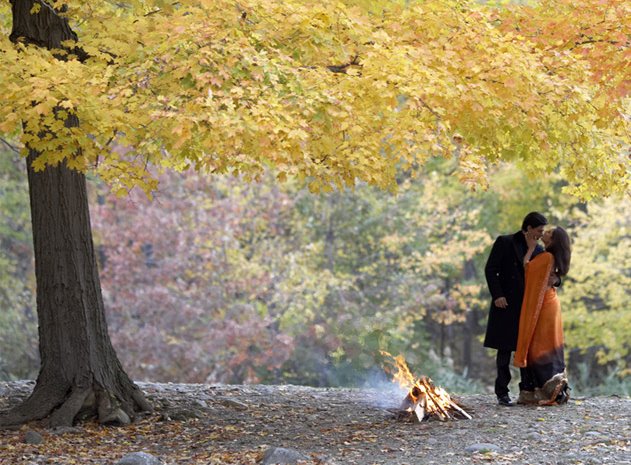
We went to see Kabhi Alvida Naa Kehna yesterday at Odeon Whiteley’s. Normally, my local theatre for Hindi movies is the London Trocadero, but a quick check of the movie listings revealed that Karan Johar’s latest offering to the worldwide public was playing at a theatre less than ten minutes walk from where I lived.
 Whiteley’s is one of the oldest shopping malls in London, and is still owned by, (surprise surprise) the Whiteley family. The building is located on Queensway, in the heart of Bayswater, about five minutes from Paddington Station. The cinema is located on the top floor, and is surrounded by a little artificial piazza of restaurants, cafes and tapas bars. It makes a reasonably convivial setting to watch movies, and the added advantage of being walking distance from home makes it more attractive.
Bayswater itself is in an area with a sizeable Arab community, so it really shouldn’t have been surprising to see the theatre with a lot of Arabs there to watch the latest Bollywood blockbuster. And Karan Johar, true to form, didn’t disappoint.
The plot is nothing extraordinary. No reincarnations, no double roles, no snakes in aeroplanes or US presidents saving us from ourselves. No – this one is a classic love story with several long, winding twists. The story is essentially about how two people in unhappy, loveless marriages first seek friendship, and then companionship, from another person in the same situation. Things get complicated, and when circumstances come to a head (i.e. someone dies) the spouses are told that there’s been some philandering going on. Tears, a few slaps, some broken tableware and potted plants later, the two marriages are dissolved; the adulterers are banished from home & hearth and languish in solitude for three years before more forgiving ex-spouses decide to play Cupid. Add a damsel running down a train platform in a chiffon sari (it IS a Karan Johar movie) and hey presto, the unhappy lovers are finally reunited. The End!
So why bother watching this movie?
If you asked me this question,I'd have to say that KANK is a good movie, despite Johar's best efforts to turn it into a sobbing ham fest, but basically because of its willingness to bring sacred cows into the abattoir. Add to this its sexual maturity and, last but by no means least, the all out masala factor.
 Before you all jump down my throat, let me expand on these one by one. I think that to make a movie about infidelity is very difficult for an Indian audience, especially given our cultural obsessions with getting married. Marriage in India is raised to a ridiculous pedestal, where it is seen as a mixture of career choice and destined fate for women, and as an essential stepping stone on the road to personal & professional fulfilment for men. Marriage is sacred, above question, essential – and any dissenting opinion is viewed as being pernicious. I don’t need to elaborate on the stigma that we choose to attach to widowhood and divorce in India and Indian societies around the world. And to talk about issues within marriage, about emotional fulfilment & sexual compatibility, in such a framework is often challenging enough to be nearly impossible.


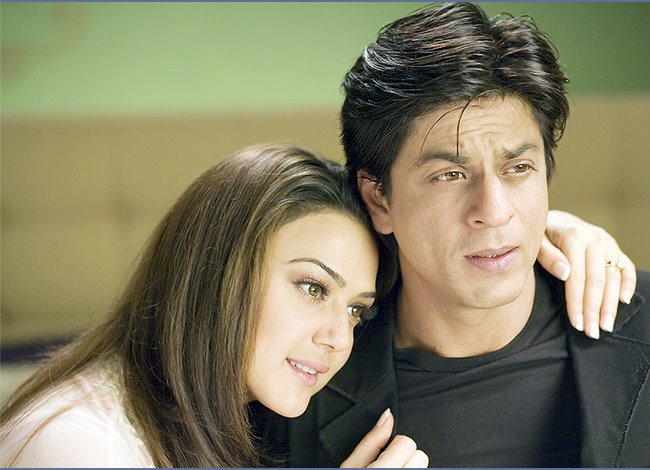
Second flaw – Preity Zinta. No matter what others may say, I find her acting to be quite wooden, while she comes across as being incredibly arrogant. (A Himachali friend attributes this to her being from St. Bede's in Simla - since I've never met anyone from there, this might just be purely slanderous, in which case I apologise in advance). Also, perhaps it’s just me, but Preity looked pretty tubby in this movie (especially when she wore skirts – her legs are SO not worth showing off).
Third flaw – The costumes, especially Amitabh Bachchan’s! I think I’m going to go to Selfridges and ask them to ban Manish Malhotra from shopping there anymore. Abhishek seems to have snitched his Bluffmaster wardrobe, while Preity insists on showing off legs that really are meant for Patiala salwars (see second flaw above).
 Whiteley’s is one of the oldest shopping malls in London, and is still owned by, (surprise surprise) the Whiteley family. The building is located on Queensway, in the heart of Bayswater, about five minutes from Paddington Station. The cinema is located on the top floor, and is surrounded by a little artificial piazza of restaurants, cafes and tapas bars. It makes a reasonably convivial setting to watch movies, and the added advantage of being walking distance from home makes it more attractive.
Bayswater itself is in an area with a sizeable Arab community, so it really shouldn’t have been surprising to see the theatre with a lot of Arabs there to watch the latest Bollywood blockbuster. And Karan Johar, true to form, didn’t disappoint.
The plot is nothing extraordinary. No reincarnations, no double roles, no snakes in aeroplanes or US presidents saving us from ourselves. No – this one is a classic love story with several long, winding twists. The story is essentially about how two people in unhappy, loveless marriages first seek friendship, and then companionship, from another person in the same situation. Things get complicated, and when circumstances come to a head (i.e. someone dies) the spouses are told that there’s been some philandering going on. Tears, a few slaps, some broken tableware and potted plants later, the two marriages are dissolved; the adulterers are banished from home & hearth and languish in solitude for three years before more forgiving ex-spouses decide to play Cupid. Add a damsel running down a train platform in a chiffon sari (it IS a Karan Johar movie) and hey presto, the unhappy lovers are finally reunited. The End!
So why bother watching this movie?
If you asked me this question,I'd have to say that KANK is a good movie, despite Johar's best efforts to turn it into a sobbing ham fest, but basically because of its willingness to bring sacred cows into the abattoir. Add to this its sexual maturity and, last but by no means least, the all out masala factor.
 Before you all jump down my throat, let me expand on these one by one. I think that to make a movie about infidelity is very difficult for an Indian audience, especially given our cultural obsessions with getting married. Marriage in India is raised to a ridiculous pedestal, where it is seen as a mixture of career choice and destined fate for women, and as an essential stepping stone on the road to personal & professional fulfilment for men. Marriage is sacred, above question, essential – and any dissenting opinion is viewed as being pernicious. I don’t need to elaborate on the stigma that we choose to attach to widowhood and divorce in India and Indian societies around the world. And to talk about issues within marriage, about emotional fulfilment & sexual compatibility, in such a framework is often challenging enough to be nearly impossible.
This is KANK’s Brownie Point One. It is not the first Hindi movie to talk about infidelity in marriage, and will invariably draw comparisons with movies like Silsila & Arth. But let’s also be fair and acknowledge that KANK talks about a different reality than either of those films. Other than the purely chronological differences, KANK addresses many more issues than either of those movies; issues that are very relevant for many young Indians today, but may not be openly acknowledged within popular culture. Infidelity is one of these issues, but there are also parallel stories – that of a domineering parent forcing his ambitions onto the child, the rigid gender stereotyping that takes place within families, the difficulties working mothers face in trying to balance work & family commitments. Johar has done a good job in managing to bring these into the equation. Perhaps that’s why I liked this movie (at least more than other reviewers!): because I think that its mainstreaming of issues that we don’t like to talk about in
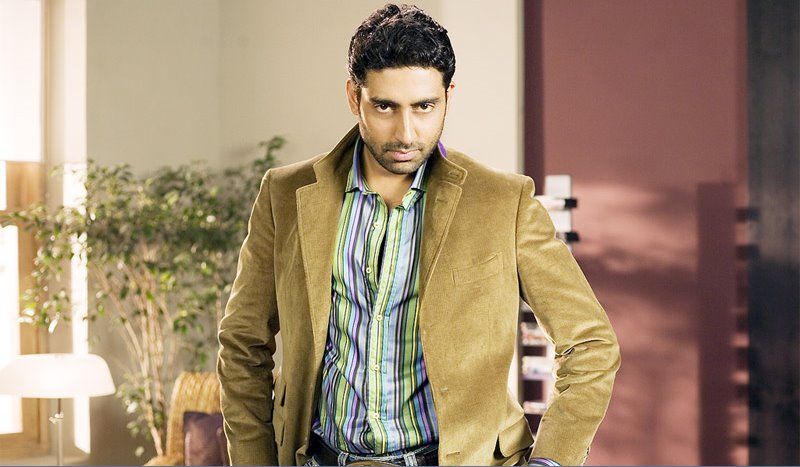
Brownie Point Two: I also appreciated the sexual maturity KANK displays. Unlike the endless tripe that recent risqué films like Girlfriend, Julie, Hawas, Aksar, and their ilk dole out, KANK deals with sex in a manner that isn’t prurient and quite matter of fact. (Parineeta also should be added to the category of Hindi movies that have a healthy attitude towards sex) That Abhishek Bachchan is frustrated by Rani Mukherji’s refusal to sleep with him is not something that is meant to titillate – it is a mature plot element for an adult relationship. There’s almost a sardonic element in the movie as Abhishek & Preity Zinta are in a club singing “Where’s the Party Tonight” while their respective spouses are checking into a hotel together. When Shah Rukh Khan & Rani Mukherji finally do sleep together, it is also not just about sex, but represents a significant & conscious act of betrayal for both of them; something that both the characters and the audience are kept aware of with a camera shot of their wedding rings as they go to sleep holding hands.
Brownie Point Three: KANK is at its heart a masala movie. In between dealing with some fairly serious issues, Johar takes the time to build in a few jokes and comedies of errors. The chance encounter that Rani & Shah Rukh have is good old fashioned sitcom style coincidences gone wrong, while the flirting between Amitabh Bachchan & Kirron Kher amusing, if sometimes making you feel like you overheard your grandfather talking dirty to your grandmother – not appropriate!
But alas, all is not well in brownie land. KANK is not without its flaws. Most importantly, Johar is in dire need of a brutal editor who will not indulge his sloppy story telling and learn to make his movies crisper. His narration is expansive, both visually & chronologically, which is fine as a style element, but like many other film makers, he is at risk of losing substance to his personal style. Make ‘em tighter, Karan!

Second flaw – Preity Zinta. No matter what others may say, I find her acting to be quite wooden, while she comes across as being incredibly arrogant. (A Himachali friend attributes this to her being from St. Bede's in Simla - since I've never met anyone from there, this might just be purely slanderous, in which case I apologise in advance). Also, perhaps it’s just me, but Preity looked pretty tubby in this movie (especially when she wore skirts – her legs are SO not worth showing off).
Third flaw – The costumes, especially Amitabh Bachchan’s! I think I’m going to go to Selfridges and ask them to ban Manish Malhotra from shopping there anymore. Abhishek seems to have snitched his Bluffmaster wardrobe, while Preity insists on showing off legs that really are meant for Patiala salwars (see second flaw above).
Fourth flaw – overdone glycerine. Rani is a brilliant actress (anyone who saw Black will attest to that fact) and to therefore have her only display of emotion as being stoic with large tears pouring out of her eyes really undervalues her ability and leaves us without the benefit of her full skills.
So overall verdict? Not the greatest movie, but passably good. Sticking with the 3 out of 5 rating. Go watch it if you want to. Don’t expect a tear jerking mammoth melodrama, but if you want to see a reasonably mature story told in a classic Bollywood style, KANK is your best bet!
Kabhi Alvida Naa Kehna
Just came back from seeing Kabhi Alvida Naa Kehna. I must admit, I'm a bit surprised with Karan Johar. He seems to be maturing as a film maker - the tear jerking heavy handedness still abounds, but his stories seem to be getting more mature.
 This is by no means a full review - that will follow later this week once I've had time to chew the movie over a bit. But for now, let me say that I was actually pleasantly surprised by the fact that for once, ALL his characters were realistically flawed. The leads and supporting cast thankfully didn't overwhelm you with their goodness - there was a kink in all of them.
One other note - I think that Hindi films are the best thing to ever happen to New York City. Like Kal Ho Na Ho, the city seems best when seen through a Bollywood lens. It loses its grimy, seedy flavour, and suddenly looks warm and inviting...perhaps that's already enough of an accomplishment.
I liked the movie - it was a bit too long, but the story was believable. I went expecting to have my heartstrings plucked viciously, as they were in Kabhi Khushi Kabhi Gham, but the movie kept its keel.
So until the review, let me just say, its not earth shattering, but passably good. Probably a 3 out of a 5...
 This is by no means a full review - that will follow later this week once I've had time to chew the movie over a bit. But for now, let me say that I was actually pleasantly surprised by the fact that for once, ALL his characters were realistically flawed. The leads and supporting cast thankfully didn't overwhelm you with their goodness - there was a kink in all of them.
One other note - I think that Hindi films are the best thing to ever happen to New York City. Like Kal Ho Na Ho, the city seems best when seen through a Bollywood lens. It loses its grimy, seedy flavour, and suddenly looks warm and inviting...perhaps that's already enough of an accomplishment.
I liked the movie - it was a bit too long, but the story was believable. I went expecting to have my heartstrings plucked viciously, as they were in Kabhi Khushi Kabhi Gham, but the movie kept its keel.
So until the review, let me just say, its not earth shattering, but passably good. Probably a 3 out of a 5...
Sunday, August 13, 2006
Mysterious flames and the death of Mickey Mouse
In keeping with my own blogging tradition, I prefer to keep my post titles as obscure and opaque as possible. If nothing else, it forces people to read further, and increases my readership (it might potentially scare them away, but let’s not think too hard about that)
I finished reading Umberto Eco’s latest novel, The Mysterious Flame of Queen Loana, a few days back.
(Personal rant follows)
Snob warning – if you read Dan Brown and actually LIKED The Da Vinci Code, not finding his continual references to the science of “symbology” totally ludicrous and intellectually demeaning, I suggest you leave. Eco was the original, intelligent historical conspiracy theorist, and to see Dan Brown’s shoddy attempts gain the dizzying heights of international stardom only confirms that this world is full of intellectually challenged lemmings, with very few people actually appreciating that Eco did it first, and with much more class.
(Personal rant ends here)
Normally, every time I read Eco I get the sense that he bears the huge burden of history on his shoulders. All of his novels have very strong moorings in medieval & Renaissance Europe. Foucault’s Pendulum, while despite being set in this century, is all about three rather batty editors, who are also serious conspiracy theorists, reconstructing (or just constructing) an arcane plot to take over the world. His other novels, The Name of the Rose, The Island of the Day Before & Baudolino were all physically set in the Middle Ages.
Not this latest production, his fifth major work of fiction. The Mysterious Flame of Queen Loana is very firmly set in the Italy of the twentieth century – potentially the early nineties, as opposed to the new millennium. As plot elements go, this is perhaps Eco’s most straightforward storyline. An ageing antiquarian book dealer wakes up in hospital, suffering from amnesia. His amnesia is of a strange variety, though. He retains his intellectual memory – i.e. he can spout Shakespearean sonnets and Dante’s poetry – but has lost his emotional memories – i.e. he can’t recognise his wife and grandchildren. In an attempt to regain this lost memory, he goes back to his ancestral home in the mountains up in Piedmont, where he spent several years as a child with his grandfather. While in this mountain retreat, he spends weeks poring over old family memorabilia, comic books, periodicals and old school notebooks that are carefully stored in various rooms of the house.
Eco uses this arguably tenuous plotline to begin what is his most graphic work yet. It was perhaps to be expected that a professor of semiotics like Eco would one day retreat back into the power of visual & aural symbols, drawing patterns, using popular culture to recreate the flavour of life in Fascist Italy.
For it is this period that Eco dwells on the most – the era from 1936 through to the end of the war, when Italy was firmly in the thrall of Il Duce, its son Mussolini. Eco recreates, through school book compositions, assigned school readings, popular radio broadcasts and children’s comics, the cultural imperialism of fascism in Italy, and how it pervaded every corner of Italian culture and lifestyle. He confesses in this interview that he doesn't view this novel as an autobiography, but rather as "the biography of a generation", but the work to which he contributed the most from his own personal memories.
Post colonialists would have a field day with this novel. Eco does not balk from discussing the less savoury aspects of a fascist Italy that had chosen to ally with Nazi Germany. There is anti-Semitism in the cultural produce, as is European superiority over other races (most strongly personified in the references to the war in Ethiopia & Libya). Perhaps the most striking example of how fascist Italy was so quick to demonise the “enemy” is a description of how Eco’s protagonist finds in his old comic collection a series of periodicals titled, Topolino, (a.k.a. Mickey Mouse) & Donald Duck. Once Italy had chosen to declare war on the USA, however, any endorsement of American culture was anti-national. The comic, as a matter of course, began to remove the American cartoons one at a time, “replaced by Italian imitations, and in the end – and this, I think, was the last, most painful barrier to fall – the famous mouse was killed”.
Eco’s writing is magical, in general. His power over language is startlingly strong. I am always amazed at how well he reads in English, and almost want to learn Italian so that I can read him in the original, because if the writing is that powerful in translation, what must it be to read him in his lingua franca?
Having said that, this was also the most difficult book of his to get into. The first fifty pages are the most tedious I’ve read so far from him. Perhaps that is not so unusual – his plots are often so convoluted and intense that the early parts of the story are always difficult to enjoy as he tries to set the scene. But as always, once Eco hits his stride around page 70 of The Mysterious Flames…the writing really takes off. Eco seems to really write from the heart in this novel – his characters are no longer intellectual constructs, as they were in a lot of his historical novels, where they operate in worlds imagined through his intellect. Yambo, the protagonist, seems to inhabit a world of Eco’s memories, those of someone who had been a child in fascist Italy, one who would have grown up listening to those songs on the radio that extolled the country’s men to die with a rose between their teeth.
The Mysterious Flames…doesn’t score merely because of the power of the writing, and the strength with which Eco manages to reconstruct the childhood of a young Italian boy in fascist Italy. His novel is perhaps scariest because it shows how easy it is for a nation to become enthralled with a single powerful leader, where nationalism becomes distorted into fascism, and where the demonisation of the other is most easily undertaken. And that alone makes it worth reading, especially given today’s rather complex geopolitical reality.
Keeping with the post-modernist theme, The Mysterious Flames of Queen Loana is a hive of intertextual cross references to popular culture. There is currently an online project underway that is seeking to cross reference and generate the most complete set of annotations to the novel than currently available. Check it out here.
Check out the author's website here.
I finished reading Umberto Eco’s latest novel, The Mysterious Flame of Queen Loana, a few days back.
(Personal rant follows)
Snob warning – if you read Dan Brown and actually LIKED The Da Vinci Code, not finding his continual references to the science of “symbology” totally ludicrous and intellectually demeaning, I suggest you leave. Eco was the original, intelligent historical conspiracy theorist, and to see Dan Brown’s shoddy attempts gain the dizzying heights of international stardom only confirms that this world is full of intellectually challenged lemmings, with very few people actually appreciating that Eco did it first, and with much more class.
(Personal rant ends here)
Normally, every time I read Eco I get the sense that he bears the huge burden of history on his shoulders. All of his novels have very strong moorings in medieval & Renaissance Europe. Foucault’s Pendulum, while despite being set in this century, is all about three rather batty editors, who are also serious conspiracy theorists, reconstructing (or just constructing) an arcane plot to take over the world. His other novels, The Name of the Rose, The Island of the Day Before & Baudolino were all physically set in the Middle Ages.
Not this latest production, his fifth major work of fiction. The Mysterious Flame of Queen Loana is very firmly set in the Italy of the twentieth century – potentially the early nineties, as opposed to the new millennium. As plot elements go, this is perhaps Eco’s most straightforward storyline. An ageing antiquarian book dealer wakes up in hospital, suffering from amnesia. His amnesia is of a strange variety, though. He retains his intellectual memory – i.e. he can spout Shakespearean sonnets and Dante’s poetry – but has lost his emotional memories – i.e. he can’t recognise his wife and grandchildren. In an attempt to regain this lost memory, he goes back to his ancestral home in the mountains up in Piedmont, where he spent several years as a child with his grandfather. While in this mountain retreat, he spends weeks poring over old family memorabilia, comic books, periodicals and old school notebooks that are carefully stored in various rooms of the house.
Eco uses this arguably tenuous plotline to begin what is his most graphic work yet. It was perhaps to be expected that a professor of semiotics like Eco would one day retreat back into the power of visual & aural symbols, drawing patterns, using popular culture to recreate the flavour of life in Fascist Italy.
For it is this period that Eco dwells on the most – the era from 1936 through to the end of the war, when Italy was firmly in the thrall of Il Duce, its son Mussolini. Eco recreates, through school book compositions, assigned school readings, popular radio broadcasts and children’s comics, the cultural imperialism of fascism in Italy, and how it pervaded every corner of Italian culture and lifestyle. He confesses in this interview that he doesn't view this novel as an autobiography, but rather as "the biography of a generation", but the work to which he contributed the most from his own personal memories.
Post colonialists would have a field day with this novel. Eco does not balk from discussing the less savoury aspects of a fascist Italy that had chosen to ally with Nazi Germany. There is anti-Semitism in the cultural produce, as is European superiority over other races (most strongly personified in the references to the war in Ethiopia & Libya). Perhaps the most striking example of how fascist Italy was so quick to demonise the “enemy” is a description of how Eco’s protagonist finds in his old comic collection a series of periodicals titled, Topolino, (a.k.a. Mickey Mouse) & Donald Duck. Once Italy had chosen to declare war on the USA, however, any endorsement of American culture was anti-national. The comic, as a matter of course, began to remove the American cartoons one at a time, “replaced by Italian imitations, and in the end – and this, I think, was the last, most painful barrier to fall – the famous mouse was killed”.
Eco’s writing is magical, in general. His power over language is startlingly strong. I am always amazed at how well he reads in English, and almost want to learn Italian so that I can read him in the original, because if the writing is that powerful in translation, what must it be to read him in his lingua franca?
Having said that, this was also the most difficult book of his to get into. The first fifty pages are the most tedious I’ve read so far from him. Perhaps that is not so unusual – his plots are often so convoluted and intense that the early parts of the story are always difficult to enjoy as he tries to set the scene. But as always, once Eco hits his stride around page 70 of The Mysterious Flames…the writing really takes off. Eco seems to really write from the heart in this novel – his characters are no longer intellectual constructs, as they were in a lot of his historical novels, where they operate in worlds imagined through his intellect. Yambo, the protagonist, seems to inhabit a world of Eco’s memories, those of someone who had been a child in fascist Italy, one who would have grown up listening to those songs on the radio that extolled the country’s men to die with a rose between their teeth.
The Mysterious Flames…doesn’t score merely because of the power of the writing, and the strength with which Eco manages to reconstruct the childhood of a young Italian boy in fascist Italy. His novel is perhaps scariest because it shows how easy it is for a nation to become enthralled with a single powerful leader, where nationalism becomes distorted into fascism, and where the demonisation of the other is most easily undertaken. And that alone makes it worth reading, especially given today’s rather complex geopolitical reality.
Keeping with the post-modernist theme, The Mysterious Flames of Queen Loana is a hive of intertextual cross references to popular culture. There is currently an online project underway that is seeking to cross reference and generate the most complete set of annotations to the novel than currently available. Check it out here.
Check out the author's website here.
Saturday, August 12, 2006
Memories of Athens
More photographs! These are all from Athens, and rather than posting the rather touristy pictures that you see all over the place of the Acropolis, the Parthenon and other major attractions, some rather random pics...


Thursday, August 10, 2006
I'll Never Say Goodbye
Kabhi Alvida Naa Kehna opens this Thursday in London. Karan Johar has already said that his latest 12-hankie weepie will not have a big premiere in Mumbai. I’m waiting with baited breath, so if you see me on the street and I look purple from lack of air, you’ll know why.
 So anyway - I had made very involved plans to head out for the opening night showing today (and like both Fanaa & Omkara, also at the London Trocadero) before my grand designs were thwarted. Thanks to something called professional commitments, I will now have to spend Thursday evening shooting at my coworkers with large globs of paint while running around a warehouse. After thoroughly pulverising each other with paint, we will go for a team dinner at the Gaucho Grill. (Hmm....there’s obviously a theme here: paintball - pellet - gun - war - Falklands - Argentina - steak)
So there I was, consoling myself with thoughts of spending Friday night in a cinema with my popcorn, coke, two partners in crime and a box of tissues (yes, I admit I bawl in movies - but only the good ones) when a friend calls up to gloat, “I’m going for a PRIVATE SCREENING of Kabhi Alvida Naa Kehna! How cool is that?!”
Very cool, and that does go without saying. I however, will be firing blobs of paint at coworkers when I could have been bawling my eyes out. And for once, I actually wanted to do the latter instead.
Holding my breath...
(Photo from the official Dharma Productions website here)
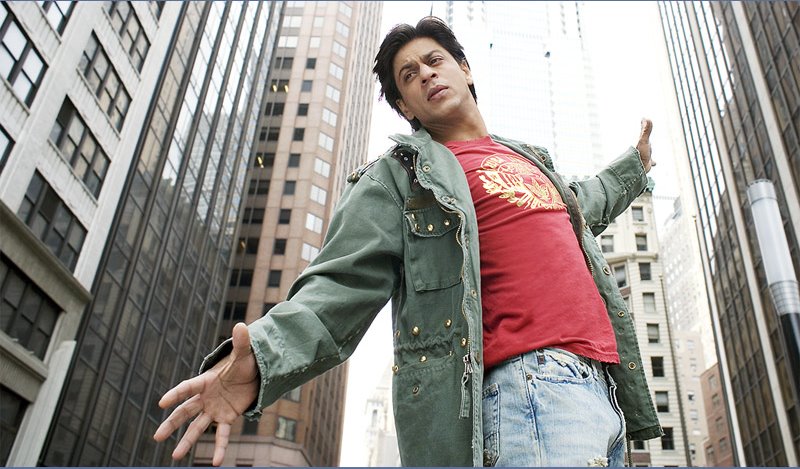 So anyway - I had made very involved plans to head out for the opening night showing today (and like both Fanaa & Omkara, also at the London Trocadero) before my grand designs were thwarted. Thanks to something called professional commitments, I will now have to spend Thursday evening shooting at my coworkers with large globs of paint while running around a warehouse. After thoroughly pulverising each other with paint, we will go for a team dinner at the Gaucho Grill. (Hmm....there’s obviously a theme here: paintball - pellet - gun - war - Falklands - Argentina - steak)
So there I was, consoling myself with thoughts of spending Friday night in a cinema with my popcorn, coke, two partners in crime and a box of tissues (yes, I admit I bawl in movies - but only the good ones) when a friend calls up to gloat, “I’m going for a PRIVATE SCREENING of Kabhi Alvida Naa Kehna! How cool is that?!”
Very cool, and that does go without saying. I however, will be firing blobs of paint at coworkers when I could have been bawling my eyes out. And for once, I actually wanted to do the latter instead.
Holding my breath...
(Photo from the official Dharma Productions website here)
Sunday, August 06, 2006
Bollywood & Bhaiyaland
Omkara opened last week in London, and after some problems in trying to figure out how to watch this movie, we finally made it to the cinema last Tuesday. Our desi Othello is playing in Central London again, and even though I'd promised to write soon about the movie, some of us have to work too you know!
I was keen to see Omkara for two reasons. The strongest one would have to be that I was really interested to see how Vishal Bhardwaj would have translated Shakespeare into Bollywood - especially given that this is one of the bard's darkest plays. There are identity & racial politics in Othello as well, which are not perhaps as significant in a Bollywood version (unless we see it manifested as inter caste tensions, which is exactly what Bhardwaj chose to do with his depiction of Omkara as the half caste)
The other reason I was intent on watching this movie is also because it is set, very explicitly, in Uttar Pradesh, a state with which I hold somewhat confusing ties. My family hails from the Hindi heartland - my father's village is in the district of Azamgarh, famous for Mulayam Singh Yadav, Dawood Ibrahim & Kaifi Azmi. My mother's family hails from the Rajput strongholds of Jaunpur & Varanasi, so I'm about as much of a UP bhaiya as you can get.
I've never lived in UP though. (Wait. That's not true - I did study for two years in Dehra Dun when it was still part of UP, and not the capital of Uttaranchal). But Uttaranchal, & Dehra Dun in particular, are not really the same cultural space at Uttar Pradesh. There is a different feel to the Gangetic plains that are quite similar, but also very distinct, from its downstream (and much more vilifed) neighbour, Bihar.
So for me, UP is where we went to visit a whole gaggle of relatives and cousins, but having never lived there, I don't really have much of a relationship with the place. UP is, despite what other parts of the country might say about it, the heartland of the country as a whole. It is the mother ship of all of Indian politics, the state that makes or breaks governments (with 85 seats in Parliament, its not that surprising). Developmentally, UP is doing pretty badly, but takes consolation in the fact that while its not quite Punjab, its better than Bihar (pretty lousy benchmarking, I know, but hey - you're only as good as your neighbourhood, right?)
So it's a bit surprising that UP hasn't seen that much depiction in Bollywood. When referring to generic village settings, film makers tend to keep them fairly generic (e.g. Viraasat or Mother India.) If there were ever references to people from the heartland, it was when they had made their exodus to the cities (Main Madhuri Dixit Banna Chahti Hoon, Company) People always left UP to pursue their dreams, to live lives. UP was stagnation, tradition, suffocation.
As Indian movies started to market themselves more explicitly to the diaspora communities, Indian cinema became enamoured of the jovial Punjabis, with their loud voices, bhangra and lassi. Uttar Pradesh, in contrast, has Bhojpuri, dhobiyaa naach & kachories. Not quite the most glamourous of combinations.
And in this one aspect, UP lagged its poor brother, Bihar. Bihar was so bad, things were so horribly wrong there, that it captured the national imagination in another way. Film makers fell over themselves when they wanted to make "gritty" realist cinema to depict the horrors of life in Bihar. Directors like Prakash Jha helped keep the spotlight on the state, and whether you like them or loathe them, the political class in Bihar has transfixed the national imagination for some time. So Bunty Aur Babli was a refreshing change last year. The film shot extensively in UP landmarks, in Lucknow, Kanpur & Varanasi. The fictitious towns of Pankhinagar & Fursatganj are amusing as situations, but also very apt depictions of the third tier cities that make up most of semi-urban UP; places like Banda, Gorakhpur, Sultanpur & Barhalganj (I bet you never heard of some of these)
But B&B really captured the quintessential spirit of UP - a series of small towns, dusty, poor, unglamorous, but burning with ambitions, desires, the need to DO something, break out and get away. In many ways, watching B&B helped reinforce some key messages - the fact that whether we like it or not, UP is the heart of the country. If we really have to get something right, we need to get it right in UP, because UP carries the whole of North India. We can see this with the prosperity of Punjab & Haryana. They've been doing quite well economically for several years now, but this hasn't cascaded across North India. And the North-South economic divide is getting wider, not narrowing.
Omkara is in this sense thematically akin to its more humorous cousin, Bunty aur Babli. Both films touch upon a message that is as powerful as it is discomfiting, and one that I haven't seen articulated in many reviews - that there is a huge tract of young Indians, whose reality is not that of their more fortunate cousins in the metropolises, who are just as ambitious, just as driven for success as anyone else, but whose circumstances do not make it possible to access these opportunities. Bunty, Babli, Omkara, Kesu, Billo, Langda - all of these characters do the best that they can with the circumstances they find themselves in - and sadly, this translates into adopting a life of crime.
Bunty aur Babli treated the issue in a lighter vein, capturing the frustrations of the leads and turning them into an amusing, entertaining Bonny & Clyde adventure through India. Omkara doesn't focus on the road into crime, but focuses on emotional developments subsequent to the adoption of a criminal life. For whatever else you say about the characters in the movie, they are thugs and political goondas.
In the opening scene of B&B, Abhishek Bachchan has an argument with his father about going for a job interview to become another ticket collector - a job that is dull, lifeless and meaningless for Bachchan. This is especially poignant after the opening song sequence when he sings of leaving small towns, building houses next to the moon and writing his name in big letters on the sky (Dhadak Dhadak)
In Omkara, all the principal characters are university educated - in fact, when in the city the gangs live in a university hostel. They are literate (we even hear of how Kesu & Dolly studied in the same college) but the motives for moving into a life of crime aren't explicitly articulated. I'm willing to guess though that it has to do with accessibility to economic opportunity.
So yet again, Bollywood comes up tops. Whether it is consciously done or not, Indian filmmakers manage, despite all the claims of creating an escapist parallel for average film viewers, to build into their stories a reality that is very harsh and very pressing. We saw Manoj Kumar do it with his Bharat image, and later Bachchan personified the angry young man who saw before him few opportunities to progress in a rigid world of bureaucracy, political ineptitude and corruption.
Today, the equation has been modified. There are opportunities out there in the India of today - it is the getting there that is problematic if you aren't the product of a private education system, speak English without an accent (remember the scene when Kesu tries to get Dolly to pronounce "bottom" in the Stevie Wonder song with an American accent?) and haven't studied in the hallowed IITs/IIM's. We need to carry the country with us on this road to economic growth if we are to avoid fragmentation.
I was keen to see Omkara for two reasons. The strongest one would have to be that I was really interested to see how Vishal Bhardwaj would have translated Shakespeare into Bollywood - especially given that this is one of the bard's darkest plays. There are identity & racial politics in Othello as well, which are not perhaps as significant in a Bollywood version (unless we see it manifested as inter caste tensions, which is exactly what Bhardwaj chose to do with his depiction of Omkara as the half caste)
The other reason I was intent on watching this movie is also because it is set, very explicitly, in Uttar Pradesh, a state with which I hold somewhat confusing ties. My family hails from the Hindi heartland - my father's village is in the district of Azamgarh, famous for Mulayam Singh Yadav, Dawood Ibrahim & Kaifi Azmi. My mother's family hails from the Rajput strongholds of Jaunpur & Varanasi, so I'm about as much of a UP bhaiya as you can get.
I've never lived in UP though. (Wait. That's not true - I did study for two years in Dehra Dun when it was still part of UP, and not the capital of Uttaranchal). But Uttaranchal, & Dehra Dun in particular, are not really the same cultural space at Uttar Pradesh. There is a different feel to the Gangetic plains that are quite similar, but also very distinct, from its downstream (and much more vilifed) neighbour, Bihar.
So for me, UP is where we went to visit a whole gaggle of relatives and cousins, but having never lived there, I don't really have much of a relationship with the place. UP is, despite what other parts of the country might say about it, the heartland of the country as a whole. It is the mother ship of all of Indian politics, the state that makes or breaks governments (with 85 seats in Parliament, its not that surprising). Developmentally, UP is doing pretty badly, but takes consolation in the fact that while its not quite Punjab, its better than Bihar (pretty lousy benchmarking, I know, but hey - you're only as good as your neighbourhood, right?)
So it's a bit surprising that UP hasn't seen that much depiction in Bollywood. When referring to generic village settings, film makers tend to keep them fairly generic (e.g. Viraasat or Mother India.) If there were ever references to people from the heartland, it was when they had made their exodus to the cities (Main Madhuri Dixit Banna Chahti Hoon, Company) People always left UP to pursue their dreams, to live lives. UP was stagnation, tradition, suffocation.
As Indian movies started to market themselves more explicitly to the diaspora communities, Indian cinema became enamoured of the jovial Punjabis, with their loud voices, bhangra and lassi. Uttar Pradesh, in contrast, has Bhojpuri, dhobiyaa naach & kachories. Not quite the most glamourous of combinations.
And in this one aspect, UP lagged its poor brother, Bihar. Bihar was so bad, things were so horribly wrong there, that it captured the national imagination in another way. Film makers fell over themselves when they wanted to make "gritty" realist cinema to depict the horrors of life in Bihar. Directors like Prakash Jha helped keep the spotlight on the state, and whether you like them or loathe them, the political class in Bihar has transfixed the national imagination for some time. So Bunty Aur Babli was a refreshing change last year. The film shot extensively in UP landmarks, in Lucknow, Kanpur & Varanasi. The fictitious towns of Pankhinagar & Fursatganj are amusing as situations, but also very apt depictions of the third tier cities that make up most of semi-urban UP; places like Banda, Gorakhpur, Sultanpur & Barhalganj (I bet you never heard of some of these)
But B&B really captured the quintessential spirit of UP - a series of small towns, dusty, poor, unglamorous, but burning with ambitions, desires, the need to DO something, break out and get away. In many ways, watching B&B helped reinforce some key messages - the fact that whether we like it or not, UP is the heart of the country. If we really have to get something right, we need to get it right in UP, because UP carries the whole of North India. We can see this with the prosperity of Punjab & Haryana. They've been doing quite well economically for several years now, but this hasn't cascaded across North India. And the North-South economic divide is getting wider, not narrowing.
Omkara is in this sense thematically akin to its more humorous cousin, Bunty aur Babli. Both films touch upon a message that is as powerful as it is discomfiting, and one that I haven't seen articulated in many reviews - that there is a huge tract of young Indians, whose reality is not that of their more fortunate cousins in the metropolises, who are just as ambitious, just as driven for success as anyone else, but whose circumstances do not make it possible to access these opportunities. Bunty, Babli, Omkara, Kesu, Billo, Langda - all of these characters do the best that they can with the circumstances they find themselves in - and sadly, this translates into adopting a life of crime.
Bunty aur Babli treated the issue in a lighter vein, capturing the frustrations of the leads and turning them into an amusing, entertaining Bonny & Clyde adventure through India. Omkara doesn't focus on the road into crime, but focuses on emotional developments subsequent to the adoption of a criminal life. For whatever else you say about the characters in the movie, they are thugs and political goondas.
In the opening scene of B&B, Abhishek Bachchan has an argument with his father about going for a job interview to become another ticket collector - a job that is dull, lifeless and meaningless for Bachchan. This is especially poignant after the opening song sequence when he sings of leaving small towns, building houses next to the moon and writing his name in big letters on the sky (Dhadak Dhadak)
In Omkara, all the principal characters are university educated - in fact, when in the city the gangs live in a university hostel. They are literate (we even hear of how Kesu & Dolly studied in the same college) but the motives for moving into a life of crime aren't explicitly articulated. I'm willing to guess though that it has to do with accessibility to economic opportunity.
So yet again, Bollywood comes up tops. Whether it is consciously done or not, Indian filmmakers manage, despite all the claims of creating an escapist parallel for average film viewers, to build into their stories a reality that is very harsh and very pressing. We saw Manoj Kumar do it with his Bharat image, and later Bachchan personified the angry young man who saw before him few opportunities to progress in a rigid world of bureaucracy, political ineptitude and corruption.
Today, the equation has been modified. There are opportunities out there in the India of today - it is the getting there that is problematic if you aren't the product of a private education system, speak English without an accent (remember the scene when Kesu tries to get Dolly to pronounce "bottom" in the Stevie Wonder song with an American accent?) and haven't studied in the hallowed IITs/IIM's. We need to carry the country with us on this road to economic growth if we are to avoid fragmentation.
Saturday, July 29, 2006
I dreamt of Delhi last night
But the Delhi I dreamt of last night wasn’t the Delhi of long, unbelievably hot summers. It wasn’t the Delhi that reels from severe water shortages, where load shedding is a daily occurrence, where the rhythms of your diurnal activity revolves as much around the benediction of Delhi Vidyut Board as it does around your own schedule.
It was also not the Delhi of long, cold winters. I didn’t dream of those long, cold nights, when the roads are empty and your eyesight dimmed by the fog that comes in menacingly before midnight and stays there till late morning, when the cold settles into your bones and makes touching the bathroom tap in the morning a dreaded activity.
I dreamt of my Delhi. It was the Delhi of the lush evenings of late August & September. I dreamt of the Delhi that is found driving down the Mehrauli road, where you can look out at the Qutub Minar, warmly lit in limpid pools of amber lighting, the bright halogens refracted into an abstruse amber puddle against a warm sky by the dust and pollution thrown up by a frantically busy city. I dreamt of the craggy hillsides near Rai Pithora, where the rough red stones turn soft shades of dark brown & slate grey as your car moves past, with the camel thorn trees that in the day time stand testament to the rugged harshness of the climate mutating into dark, black etches against a night sky glowing with promise.
Delhi is the city that I went to university in, and it is the city that was my first real playground as an adult. No matter how many cities I go to, anywhere in the world, Delhi shall always remain the one indelibly etched on my mind. And more than anything else, the Delhi that I loved the most was the Delhi of the dark, when the burning sun had dropped below the horizon, the glowing grey of the evening sky had dimmed to an inky midnight blue, the street lights casting long shadows on roads, where the cool breeze would be countered by the heat that would radiate from the tarmac until the early morning. It is that Delhi that I love, and it is that Delhi that I miss the most.
There are so many memories associated with travelling along those seemingly endless roads at night, under the cover of darkness. There were endless evenings when I would drive through Lutyens Delhi. Usually a necessity of living and moving around in Delhi, driving was sometimes never the means to an end – it would often be an end in itself. There were times when we would be sitting around, bored, tired of the endless hum of air conditioners at a friends place, or the more radical, industrialised noise of air coolers (that magical sound of dripping water, the cold damp of the straw against your fingers as you ran your hands up and down that panel, the rich, wet smell of khas perfume that would be dropped into the water tanker every morning)
And when the boredom got too much, when just chilling was not enough, when TV or Barista or TGIF got too much, we’d go for a drive. Remember that scene in Monsoon Wedding, when Vasundhara Das sneaks out at night to meet her married lover? When asked where she wants to go, she says, "Just drive. I just want to go for a long drive..."
And so would we. We would just want to get out of the house, climb into our cars, and keep driving. Heading out from South Delhi, we’d drive up Shanti Path, the windows of my little Maruti 800 rolled down, music playing softly on the radio.
“You’ve got the music playing, night & day…FM is ready for you….in the morning, or late at night, wow, we’re gonna let the music play…
AIR F.M. Stereo….all the time……..on All India Radio”
Driving up Chanakyapuri, we would turn off towards Teen Murti, drive up South Avenue, until we finally hit the periphery of South Block. From there, it was a quick drive up to Rajpath, and then we’d careen down the long stretch, the proud flanks of Indian government behind us, India Gate looming large in front.
The lawns along Rajpath were always lined with families out for ice cream. There would be couples, trying to get two seconds of privacy under the trees that in the daytime provide shade for thousands. The balloon walas, Kwality Walls ice cream carts, kiosks selling ice cold Coke, Pepsi & Fanta (but nothing to beat the synthetic lemony tang of a chilled Limca on a warm sunny evening). A friend, any friend, sitting in the passenger seat, the cigarette we were sharing moving back and forth. (“Don’t drop any cinders on that dashboard or the seat – my dad’s gonna kill me”)
And then turning off at Shahjahan Road, heading down to Aurangzeb and back to Race Course, before heading back behind Chanakya Cinema to hit the end of Shanti Path and going back down Moti Bagh at the Rail Museum…the road home was equally magical.
Or if we were really bored, we’d head out of Priya and drive past Vasant Kunj, double back towards Andheria Mod and head for Gurgaon down past Qutub, Chhatarpur and Ghitorni. That road was the route to so many farmhouse parties – normal evening chillouts, more hard core scenes and the many, many music concerts that kept us occupied through long, hot summer nights.
But when we were out for a drive, the road to Gurgaon was rarely our destination. Once we went past the Delhi border (“Welcome to Haryana – jahaan doodh dahi ka khaana”) and made it through the sterile high rises of DLF, we’d head past IFFCO crossing and hit the Jaipur highway.
Oh, that great road. Long, endless stretches of highway, the dark looming trucks trundling along. The big Jaipur merchants in their fancy Mercedes and Toyotas would effortlessly cruise past our little rattling student cars – usually beat up old Marutis, or if we were lucky, a Santro or maybe even a Qualis. The wide, dusty Aravalis stretching out ahead and besides you, the ground falling away on either side, petering away into darkness. The air would always be warm – never hot, but this was Haryana, heading into Rajasthan, so there was always a flavour of desert dryness, a grainy, dusty layer on your arm where it rested on the door as you drove through the night.
Music was our constant companion. Nietzsche said that a life without music was senseless. Each of those long journeys, where the destination is meaningless and there is a quiet peace in the journey would have been incomplete without the music we played.
Our tape decks were our lifelines, as was AIR FM. When three new FM stations were launched in Delhi, our lives became fuller, richer – we were given the freedom to change music at the touch of a button without having to change tapes, fumble around the dashboard or in the glove compartment to find the right replacement. Such luxury.
But the music that sustained us, it was some of the best. We had Indian Ocean, Shaan, Strings, Junoon, Euphoria, Creed, Metallica, Tom Petty & the Heartbreakers, John Denver, Farida Khanum, Nusrat Fateh Ali Khaan, Adnaan Sami, A.R. Rehman, Joan Baez, Joni Mitchell, Paul Mc Cartney – there are songs that even now I can play and I can feel the shudder of the steering wheel under my palms, the smell of nicotine and dust in my nose.
I dreamt of Delhi last night. And I hope I dream of it again.
It was also not the Delhi of long, cold winters. I didn’t dream of those long, cold nights, when the roads are empty and your eyesight dimmed by the fog that comes in menacingly before midnight and stays there till late morning, when the cold settles into your bones and makes touching the bathroom tap in the morning a dreaded activity.
I dreamt of my Delhi. It was the Delhi of the lush evenings of late August & September. I dreamt of the Delhi that is found driving down the Mehrauli road, where you can look out at the Qutub Minar, warmly lit in limpid pools of amber lighting, the bright halogens refracted into an abstruse amber puddle against a warm sky by the dust and pollution thrown up by a frantically busy city. I dreamt of the craggy hillsides near Rai Pithora, where the rough red stones turn soft shades of dark brown & slate grey as your car moves past, with the camel thorn trees that in the day time stand testament to the rugged harshness of the climate mutating into dark, black etches against a night sky glowing with promise.
Delhi is the city that I went to university in, and it is the city that was my first real playground as an adult. No matter how many cities I go to, anywhere in the world, Delhi shall always remain the one indelibly etched on my mind. And more than anything else, the Delhi that I loved the most was the Delhi of the dark, when the burning sun had dropped below the horizon, the glowing grey of the evening sky had dimmed to an inky midnight blue, the street lights casting long shadows on roads, where the cool breeze would be countered by the heat that would radiate from the tarmac until the early morning. It is that Delhi that I love, and it is that Delhi that I miss the most.
There are so many memories associated with travelling along those seemingly endless roads at night, under the cover of darkness. There were endless evenings when I would drive through Lutyens Delhi. Usually a necessity of living and moving around in Delhi, driving was sometimes never the means to an end – it would often be an end in itself. There were times when we would be sitting around, bored, tired of the endless hum of air conditioners at a friends place, or the more radical, industrialised noise of air coolers (that magical sound of dripping water, the cold damp of the straw against your fingers as you ran your hands up and down that panel, the rich, wet smell of khas perfume that would be dropped into the water tanker every morning)
And when the boredom got too much, when just chilling was not enough, when TV or Barista or TGIF got too much, we’d go for a drive. Remember that scene in Monsoon Wedding, when Vasundhara Das sneaks out at night to meet her married lover? When asked where she wants to go, she says, "Just drive. I just want to go for a long drive..."
And so would we. We would just want to get out of the house, climb into our cars, and keep driving. Heading out from South Delhi, we’d drive up Shanti Path, the windows of my little Maruti 800 rolled down, music playing softly on the radio.
“You’ve got the music playing, night & day…FM is ready for you….in the morning, or late at night, wow, we’re gonna let the music play…
AIR F.M. Stereo….all the time……..on All India Radio”
Driving up Chanakyapuri, we would turn off towards Teen Murti, drive up South Avenue, until we finally hit the periphery of South Block. From there, it was a quick drive up to Rajpath, and then we’d careen down the long stretch, the proud flanks of Indian government behind us, India Gate looming large in front.
The lawns along Rajpath were always lined with families out for ice cream. There would be couples, trying to get two seconds of privacy under the trees that in the daytime provide shade for thousands. The balloon walas, Kwality Walls ice cream carts, kiosks selling ice cold Coke, Pepsi & Fanta (but nothing to beat the synthetic lemony tang of a chilled Limca on a warm sunny evening). A friend, any friend, sitting in the passenger seat, the cigarette we were sharing moving back and forth. (“Don’t drop any cinders on that dashboard or the seat – my dad’s gonna kill me”)
And then turning off at Shahjahan Road, heading down to Aurangzeb and back to Race Course, before heading back behind Chanakya Cinema to hit the end of Shanti Path and going back down Moti Bagh at the Rail Museum…the road home was equally magical.
Or if we were really bored, we’d head out of Priya and drive past Vasant Kunj, double back towards Andheria Mod and head for Gurgaon down past Qutub, Chhatarpur and Ghitorni. That road was the route to so many farmhouse parties – normal evening chillouts, more hard core scenes and the many, many music concerts that kept us occupied through long, hot summer nights.
But when we were out for a drive, the road to Gurgaon was rarely our destination. Once we went past the Delhi border (“Welcome to Haryana – jahaan doodh dahi ka khaana”) and made it through the sterile high rises of DLF, we’d head past IFFCO crossing and hit the Jaipur highway.
Oh, that great road. Long, endless stretches of highway, the dark looming trucks trundling along. The big Jaipur merchants in their fancy Mercedes and Toyotas would effortlessly cruise past our little rattling student cars – usually beat up old Marutis, or if we were lucky, a Santro or maybe even a Qualis. The wide, dusty Aravalis stretching out ahead and besides you, the ground falling away on either side, petering away into darkness. The air would always be warm – never hot, but this was Haryana, heading into Rajasthan, so there was always a flavour of desert dryness, a grainy, dusty layer on your arm where it rested on the door as you drove through the night.
Music was our constant companion. Nietzsche said that a life without music was senseless. Each of those long journeys, where the destination is meaningless and there is a quiet peace in the journey would have been incomplete without the music we played.
Our tape decks were our lifelines, as was AIR FM. When three new FM stations were launched in Delhi, our lives became fuller, richer – we were given the freedom to change music at the touch of a button without having to change tapes, fumble around the dashboard or in the glove compartment to find the right replacement. Such luxury.
But the music that sustained us, it was some of the best. We had Indian Ocean, Shaan, Strings, Junoon, Euphoria, Creed, Metallica, Tom Petty & the Heartbreakers, John Denver, Farida Khanum, Nusrat Fateh Ali Khaan, Adnaan Sami, A.R. Rehman, Joan Baez, Joni Mitchell, Paul Mc Cartney – there are songs that even now I can play and I can feel the shudder of the steering wheel under my palms, the smell of nicotine and dust in my nose.
I dreamt of Delhi last night. And I hope I dream of it again.
Subscribe to:
Posts (Atom)


