Showing posts with label Bollywood. Show all posts

Tuesday, February 16, 2010

My Name is Singh and I am who I am

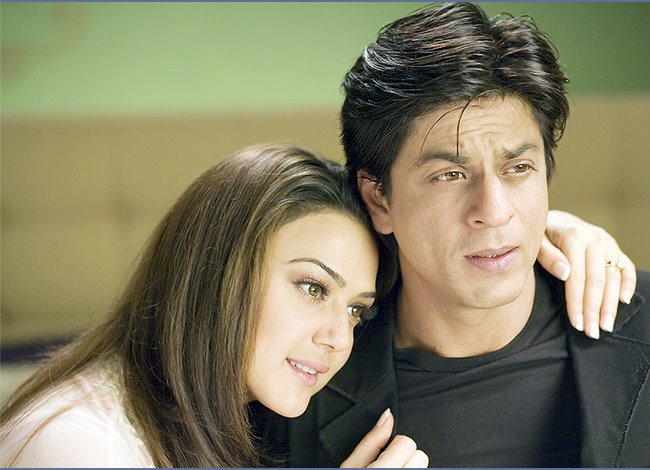
I had first heard of My Name is Khan back in the summer of last year, after Shah Rukh Khan was, somewhat ironically given the plot & premise of the movie, held at US immigration for a few hours as the airport authorities found him suspicious on the basis that his surname was “Khan”. The story was soon dropped, but for a few hours, the rapacious Indian media feasted on the bones of the scandal. (As an aside, I love using the word “rapacious” – it reminds me of the Velociraptors in the Jurassic Park movies)

So going to see the movie last night with an Austrian friend who is rapidly sinking into the quagmire that is Bollywood-mania, I had a pretty good premise of what the movie would be like. My concerns were primarily around the fact that the movie was a Karan Johar production, especially since KJ is never quite known for being subtle or discreet, but prefers to hammer in the ham & emotion with a sledgehammer. Don’t get me wrong – I love my good ole’ Johar flicks – but I was intrigued how a filmmaker of his ilk would treat something as sensitive as racial profiling in the USA in a post 9/11 world.

This blog-post is not meant to be a review, so I won’t spend much time going over the fundamentals of the film. But the reason I’m writing this piece is because there were many elements of the story yesterday that resounded quite closely with me, and that I found particularly affecting. And at the very end, for me, a film is only successful if it can relate to you personally; the big bang glamorousness of a blockbuster is only as good as the emotions it can generate in your heart. That is why the first Star Wars worked, while the more recent additions to the franchise don’t. And that is why My Name is Khan is, at least in my eyes, a successful film.

The reason for this is pretty straightforward – MNIK is a film about being different, not being typically like the others around you, and about having the courage and conviction to embrace the identity that is yours, regardless of how well that lets you “fit in”. Rizwan Khan is, in the movie, the ultimate outsider, who through his entire life inhabits liminal spaces. In India, his minority status is based on his religion. In school, he is bullied by peers for his autism. At home, his brother resents him for being the centre of his mother’s attention. In the broader US community, he is an immigrant. In the US Muslim community, he is a vocal moderate willing to challenge fundamentalists, who marries a Hindu divorcee with a child (herself a minority). But the Khan we see in the movie is someone who is at peace with his own identity, in whatever the circumstances. He is not necessarily able to understand why other people do not like him, but at no point do we see him turn around and say, “I wish I was not Muslim / autistic / brown ..."

And for me, this is where the success of the movie lies. Unlike other commentators, who have moaned at length about how "unrealistic" the movie is, I don't really give a damn (especially since most of the same commentators had raptures over an equally improbably Inglourious Basterds.) I don’t care how “cognitively realistic” the movie was, but how "emotionally realistic" it was. I don’t need to know why Rizwan Khan travels the length & breadth of the US, in his attempts to meet the US President and tell him that he is not a terrorist by virtue of his name. Fundamentally, none of these elements really matter.

Perhaps my perspective is skewed by my circumstances. I am an Indian national who has lived less than a third of my life in the country of my nationality, but my identity is intensely Indian, primarily founded on a childhood travelling with parents who were diplomats. I was not born in India, but in Pakistan, which means that unlike other NRI’s who travel back to India, I am now increasingly subjected to intense scrutiny at Indian immigration, where officers are perplexed that someone who was not born before Partition can have an Indian passport even though he was born in Pakistan (the same happenstance raises eyebrows at many airport check-in counters, immigration barriers, and cocktail parties). And even though I am proud to be an upper-caste Rajput Hindu with an impeccable lineage that I can track back hundreds of years by name, I find much in religion to be tedious and ritualistic; something that is exploited by clergies to keep the masses in check.

But the results of this upbringing are ubiquitous. I find that India drives me insane, but outside the country I am one of its most impassioned (and I would hope, erudite) defenders. I have lived much of my life overseas, and as a frequent traveller on an Indian passport have the infinite joy of having to apply for millions of visas ahead of any journey. At the same time, the idea of giving up my passport for a more convenient one, though attractive from a purely pragmatic point of view, is quite emotionally difficult. I have friends who are activists of all sorts across the world – ranging from LGBT campaigners through to aid workers in Haiti, through to American Muslim university professors, much like Khan’s hijab-wearing sister-in-law in the movie, who wear the scarf not out of any circumstance of familial or gender-based suppression, but out a sense of identity and protest. Many times my friends have opinions or views that I cannot agree with. At the same time, the reason we are friends is because we are able to accept that we are inherently different, and are friends because, not despite, those differences.

And so perhaps because of these circumstances I was touched by the movie last night; and this is why the movie is "emotionally realistic". Rizwan’s message of being true to yourself, regardless of circumstances or environment, was a strong, touching and most importantly, personally relevant one for me. It reminded me that there are many other people out there in the world who are as different as I am from the others around me, with different hopes, aspirations, dreams and identities; people who cannot claim to be from any “majority”, but that ultimately it is important to remember that despite being different, it is still possible to be yourself.

And perhaps, even, to be happy.

Monday, October 12, 2009

Bollywood Troop Rally!

A friend of a friend is currently in Turkey, there to learn dance, and not surprisingly is being harassed to death about teaching her classmates how to shimmy and do the Bolly . She's struggling a bit with ideas, and since youtube isn't readily accessible in Turkey, can't even do an online crash course. So come on folks - spread the love, spread the dance, and send her your suggestions!

Check out her dilemma here.

Tuesday, September 15, 2009

Why I hate Bollywood

So if you’re a regular reader of this blog (or even someone who’s stumbled across this site via my Twitter or my blog, or are just a friend who’s here out of curiosity) you will be very aware of the fact that I am what could be described as a die-hard Bollywood fanatic. Perhaps one of the best things about living in Central London is that it is very easy to access the latest cinematic offerings at mainstream cinemas at Piccadilly Circus, unlike some other geographies where Bollywood movies play in suburban desi ghettoes (this is also probably yet another reason I dislike Singapore...)

Having said this, there are several things that I either find singularly irritating about my relationship with Bollywood, and with Bollywood’s relationship with me. One of these many irritants is how Bollywood has made me into a strange combination of champion and pimp (a pimpion?) Insidious, devious, underhanded, it forces its way into all my relationships – friends, lovers, colleagues – and I end up pitching for it everywhere. There have been so many random conversations – acquaintances in pubs over beer, lovers in bed after sex, random strangers on transcontinental flights – where what starts out as chitchat ends up turning into an unsettling blend of passionate sales pitch, courtroom defence and self-righteous admonishment of ignorance.

Now while you might say that it serves those idiots who dare broach conversations with the strangers next to them on transcontinental flights right to have me bite their heads off, imagine what it does to your sex life. And I always feel that some of my friends have gotten too cautious about what they say in front of me, out of an overweening fear that it may unleash the Bollywood beast.

The thing is, in my own pimpion head, it’s a simple equation. If you plan on maintaining any modicum of a relationship with me, in whatever capacity, you will have love the Bolly; not necessarily as much or as passionately as I do – it’s not too cool to be too eager or desperate – but enough to get me. And if you can’t get to that special place in your heart where you love it as much as I do, where if you could you would marry it and have lots of little Bollywoods, then at least show me that you respect my love of it. It’s the same as how I choose not to make disparaging comments about croquet to friends who I know can think of no better way to spend a mild English summer’s day knocking clunky wooden balls through metal hoops with even clunkier mallets. I may not get it, but I will respect your right to risk sunburn and potentially broken toes.

So yeah, I kinda hate Bollywood for making me into such a raving fanatic. I hate how it turns me into a Bolly-vangelist who deep down feels that everyone who doesn’t believe will burn for all eternity in some antiseptic Iranian / French cinematic graveyard (all monochrome and bleak) without ever a rainbow coloured dance routine to brighten up the day. (Note to self: can you burn for all eternity in a graveyard? Oh what the hell; it’s an Indian thing to mix metaphors...)

The other reason I despise my addiction with Bollywood is because it’s just so damn relevant to what’s happening in my life, and in the lives of my friends and family. Just when I get lulled into this sense that my life can be considered to be unique, individual, or just distinctly my own, something comes along that just proves that despite India and Bollywood being such massively post-modernist narratives, we’re all really just part of a wider piece.

Bah, humbug. This, however, totally contravenes all attempts to reinforce my inherent coolness by doing things that are supposed to be unique, different and not so mainstream that the world’s largest commercial film industry can make blockbusters around the broader themes.

For example, when I was growing up, everyone who was Indian would rush to the USA for postgraduate study. How typical, I thought. I was going to go somewhere else. Somewhere hatke. The UK had been a big destination post-Independence, but had slowly lagged behind as the USA took over as the main destination of brown brainiacs in search of a Masters’ degree in something (if not a PhD). That’s it, I thought – I’ll look at programmes in England.

And then what happens? As soon as I start my research, Bollywood had to run across and start filming every second song over here. Starting out with Kuch Kuch Hota Hai, Main Prem ki Deewani Hoon, Mujhse Dosti Karoge... it was like, so you want to go here? Look, if you’re lucky you may run into Rani Mukherjee! And it’s not gotten any better these past few years that I’ve chosen to live here. Salaam-e-Ishq and Love Aajkal have significant portions filmed in London, a city I’ve lived and worked in for the past six years. It’s like, wtf? Go somewhere else!

Alright, I know you’ll argue that my being here in London and Bollywood’s presence here are not unrelated. (No, TBS, it’s not as if an entire film industry is stalking you). Both the UK, and London in particular, have strong links with India, not least because of a large diaspora community, and there are a large number of Indian expatriates who come here to study and work for a few years. Some stay on, some return home. So yeah, you’re just part of a wider trend. Chill.

Well, okay. I might buy your argument there. But it’s not as if this is the only instance. There are distinct moments while digesting the latest Bolly news that I get a sense that at some cosmic level, someone is having a massive cinematic laugh at my expense. So last year when I was gearing up to go to Delhi for the wedding of a good friend, Jaane Tu Ya Jaane Na came out, along with famous song Pappu Can’t Dance Saala. Listening to those lyrics, I realised that my friend, the would-be groom, was actually Pappu. (Hey, hey, Pappu ke paas hai MBA, karta hai France mein holiday... I even think he had a Rado watch before he hid it to avoid too many comparisons. And yes, my friend can’t dance either.)

Okay, I know you’ll argue that again my friend is merely typical of a broader genre of Indian men who are well educated, travel and have poor rhythm and fashion sense.

So how do you explain these last few “coincidences”?

Fine, I decide - the UK is a but-obvious choice for anyone who’s Indian and making movies. What with 200 years of colonial rule, maybe it was going to be difficult to pretend that there’s no real link between the two countries, especially since the damn Kohinoor diamond’s still over here. Meanwhile, I’ve spent the past few years exploring other parts of Europe, hoping to find the next city for me to move to (NB – given my itinerant childhood, I get this uncontrollable desire every few years to uproot myself and find a new home in a new country. I’ve realised that the smart thing is not to fight it; rather, I should facilitate the move by pre-selecting the next destination before the urge kicks in, just to speed up the transfer process.) I’ve now also decided that I don’t want to go to a place that is mainstream, popular with Indians or something that’s made it to a Bollywood movie.

So in 2007, for the first time, I get my ass out to Berlin. One weekend, and I’m in love. The place is unbelievable. In 2008, I’m back again with work for almost a full week, and it’s just reinforced the attraction. This is it, I decide. It’s funky, it’s cool, it’s unique, and nobody will film a dance sequence here. It’s a beautiful city, but it doesn’t have that Bollywood aesthetic. I’m safe.

And, then, back in London, after a couple of weeks, I read about how Shah Rukh Khan is planning to film the sequel to Don in Berlin.

Bah, humbug.

And finally – the icing on the cake - a recent one that’s just reconfirmed that I’m being stalked. By an entire frickin’ film industry:

My sister, a good Indian girl (she was born in a good family in the city of Varanasi – you can’t more desi than that) has been seeing a Brazilian guy for the past eighteen months. Both sets of parents – one Indian, one Brazilian – came to the UK to allow both families to meet, so it’s been all fun and games, really. The one thing that struck me when they started going out last year was how, despite a life spent in four different continents, in fairly international communities, where international relationships are usually a norm, not an exception, while I’ve come across Indians with Europeans (French, German, English), Indians with Australians, Canadians, even Japanese, I’ve never encountered an Indian-Brazilian couple. So in many ways, I liked to think that my sister’s breaking new ground. I mean, India – Brazil is just not spoken of unless you’re talking about BRIC economies.

And then I go to India in June and figure out that the latest new actress is this woman who plays good Punjabi Sikh girl Harleen Kaur in Love Aajkal. The catch? Her real identity was kept secret until after the movie was released. She’s BRAZILIAN!!!!!!

DAMN YOU BOLLYWOOD!!! STOP STALKING ME!!!

Monday, September 14, 2009

Why I love Bollywood

Doesn't it suck that I missed this when I was in New York in August? I would have loved to have been there at Times Square when the Bollywood flash mob hit town:


Though I have to say I'm not quite with the very weird blue and silver shirts these dudes are wearing. I have my own personal tastes in Bolly bling, thank you very much!

Maybe I should organise secret Bollywood flash mobs in London... any takers?!

Tuesday, July 21, 2009

Volcanoes, Vampires, Voldemort, Vatever.

So here I am in a little (well, okay, its huge) internet cafe in little (okay, its not massive, but it ain't no village either) Yogyakarta. For the uninitiated or un-Indonesian among you, that's pronounced Joge-Ja-Karta. I think that the pronunciation was a little joke that the Javanese played on the Dutch colonisers. Everyone knows that the Dutch pronounce the "J" as a "Y", so why not mess with their minds and pronounce a "Y" as a "J"? Just to clarify, Java is NOT pronounced Yava...

Indonesia is the latest on the travel itinerary. I got into Jakarta (not Yakarta) on Friday from Bangkok. All was well when I left Bangkok Suvarnabhoomi airport (which is pronounced Su-warn-a-poom; don't ask). With a two hour layover at Kuala Lumpur, I decided to explore the wonders of the airport (not much) but found a TV screen playing CNN, and it was there that I found out that there had been two bomb blasts in Jakarta, at two luxury hotels downtown.

Groan. The last thing I wanted was to head into a war zone, or be under threat. If that was the kinda adventure I wanted I would have gone to Kashmir. Still, there wasn't much to be done about it but to just suck it up and get to Jakarta.

Jakarta Soekarno-Hatta (I don't even KNOW how that's pronounced) airport is quite unusual and exceptional in South East Asia's glitzy airport populace; it feels like something out of air travel in the 1970's; you expect people to be wearing bell-bottoms, loud floral print shirts two sizes too tight, and to be chain smoking Marlboros. Still, the airport had all the chaos and hum of people that you can expect from any self-respecting Asian airport, so it wasn't all that unsettling. After an HOUR at immigration (the queues were...challenging) I finally got out of the airport. The best thing about the airport has to be the big signs saying "Welcome to Indonesia; DEATH PENALTY FOR DRUG TRAFFICKING".

Just so that we're clear on that, you see.

So I'm outside the airport, trying to figure out whether I want to head into Jakarta city (my trusty Lonely Planet told me that the city popularly called the Big Durian wasn't great on culture or pretty things to see, but was great for chaos, mayhem and overall pandemonium.) Feeling that a city that is chaotic on a good day might be a little unbearable the day two massive bombs rocked through the business district, I grabbed a minivan to Bandung, a town about three hours away from Jakarta.

Word of advice to the uninitiated; do not take a minivan in Indonesia unless you are used to travelling in Asia by road, and definitely do not do it if you are weak of mind, spirit or bladder. Our driver seemed intent on careening headlong into the big trucks carrying metal poles all over the highway, while other cars and minivans were racing him for the privilege of doing so. Sitting at the very back of the van, I spent some time trying to calculate how much impact the three rows of human bodies in front of me could take before I got to the metal poles in the event of a collision. Sadly, I left Physics and Biology after school, so it wasn't a very enlightening time.

Anyway. I made it to Bandung at 11 pm at night, most unexpectedly in one piece, and the city looked completely comatose. Unable to find Kebonjati road (which I also struggled to find the next day in bright sunlight) I decided to follow the "Splurge" box in my Lonely Planet and ended up at the Savoy Bidakara Homann - a hotel dating from the 1910's that was redone in the art deco style sometime in the 30's. It was also a stone's throw away from the Asia Afrika Museum, which commemorates the Bandung Conference that helped establish the Non Aligned Movement during the Cold War, and most importantly, had satellite tv, hot water, and air conditioning. A night well spent, even though I ended up watching my first episode of True Blood (DUDE! Well cool, as they'd say in an American version of England...)

Trying to get to the top of the Tangkuban Perahu (big volcano close to Bandung) the next day ended in tears and a sprained ankle. Ironically, the sprain happened even before I left Bandung, so I was not too pleased. Still, I value my joints more than random Javanese volcanoes, so I decided that the best course would be to hit a bookstore and then a movie rather than try to climb rocks and scrabble across lava flows with a strapped-up ankle. Bookstores in Bandung have limited collections of English fiction, so it was either a choice of reading the Brisingr trilogy (just finished it) Danielle Steel (would throw myself into boiling lava first) or Twilight - the latest vampire craze. Having hated the movie (I actually fell asleep in it) I was sure the book would be equally stimulating. Still, beggars being choosy and all that crap.

Thankfully I found a Starbucks (though my order for a double tall sugarfree vanilla skinny latte was enough to confuse the entire team; we finally settled for a double tall vanilla non-fat latte; sugarfree is not a word they are familiar with in Indonesia, or so it would seem...) so the caffeine was enough to keep me awake.

Having a whole evening in Bandung with a sprained ankle, my first option of sitting in a dinky hotel room reading sleep inducing vampire teenage romance novels was not thrilling. I did, however, manage to figure out with my non-existent knowledge of Bahasa that Harry Potter and the Half Blood Prince was out and playing. A quick trip (literally - I fell again inside the office) to the tourist information centre and I was off to watch HPATHBP in a theatre full of families, children, and mobile phones that just wouldn't stay switched off.

Random? But of course.

The next day involved an early morning train to Yogyakarta, where I spent around four hours trying to find a room. I finally settled for a hideously overpriced one in a nasty little guesthouse (they're called Losmen here). Still, it was air-conditioned, with a private little hellhole that passed for a bathroom. The owner found it fascinating that I was from India (not fascinating enough, though, to negotiate a lower room rate) and insisted on calling me "Shah Rukh Khan" and singing "Kuch Kuch Hota Hai".

Gaah. Damn you Bollywood.

I then spent yesterday being ferried around the Javanese hills in another dinky minivan (what can I say - I'm a sucker for punishment) and managed to get in the Dieng Plateau, which has some (self-admittedly) unimpressive Hindu temples, a smoking crater full of sulphur, and a lake that's the weirdest colours of blue thanks to all the minerals the volcanoes throw up.

That was followed by a trip to Borobudur, the big-ass Buddhist temple.

Wow.

Big, beautiful, serene (despite the HORDES of Indonesian families crawling all over the place, in blatant disregard of the "no climbing" signs) but still absolutely stunning. The coolest thing about it was that the hundreds of Buddha's on all four sides are each in different postures, or mudras. Totally cool. Pics to come soon too. I promise. I was expecting to be a little let-down after Angkor Wat and its glorious, massive architecture, but Borobudur was equally spectacular, if in a very different way.

Now its off to some more Javanese explorations, before hitting the beaches of Bali to chill and party for a couple of days. I'm looking forward to not doing much more than chill on a beach for a few days before returning to the mayhem that is Jakarta, and then to India, so very excited.

Watch this space.

Thursday, April 03, 2008

The Bollywood Samba

So I was browsing the net trying to find the Tibetan name for India, which, if memory serves me well, means "the Land of Dance". However, old age and the stress of the current markets is obviously catching up with me, and as a result, I'm reduced to random googling to get the answers to many of my questions about Life, the Universe and Everything.

Having said that, the joy of random googling is the serendipity with which I occasionally run across the most fascinating and/ or unexpected websites out there. My search for the land of dance led me to the site Bollywood Brazil, which is a site set up by a Sao Paolo based production company, and aims to increase awareness among Indian television and film producers about the potential of filming in Brazil. After the runaway success of Dhoom 2, which was extensively filmed on the beaches near Rio de Janeiro, I guess the potential revenues associated with more Bollywood productions being filmed in Brazil was too juicy an opportunity to resist. I'm also beginning to wonder how popular Bollywood films are in Brazil; I know for a fact that Latin America is a significant foreign market for the industry, and that the first language that Kaho Naa... Pyaar Hai was translated into was Spanish, primarily to cater to this audience, but there definitely warrants more exploring...

And to make sure that this post is of suitable intellectual quality, can I just add a comment on how this is yet another example of how globalisation is fostering increased South-South trade....

Saturday, November 24, 2007

Water under the bridge...

So its been almost a month (probably just under) since my last post. Thanks, everyone, who wrote in, either online, or backchannel, to ask about the burglary. There's really not that much to report - came back late on Friday night to an empty house, with my door kicked in, and without several electronics and some cufflinks. The lack of a laptop, and my inertia in going to go get another one, is primarily the reason why I've not replied to several emails. So if you were wondering why I hadn't replied, let me just say that its not you, its me!

And there is so much water under the bridge. Too much to tell and not enough time to spend several posts on each, so let's do this by themes...

Life in London

Winter has definitely set in, and today there was ice and frost on the ground in Hyde Park. We didn't see much sunlight, and there is a wet, slightly damp smell of cold weather perpetually in the air. The tube is actually comfortably warm, and Oxford Street has its Christmas lights up. I'm wondering whether it will snow, but I'm not sure if I'm going to be around to see any..

Travels

4Q 2007 is definitely turning into travel season. I'm off to South East Asia with work for several weeks, and will be jetting around from one city to another. Given that its going to be about 25 degrees down there, you don't exactly see me complaining! I've never been to Taiwan before, and there's also a chance to sneak a trip to Beijing, so I'm definitely psyched! Oh, did I mention that I might try to nip across to Hong Kong and/ or Bangkok as well?!

But its not all travel for work...there was a weekend spent in Berlin, which I have to admit is the only city in Europe after London that I could see myself living in. The city has an amazingly historic sense to it, especially the parts that are close to the former Berlin Wall. It's also incredibly moving to go and actually see the Reichstag which has been restored to its pre-1933 grandeur, with the addition of a spectacularly gauche glass cupola that is totally out of place with the Gothic architecture otherwise seen.

I think that the two things that moved me the most, out of the entire visit, was walking after dark along the one stretch of the Berlin Wall that is still standing, and getting an incredible sense of being fenced in, so to speak. Given my own claustrophobia, the thought of being trapped behind a wall, unable to move because of global geopolitics, was a very disturbing feeling. And what made me even more troubled was that there are so many places in the world where similar walls and boundaries exist - the latest Israeli attempts to fence in the West Bank being a case in point.

The second most moving place in the whole of Berlin has to be Bebelplatz, a large square in the centre of old Berlin. The square is ordinary enough by itself, but its only when you look at the cobblestones and realise that this was the site of the Nazi's great book burnings does the chill set in. A German philosopher (whose name eludes me) said in the 1800's that anyone who started out by burning books would end up by burning people, and we all know how prophetic those words are. As someone who's pathologically obsessed with books and knowledge, I can't actually imagine what it must be like to be crazy enough to want to burn books. And I hope I never have to find out, or meet anyone who does...

But Berlin was not all doom and gloom - this is Germany, remember! The city has a vibrancy and feel that is gritty and exciting, with real artists painting or sketching on the streets, large tree lined avenues and grand classical buildings sitting next to districts with punks and hippies with large warehouses and industrial architecture. And of course, how could I forget...

Bollywood!

Getting back to my hotel room in Berlin at something like 2 am (yes, I was out partying...) I turned on the TV and had the somewhat dubious pleasure of watching the opening credits of Dhoom 2! In full three hour, unedited glory, there was Hrithik, Abhishek, Bipasha and Aishwarya, speaking GERMAN! I confess that my German is not good enough, and neither am I crazy enough to stay up till 5 am watching a movie that was timepass at best, but I think that my last recollection of the movie is a scene of Abhishek Bachchan going, "Wohin ist diesen Herr A?!"

(Curiously, they don't dub the songs, but because I guess it may be somewhat boring to watch a song where you don't understand the words, they edit out the verses completely...so all you get instead is a series of five minute sequences of the dancing, but just when you expect to hear, "na usko ko pata..." all you get is "crazy kiya re.....crazy kiya re..." ad infinitum... )

And finally, books...

I can highly recommend Orhan Pamuk's Black Book, (which is called Kara Kitap in the original Turkish)... a slightly surreal, dreamy recollection of a simple life turned complex, it has the best of Pamuk - Istanbul, love, Turkish identity, and that smell of winter...

Anyway, so that's pretty much where things are at this point in my life. Mad, hectic, but so far a good 2007, and one to look back at fondly. A friend said today that the past few years had been reasonably "unbalanced" and I know what he means. I just hope that I get a few more years lacking balance, because in the words of the Goo Goo Dolls, yeah you'd bleed just to know you're alive...

Sunday, April 08, 2007

Hazaaron Khwahishein Aisi

What was it like to be a young, educated Indian in the late sixties & seventies? What was the circumstance of your daily life, watching the hopes, dreams & desires of so many shattered by a corrupt regime? What did it feel like to be helpless in the face of such extreme brutality, darkness & despair?

Hazaaron Khwahishein Aisi tries to answer some of these questions. Using the incredibly tumultuous political landscape of 1970's India, when the Naxalite movement was in its early years, when Indira Gandhi had started tightening her grip on power, and when Delhi had begun its descent into the nefarious web of power broking, coteries and political intrigue that marked it through the 80's and much of the nineties (and from what I've heard, has started to resemble again under the current regime) the story tracks the lives of three individuals - Siddharth (KayKay Menon), Geeta (Chitrangada Singh) & Vikram (Shiney Ahuja). Siddharth & Geeta are a couple, but whose relationship is ended by Siddharth's political activism and desire to move away from the sloganeering & banner waving of the city, to a more participative approach by fighting with the Naxalites in the villages of Bihar & West Bengal. Vikram is the lower middle-class son of an idealistic Congressman, madly in love with Geeta, but unable to gain her attentions as anything more than a friend.

Through the ups & downs of the six years between 1969 & 1975, the story tracks how the three are continually separated and brought back together through circumstance. Against the backdrop of the political upheavals of the time, each of the main protagonists is woven in a tightly crossed web of friendship, sex, emotional interdependence and love with the other two. Reaching out to each other at the most unusual of times, the letters that the three write to each other form a recurring leitmotif of the narrative. Siddharth's letters to Geeta are about idealism, a desire for revolution & changing the system. Geeta writes to both Siddharth & Vikram, talking about love to the one, and of confusion to the other; often interchangeably. Most importantly, all of them write about their desire & urge to make sense of the despair that surrounds so much of their daily lives.


And yet, despite the darkness, there is hope & a need to bring change that keeps them going. But perhaps more than the desire to change the world is the desire to understand themselves; the need to accept their own aspirations and shortcomings that make the three lead characters so amazingly human, believable and empathetic. Siddharth is driven by an ideology, but also perhaps a fear of failure; Geeta doesn't want to change the world, but she is drawn further and further into the movement through her love for Siddharth, until finally the movement becomes the greatest of her all loves. Vikram is the money minded "fixer", the man who plays the power circuits and gets things done. He is driven by his love of Geeta, for whom he goes to extreme lengths, even if only to help her meet a fugitive Siddharth. But he is also motivated by what he describes in a letter as a need to make it. "You guys are all trying to get out," he writes in a letter to Geeta, "while I am trying to get in".

There are some beautiful moments & dialogues in the movie; scenes that are brief, often only glimpses, but enough to bring enough colour to the narrative. A subtle shot of a man's silhouette against a rising sun in a field in Bihar; red blood on grey stone cladding swept away by a barefoot sweeper after a communal riot in Meerut; the blare of sirens as a fleet of white Ambassadors drive down a tree lined road; these are enough to capture the moment.

But what Hazaaron Khwahishein Aisi does best is talk about the lost generation of India - thousands of young idealists, for whom the only option was to stand up and be counted in the protests against a regime that was seen to be oppressive, exploitative & corrupt. People who went to fight in the villages, endured police brutalities, and often died unsung, almost pointlessly. People who are easily forgotten because to remember makes what they died for equally remembered, and some memories are easiest to deal with by forgetting.

In so many ways, watching this movie was an incredibly emotional experience for me. Starting out as it did in Delhi University, filmed extensively in my alma mater of Hindu College, the film started out by bringing so many amazing memories - of times well spent with friends, hours whiled away on the lawns with endless cups of tea, the faint remnants of the morning's fog still adding a cold nip to your breath. Extensive panning shots of Library lawns, the front of the building, VT, Hindu hostel & the chemisty faculty brought those days, now so long past, right back.

But that's not all; the scenes of the movie relating to Bihar were probably equally resonant, but for completely different reasons. For my family, the Naxalite movement was never a good thing; hailing from a landowning family, my idea of Naxalism is stories of the village house being barricaded from within; of hearing stories of small private militias that were springing up all over the countryside; of my aunt, barely aged 7, grabbing a bhaala and following the men of the house as they ran to tackle another confrontation (she was spotted by her uncle who promptly sent her packing.) Conflict, you see, is never unidimensional. Naxalism was never an easy nut to crack; the issues that it tackled were so complex that it was never going to be black & white.

And then of course, the scenes of the Emergency. I was spared the anguish of those times by being safely born after what many have called the darkest period in India's democratic history. But I grew up hearing such stories - of how my grandmother hid the local student union leader in the bathroom, while she went out to deal with the police who had come to check the house on an anonymous tipoff. Stories of my uncle who was a closet journalist during those years, knowing where the secret printing presses were hidden in Kamla Nagar behind the university in Delhi. Stories of a cousin whose grandfather was an opposition party leader in Assam, and who described watching her grandfather being interrogated in his own living room by the same police inspector who would salute him until the day before.

This is a brave movie, for tackling the complexities of the issues it chooses to, and it succeeds in humanising the issues. Go watch this movie - it will make you think, it will chill you to the bone, and it will break your heart. And when its all over, it will make you think all over again.

I know that I am.

Saturday, February 17, 2007

Eklavya - Throwing Seats at the Screen

I'll confess - I knew very little about Eklavya before I went to see it. I didn't know much about the cast - just that it starred Amitabh Bachchan, and just that it was directed by Vidhu Vinod Chopra. Chopra is capable of either producing a real gem, as he did with Parinda & Mission Kashmir, but also very easily capable of producing what can only be described as bilge - as he did with Kareeb. It's like watching Sehwag go out onto the pitch - you can never tell at the start of the innings if he's going to knock a century or be out for a stupid shot in single digits.

Eklavya has to be one of the worst Bollywood movies I've seen in some time. I just knew that the good run I've had watching Hindi movies in cinemas over the past six months just couldn't last. After Omkara, Kabul Express, and even Dhoom 2, which at least qualified as a total time-pass movie, Eklavya will be my statistical correction. It has to be the single most reductionist, essentialising view of a world that is so unbelievably anachronistic as to be laughable. The entire movie is set in a royal palace (as a Rajput and someone with some genetic sense of what a fort actually is mean to be, I will NOT dignify the pleasure palace they filmed in with the term "fort", despite the insistence of the characters to do so) and is predicated on a great & terrible palace secret - that the heir to the throne is not the son of the King, but rather of one of the guards, Eklavya. The King opens the movie by reading Shakespeare, "Shall I compare thee to a summer's day?" to his dying wife, in what seems to be an act of touching love, until we see him strangle her when in her dying delirium she keeps calling out for the guard, not him. Nice, isn't it?

Things steadily go downhill from there. There is palace intrigue, the King isn't impotent (as was earlier implied) but rather more interested in his stable boys than his wife (aha, that prediliction, do I hear you say) Saif Ali Khan emerges to play the London - returned heir apparent (i.e. pretty much playing the nawabzada that he is in real life), there is a love sick girl from a lower family (Vidya Balan, who is stunningly expressive & just gorgeous on the big screen, but has REALLY flabby arms!!!) and also a demented sister who paints her mother in broad oil strokes reminiscent of Anjolie Ela Menon & M.F. Husain.

Throw into this cocktail some long winded tirades about what dharma really means, a letter from a dying mother to her son explaining who his father is, and possibly the most ill-quoted phrase from the Mahabharata (Dharmah Matibhyah Utghratah - dharma is that which is born from reason & rationale) and voila - one orientalist fantasy with eerie Shakespearean intrigue thrown in for good measure. Eklavya, the title character, has been described as Bachchan's tour de force. Unfortunately, while Bachchan is definitely a good actor, even he cannot save his character from descending into what appears to be an almost Al Qaida like fanaticism of what his dharma truly is, and how dharma is above all reason, all question, all challenge. Besides, he's an incredibly weepy man!!

The real tragedy of the movie is that aesthetically it is quite beautifully shot. But to quote a fellow film goer, give a five year old a camera and some Rajasthani landscapes, and you'd get some amazing visuals. There are also some good performances from several characters - Boman Irani, a favourite after Don, plays an incredibly Shakespearean King, while Sanjay Dutt in his cameo as the untouchable who became a cop is a breath of fresh air. It was good to see Parikshit Sahani back on screen, but alas, even heavy hitters like these are unable to save Eklavya from becoming the hash that it truly is. I am truly surprised by the reviews that this movie has gotten from international critics - but I suspect in so many ways the movie becomes much more accessible to a western audience that is immediately able to relate to a film that can so easily help reinforce an Orientalist stereotype. There are palaces, there is royalty, there are long speeches about honour, there are evil landlords who annex the lands of poor farmers - all in all, welcome back to the Raj.

I won't even GET started on the factual inaccuracies, because we could be here for some time, and I feel terrible about having wasted three hours of my life on this movie already. So I will finish this post with the following two comments:

1. DO NOT WATCH THIS MOVIE unless you are totally mascochistic

2. DO NOT WATCH THIS MOVIE unless in the words of a fellow movie watcher you want to see if you will actually be forced to rip your seat off the floor to hurl it at the screen...

(PS - No images because I could not be bothered to waste my time looking for them on the internet. Go to the official film site, Eklavya The Royal Guard, if you're interested)

Saturday, February 03, 2007

What I'm Listening To...

I've gone through yet another period of being terrible at updates - but I blame work, really! One really good development is that I've now figured out that I can access online streaming music websites from work, so I can carry out all that corporate financiering with the strains of the latest Hindi music blasting away!

A recent discovery, and likely to be promoted to the category of "all time favourite" is the song Maula Mere from the film Anwar.

Normally I don't post a lot of videos on this blog, but this one just had to come in...I love the visuals in this clip as well - you can almost feel the dust in the air, the heat of a warm day in a small Northern India town...

Saturday, December 30, 2006

Kabul Express

War zones are usually as commonly seen in cinema as in real life. Directors & scriptwriters seem to enjoy placing utterly normal (read boring) characters into the surreal climates engendered by human conflict, only to use it as either a foil to demonstrate the extraordinary (read heroic) fortitude inherent in humans, or to demonstrate just how brutal and barbaric humans can be. Given the nature of war zones, it probably isn't too out of place to reflect on these two aspects of human nature - we're either heroes or villains when the shit hits the fan.

Kabul Express therefore is a bit unusual, and not just as a Bollywood movie. It's non-Hindi fillum quality is echoed by the brevity of the movie (a shocking 104 minutes) with a total lack of songs (only background music for short durations) and fairly skewed gender mix making romance impossible (3 guys, 1 woman - not even a love triangle possible). This movie is groundbreaking, simply because of its utter departure from well established norms of Hindi movie making. But the change in format alone isn't what makes Kabul Express unique.

The most important point to make about Kabul Express is that its not a war movie - it's a road movie set in a war zone. Kabul Express is the name of the trusty Toyota 4x4 that takes the travellers across the Afghan landscape - five individuals, with very different experiences, backgrounds and slants to the Afghan crisis, travelling across dramatic landscapes and inhospitable terrain to an unknown consequence at the end of the journey. The story is straightforward enough - two Indian journalists out in post 9/11 Afghanistan, looking to get that one interview with the Taliban. This is a rare journalistic opportunity for the two men, who are only too happy to get away from covering press conferences & domestic politics. They are accompanied by an opinionated Afghan and occasionally run into an American photojournalist, who is as hungry for a scoop as the two intrepid reporters. They eventually encounter their elusive target, a Pakistani member of the Taliban, and things get a little complicated as he takes them & their American rival/colleague hostage to cross the border to Pakistan. Kabul Express takes this story and explores how characters respond to these unusual circumstances.

The cast is fairly international; the casting director selected an actor from the same nationality as the character being filled. The result, possibly inadvertantly, is to add an extra layer to the acting process. The Indian journalists are as naive and bumbling as the actors who play them, the Afghan has a traumatised element about him, while the Pakistani Talib has this jaded, tired atmosphere about him. And while it may be a cliche, the American journalist is as indifferent to the circumstances and environs of her photo essay as George Bush seems to be.

The director, Kabir Khan, has made several documentaries in Afghanistan, and his feel and knowledge for the countryside and terrain is palpable. The dramatic, inhospitable and rugged terrain of Afghanistan is as much a character in this movie as any other, with some fantastic camera work capturing the ravages that war has brought upon this landscape.

But that is not what makes this movie unique. What is truly exceptional is how Khan has taken what is from the outside an extremely difficult & violence ridden conflict zone and found humanity, humour and compassion within. Most importantly, and in this one aspect Khan does not deviate from Hindi cinema, there is no demonisation of the terrorist. As we saw in Fanaa, Maachis & Dil Se, the "terrorist" is as human as any other character in the narrative - his motivations are never clear, but they are clearly separable from the violence that he engenders. Imraan Khan Afridi is as much a victim of the conflict as any other person, and his being a perpetrator of violencedoes not detract from this fact.

The movie has some brilliant dialogues, with my personal favorite being reference to "flowers blooming in the desert" (can't explain this joke - just watch for it when you watch the movie). Arshad Warsi plays the unwilling heroic cameraman to John Abraham's journalist, and walks away with the best footage. His comic timing and rueful takes on life give him the best lines in the entire movie. Abraham gets the more intense, and arguably less interesting, lines to spout. Khan takes a leaf out of Hollywood movies, and uses the movie to push as much pro-India propaganda as he can fit into his movie as any average Hollywood movie does for the USA. And in a reference that any Indian who has travelled in the Middle East can attest to, Hindi cinema is often the first and only bond that can be forged with people who do not speak your language, do not share your reality, but definitely share your memories of watching Zeenat Aman & Dharmendra.

But its not all action and comedy. The script writing is able to fit into some poignant references to the horrors of war, including briefly focusing on the problem of children maimed by landmines, the trauma of losing loved ones, and perhaps most powerfully, the pain of separation from family. There is a brief scene when the Talib goes to visit his daughter, married into an Afghan village, but who is ashamed of her father because he is part of the hated Taliban. The moment is beautifully, if poignantly, filmed, with not a single second seeming unnecessary or excessively melodramatic.

Almost paradoxically, the Pakistani mercenary ends up with the best footage and the most sympathy of all the characters - primarily because he is in a sense the only one who will be unable to exit the extenuating circumstances of the conflict. At one point, he wryly comments to the Indian journalists that they would not understand his actions or motivations, because their realities are different. And that one line captures the entire pathos of his existence - of the prison that his own life is for him, and how it is impossible to fathom the extent of entrapment that it engenders.


And this is what makes Kabul Express worth watching - for being able to emphasise the utter and often helpless humanity of us all in times of conflict, for being able to capture the ability of a human being to laugh and joke at the worst of times. Kabul Express could not have been an easy movie to make - filming an entire movie in a war torn country would takes something exceptional, and the entire film crew deserves to be applauded for taking on the challenge. But what is truly enjoyable is to recognise that their bravery was not misguided - the end product is well worth the effort.

Go see it - you won't be disappointed, unless you were expecting the Taliban or the Mujahideen to be performing item numbers in the mountains!

Movie seen at: Cineworld Haymarket, London
Movie images from: Yash Raj Films

I KANK stand it...

Fellow blogger and film addict Filmiholic wrote an article recently for India Abroad magazine, about the travails of watching Hindi movies outside India. She posted it on her blog this week, and you can read it here. Your's truly also has an honourable mention, where I had a chance to share my Kabhi Alvida Naa Kehna experience all over again...

Coming soon - a review of Kabul Express, as well as a summary of the best books I've read in the past month.

Friday, October 20, 2006

Don - A Darko of Another Kind

First things first - GAAARGGHH! Filmiholic's beaten me to it (yet again!), proving that her world is indeed more filmi than mine....

So (sniff) my excitement at being able to watch a Hindi movie on its first day of release (with the subsequent pleasure of posting a review) has been diluted somewhat. I shall take comfort in some small facts, which shall become clearer as you read on...

Watching any movie on the first day of its release in India has got to be a unique experience. Add to this the fact that the movie in question stars one of the biggest superstars of Bollywood (King Khan SRK himself) and opens the day before Diwali, and you're pretty much guaranteed that the theatre's going to be packed!

Check out the JACKET yaar!So it was with some discomfiture that I squeezed into my booked well in advance seat, settled down and got ready for the ride. I was curious to see how anyone, even as talented a film maker as Farhan Akhtar, would be able to do justice to an all-time classic like the original. It was always going to be difficult to do justice to a remake - how on earth could you recreate an entire film, capture the magic and also keep an audience engaged - especially one that already knew the story by heart?!

Akhtar went about this in a fairly smart way - he slicked it up, made some significant deviations from the original story, and retained just enough from the original to keep the association between the films alive. Rather than trying to replicate the original frame-by-frame, he's been reasonably liberal in reinterpreting and moulding the story to present an updated version to a much broader audience.

Don feels like more than a Bollywood movie. With some crisp editing, pretty spectacular stunts & props, and some gloss at the right places, Akhtar's packaged a slick flick for a global audience. This film is infinitely more accessible for non-Indian viewers, with its Hollywood-style action pace.

Just enough gloss at the right placesLike Dil Chahta Hai, this film is classically Akhtar, with an urban, contemporary feel to it. Akhtar's cinescape is that of the big modern city - and he has done Kuala Lumpur justice, where most of the film is shot. In fact, I wouldn't be surprised if Malaysia Tourism sends him a cheque for the best promotional video they could have asked for.

I'm not going to spend my time recounting the storyline here, because most people are too familiar with the original, and I don't want to give away too many of the new twists that Akhtar's factored into the story, because that makes the film more enjoyable. I will however go through some interesting things that caught my attention.

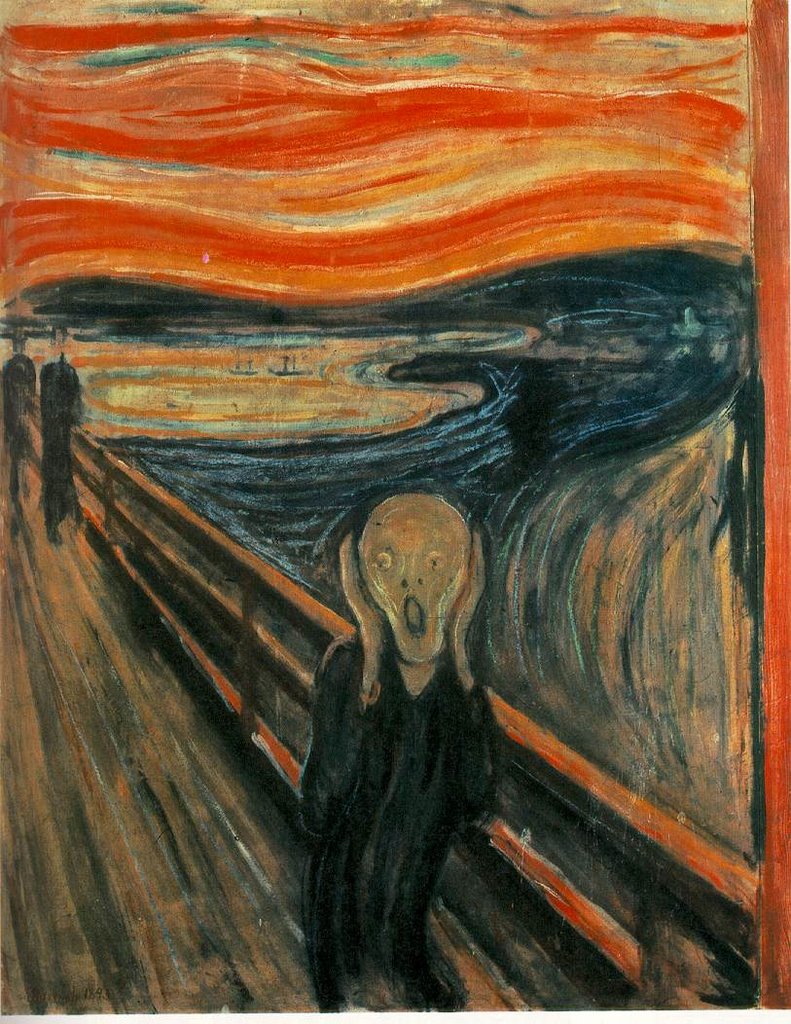
Don's vault - a large steel room, with access through a single door requiring Narang's palm print to deactivate the locks, the vault contains money, diamonds, cocaine, the infamous disc (a red diary in the original) with all those contacts, some ancient Asian sculptures, and - WAIT A MINUTE - is that Edward Munch's "The Scream"? The one that was stolen at gunpoint in August 2004, only to be recovered earlier this year? So we finally know who had it all that time the international hunt for the masterpiece was on...

Bachao - Don mera peechcha kar raha haiSecond thing of note - when Don spots Kamini (Kareena Kapoor) they are both in a nightclub in KL. The scene is incredibly reminiscent of the club scene from Dil Chahta Hai - lots of flashing strobe lights, a dance floor packed with clubbers, alcohol, and pulsating music....hmmm....that beat seems familiar.....hey wait a minute - it sounds like the one from Koi Kahe Kehta Rahe in the club scene in Dil Chahta Hai. Interesting way to build in a signature Mr. Akhtar...

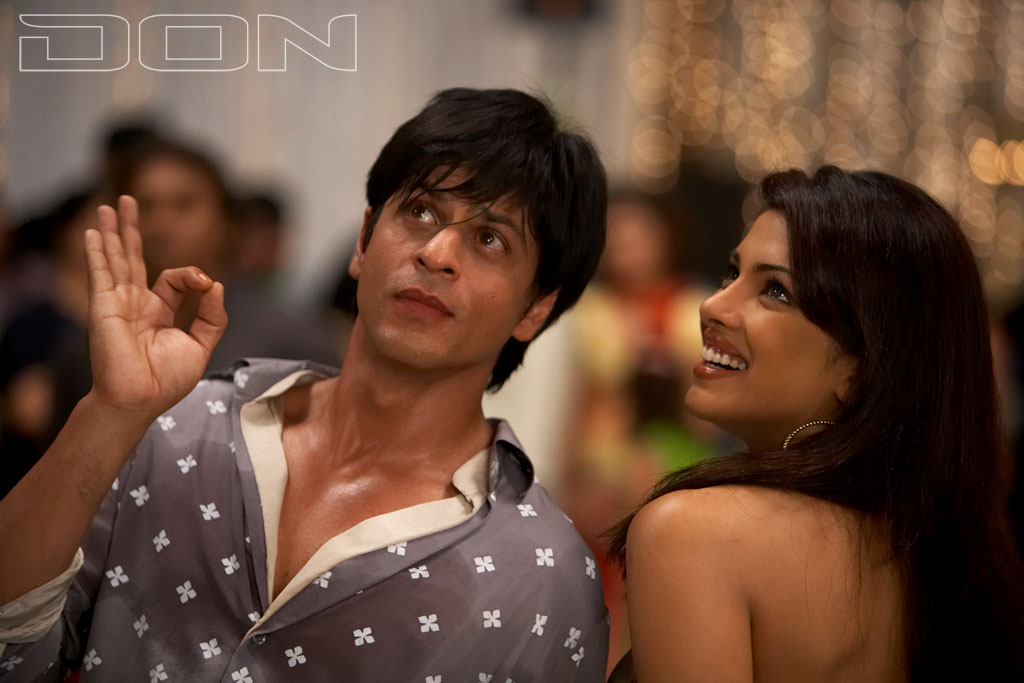
Third thing - Priyanka Chopra. This woman has come a long way, from being a wooden Ms India to a pretty competent screen presence (note the absence of the word actress) Chopra is beautiful, and also very photogenic. She also plays a convincing Roma, out to avenge her brother's death at Don's hands by infiltrating Don's gang. There were several moments when she was on screen that wolf whistles went off all over the cinema (at one point, a particularly distressed man kept wailing, "Sexy" at the screen until he was, I presume, either escorted out or passed out, because the noise died out after some point - I just hope he didn't stop because he had managed to "gratify" himself...)

Laakhon taare aasman mein, ek magar dhoonde na mila...Khaike Paan Banaraswalla - this song made the original movie, and in many ways also cemented Amitabh Bachchan's fan following in his own home state of Uttar Pradesh. Sadly, while King Khan does his best to emulate a paan chewing rustic from the Gangetic plains, high on bhaang and also on the tambaaku in his beeda, this is where you miss the old Bachchan. Khan throws some fairly energetic moves, while Chopra does a good job as well, but you can't help but remember the original. Having said that, I had never thought this particular song would do well as a karaoke number, but at one point, half the audience was going, "Hai, Hai, Haaai" with Don when he sang about ek kanya kuvaanri & ek meethi kataari.

Oh yeah - another good point in the movie is Arjun Rampal. Akhtar coaches out a believable performance from him; there are some creepy moments when he's locked in a coffin, and also when he's hunting down DCP Da Silva. Rampal's also looks convincing in the fight scenes, though his geeky IT consultant image jars just a bit.

Whistle Quotient - highest for Kareena Kapoor for her Yeh Mera Dil number, followed closely by Priyanka Chopra in a bathing suit. Isha Khoppikar didn't get much attention, but seriously, what do you expect when the woman's wearing a maternity frock?!

Isha, girl, you gotta talk to my designer next time...
Disbelief Quotient - pretty low, with the exception of Don flying through mid air like a Patriot missile to zoom in the guy with a parachute. Thankfully, the high wire walk by a lame man with two kids is replaced by a much more believable scene...

Overall Result - go watch it, for some good fun, good thrills and very slick production. Picture mast hai baap...

Images courtesy official movie website

Edward Munch's The Scream courtesy Wikipedia

Saturday, October 14, 2006

Thelma & Louise do Bollywood

Warning: This piece contains plot spoilers

There is a school of thought that believes that the true measure of whether a movie is great cinema or merely passing fare is whether or not there is that one screenshot that captures the ultimate essence of the entire film; one that becomes the leitmotif of the film. Hindi cinema has several such moments - scenes that have become emblematic of the film as a whole, as well as signposts along the filmmaker's career. Scenes such as Waheeda Rehman sleeping on the couch in Chaudhvin Ka Chand, Nargis hunting for food in the mud in Mother India, Manisha Koirala's burqa snagging on a tree and her flinging it aside in Bombay.

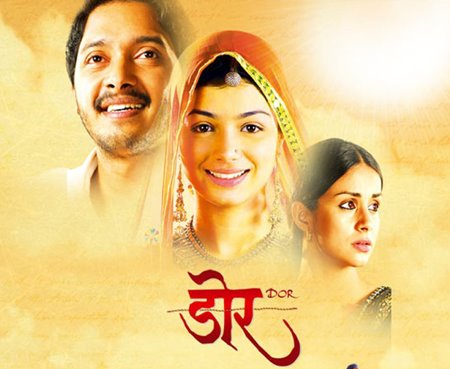
And today, I saw a similar scene - when Mira threw off her odhni in Dor.

One of the smaller, lower budget movies of the year, Dor is the latest offering from Nagesh Kukonoor, Indian cinema's NRI engineer turned India-returned filmmaker. After giving us some seriously low budget films like Hyderabad Blues, Kukunoor's growing stature has given him more funding, while each successive film has shown his maturing into a talented filmmaker.

Dor, is his most mature & well crafted movie. Compared to the raw amateurishness and boisterous enthusiasm (coupled with the pretty stilted acting) of his earlier ventures, his latest cinematic venture is a brilliantly executed work in understated, subtle film making. With a low-profile but competent cast, some extremely simple but powerful landscapes, and a very tight script, Kukunoor delivers a film that is worth seeing several times.

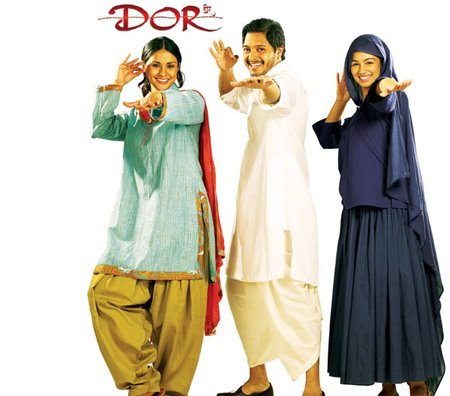
The film traces the journey of two women, Zeenat (Gul Panag) from Himachal Pradesh, Mira (Ayesha Tankia) from Rajasthan, on their journeys of separation, loss, friendship & liberation. Both women are married to husbands whom we see leaving for Saudi Arabia at the start of the movie. When it emerges that while in the Gulf, Mira's husband has died, ostensibly at the hands of Zeenat's husband, one woman is widowed while the other is left knowing her spouse is to be executed for murder. Zeenat's only hope is to obtain a pardon from the victim's wife, and for which she undertakes the arduous journey to the desert state to track down Mira and convince her to sign the pardon.

Dor has been labelled a feminist film, in the sense that the narrative is entirely focused on the two women who are central to the plot. From the start through to the end, the male characters in the film serve only to progress the plot, but are also merely incidental to it. Kukunoor almost takes Thelma & Louise and injects into it a distinctive "Indian-ness", in terms of aesthetics, plot as well as character development. Both Zeenat & Mira face very different circumstances, both from their western counterparts as well as from each other, differing in language, religion & perspective, but each is ultimately Indian. Kukunoor fleshes out the disparities between them easily, both through narrative and cinematography - Zeenat & Mira are as different as their respective homelands of verdant Himalayan mountains and the arid Rajasthani desert, but this difference does not detract from their instant recognition of a companion soul in the other.

Kajra re, kajra re, mere kaale kaale naina...Kukunoor also manages to inject his story telling with a healthy dose of cross referencing to mainstream Bollywood, lending a unique intertextuality to Dor. Several references through dialogue, many of them to contemporary films like Munnabhai MBBS & Bunty aur Babli, and the use of Hindi film songs (You are my Soniya, Kajra Re) also help Kukunoor develop aspects to his characters that would have been challenging to flesh out otherwise. You can immediately recognise in Mira every small town girl that learnt the steps to famous songs, to be performed at family festivals in front of cousins and at wedding sangeets, while the Behroopiya's mouthing of filmi dialogues marks him out in five seconds as that small town performer who entertains in villages with his impersonations. Furthermore, this intertextuality is both a testimony to the over-arching influence of popular cinema in the lives of millions, as well as a fitting tribute to Bollywood. Kukunoor has done well in not going down the route of many "auteurs" who look down on their mainstream counterparts; on the contrary, he uses them intelligently to sustain the sparseness of his own narrative.

The film thus etches the characters of Zeenat & Mira as much through dialogue & situation as through visualisation and imagery. If Zeenat's overt fearlessness, but inner hesitation, is most clearly etched out as she stands cornered by two men in a doorway, silently clutching a small stone to defend herself, Mira's tender innocence is seen most clearly as she dances quietly in a dusty alley to You Are My Soniya, dressed only in the dull blue of the widow. Later, her distress at having to take a decision that affects another human's life, when she herself has been denied the freedom to make decisions about her her own life, is beautifully acted out. Kukunoor chooses to utilise all the elements of cinema at his disposal, rather than relying only on verbalising everything that is to be portrayed. Thus, we see Mira's desolation in her clutching a pink shawl retrieved from her deceased husband's belongings, while Zeenat's independence is seen in her striding confidently through mountains on her own, unaccompanied, to go visit her in-laws or work on her house, hammer in hand.

This, then is what good cinema is about. This is what we have expected from our new breed of directors but have not seen much of until now. Kukunoor is to be lauded on reaching a stage of maturity in his film making through a relatively brief filmography. From Hyderabad Blues to Dor, he has crossed a big gap and has given us one of the best movies of the year, if not decade. Dor is a tribute to the strength of the individual will to make its own decisions and bear their consequences; to the power of humanity and to the complexity of human relations. This is a definite 6 out of 5 - go watch it or you'll miss out on some of the best cinema in years. And when its out, go buy the DVD and watch it again.

A final comment on the closing sequence. Kukunoor's intextuality continues, with a tearful departure on a small train station. Zeenat is leaving, and takes with her Mira's pardon. Unlike when Mira's husband was going, this is a solitary departure, alone, without the strictures or support of family ties.

Here, we are treated to a scene of greater pathos - Mira hands the pardon to Zeenat through the grilles of the train window. With that pardon, she hands across not only her forgiveness, but her desire for revenge, and in a sense, her one and only friend. For surely a married Zeenat will leave her to her own private desolation? What we see instead is a desi version of Thelma & Louise, with Zeenat holding out her hand for Mira to catch. But in this case, because this is a Hindi movie which is to have a happy ending, we are not looking at two friends about to drive off a cliff, but at two friends who are looking into the future.

It is virtually impossible to not think of Dilwale Dulhaniya Le Jaayenge, when Simran must beg her father to let her go with Rahul. Unlike Simran, Mira must not beg for freedom from her constraints as personified by anyone; her boundaries are made amply clear to her in her own widow's garb. Seeing in front of her a future, a life and a friendship, Mira chooses to run and board her own life.

And as she does so, she lets her dull blue widow's odhni fly away.

Images courtesy Apun Ka Choice

Tuesday, October 10, 2006

Woh Lamhe - Movies in the Hills

I went to see Woh Lamhe as part of my holiday experience (whenever I'm back in India, I will try to see at least two films in a cinema, and don't even try counting how many I see on television) Funnily enough, I went to see this particular one on Karva Chauth, that classic festival that remains an all time Bollywood favourite for songs, family gatherings and situations of love and separation. Since on this auspicious (?) occasion, people tend to stay at home with their families, I had the somewhat dubious privilege of sitting in an almost empty theatre to watch the latest offering from Mahesh Bhatt.

Woh Lamhe stars newcomers Shiney Ahuja & Kangana Ranaut, both of whom were also seen earlier this year in the moderate hit, Gangster. The film is a fictionalised account of the real life relationship between Mahesh Bhatt (the producer of this movie) and erstwhile Bollywood star Parveen Babi. Bhatt himself claimed that this movie was his way of "letting her go", after Babi's death in her Mumbai apartment last year. (Though it has to be said that the story has been rehashed several times, including in the classic, Arth).

To be fair though, in many ways, the Bhatt - Babi love story has been one of those almost mythical stories that have evolved in Bollywood. Something everyone knew, but nobody ever talked about. Babi's rise to success, from a newcomer from Junagarh to everyone's heart throb, her sudden illness, which many thought was drug addiction, and finally her disappearance for several years, only to return to the spotlight a ravaged, depleted woman.


Woh Lamhe tells that story, in a slightly fictionalised & updated form. Kangana Ranaut plays Sana Azim, an established Bollywood star from Junagarh(!), in an abusive & exploitative relationship with another film star. She meets struggling filmmaker Aditya Garewal at an event, Garewal provokes her to get some attention, and finally, many twists and turns later, the two end up working on the same movie. Garewal's intentions are only to use Azim as a stepping stone to success, but he ends up falling in love with her. The rest of the movie deals with the trauma of finding out that Azim is suffering from paranoid schizophrenia, and how the relationship flounders until finally Azim dies at the end of the movie, having successfully attempted suicide.

Now, this is not the most happy of films to watch - in fact, it can get quite heavy at times. Having said that, I was pleasantly surprised by several things about this movie. The script is decidedly mature, dealing with several issues, including schizophrenia, marital/relationship rape, and adult relationships. The script is reasonably tight, and the editing doesn't really make the movie seem too long. The soundtrack is also pretty good - I've been humming "Kya Mujhe Pyaar Hai" and I think its going onto my iPod very soon. More importantly, the songs aren't forced into the script for the sake of it, which makes them seem more natural.

Finally, a word about the lead pair. Both Kangana Ranaut & Shiney Ahuja are fairly new to the screen, and taking on such an emotionally fraught film can't have been easy. Having said that, both are reasonably good at their roles, but are definitely still young actors. Shiney is best when he doesn't speak - he can emote quite well with his eyes, but his dialogue delivery lets him down. He will have to learn that there is more to verbalising than shouting, and more importantly, trying to tone down the gruffness in his voice. Otherwise, he runs the risk of sounding like a Jat munda from inner Delhi. Ranaut is also quite immature as an actor, but doesn't shy away from getting into character.

Overall verdict? Probably deserves a 3/5 rating, with a good soundtrack, tight editing and clean dialogues.

Image courtesty Apun Ka Choice

Friday, October 06, 2006

Blogging Them Movies, & Then Some

I got an email alert today, notifying me that I'd been tagged by my fellow Bollywood blogger, Filmiholic (who's world, rumour has it, is totally filmi). Funnily enough, in a situation that reveals quite how small the blogging universe really is, Filmiholic was tagged by another blogging contact. Let's call him the romancing, wining & dining Bombay boy - seriously, his love life keeps me more entertained than my own...

So the key issue at hand here, and one that people have asked for my reflections on, is that query that lurks in the subconscious of every slightly megalomaniacal blogger:

Which movie characters should have had blogs and in what ways would their blogs have changed the movie plots?

Now, this is by no means an easy question. To start with, it requires me to think about ALL those movies that I've seen, and actually am able to remember. Then I'd have to think about ALL those different situations in which the plot development was NOT to my liking, and think about whether or not there would be scope for improving the obviously lacking story with a spot of blogging (hmmm....is that why its called blogspot?!)

Now there are two ways I could go about this - I could either go away, spend time thinking through a lot of different movies, ponder the issue ad inifinitum, and like the Indian Parliament, eventually establish a committee to review the problem and develop a cross party consensus on the matter (much like the much debated and ill fated Womens' Bill) The other, and probably speedier alternative, is to convince you that ANY movie could do with a bit of blogging, though whether the impact on the overall plot would be to our liking or not remains questionable.

Let's start with that classic (well, maybe not really) Hindi college film (well, before Rang De Basanti) Kuch Kuch Hota Hai. Anjali & Rahul & best friends, Anjali falls in love with Rahul, Rahul falls in love with Tina, Tina & Anjali are good friends, Anjali can't tell Rahul she loves him because he tells her first that he's in love with Tina, Tina & Rahul get married, Anjali leaves college to go home and never comes back. Tina & Rahul get married, Rahul gets Tina pregnant (well, maybe not in that order, but who knows) Tina gives birth to little Anjali, Tina dies, Rahul brings up little Anjali all by himself (well, maybe with a little help from his mom, Farida Jalal) and then years later runs into an Anjali that is mature, though still in love with him, even if she is trying to hide it by marrying a totally inappropriate Salman Khan (I mean, he's FLIRTING with him prospective mother-in-law! Seriously, how gross is that?!)


Add a little more grey hair please..
What if instead of running away, Anjali had started a blog (perhaps even imaginatively calling it, "I Love Rahul"?) She could have started it out as an anonymous poster, and even got all those girls that were in love with Rahul/Shah Rukh to post as guest columnists or "anonymous commentators", responding to imaginatively titled posts like "Why I love Rahul's high-lycra-content t-shirts" or "Gap - the only casuals brand for my man". Eventually Tina would emerge as the most hated woman on that site ("We love to hate Tina for her legs/hair/lips/skin/dress sense/lack of dress sense/sense of humour/lack of sense of humour/phoren-returned accent/fill in with appropriate hateful attribute") Finally, similar to Darr, we'd have the most psychotic group of stalkers baying for Tina's blood. Given that she died in the original movie anyway, we could add some more drama to her death through a gruesome murder in a misty forest, an abandoned little Anjali that is found and adopted by big Anjali, who rears her as her own until many years later, after she's old and wizened and so is a heartbroken Rahul, they run into each other. They start chatting, little Anjali comes into the scene, Rahul sees a locket that belonged to Tina on little Anjali's neck (perhaps little Anjali could be played by Rani Mukherjee to add that extra frisson of melodrama) and there is a thunderstruck revelation. Thunderclap, multiple camera frames and dramatic music later, there is a tearstruck reunion between father & daughter, and big Anjali & Rahul live on happily ever after (we could even use the song, "Tere Liye, hum hain jeeye, hoton ko seeye...")

What do you mean I'm being paranoid about your stalkers?!
Would that make Kuch Kuch Hota Hai a better movie? I think not.

And while we're at it, what if the guys from Brokeback Mountain had started blogging as well?! Ennis could start a blog titled, "Loved & Lost - How I tried to Quit Him", while Jack could start one called "Why Heath scored over Hathaway". They could write about hot and steamy nights out on the lake, on how "fishing" was no longer enough for them, why denim is the ultimate look for the new man and why the best way to use aftershave is after you've made sure you've moisturised after shaving. There could be special columns on the sexiest way to wear a Stetson, why you should always buy those plaid shirts a size too small (the better to have them hug your torso with) and why you could never be seen outside your house without a properly knotted bandana - think of "Queer Eye for the Cowboy". Soon, after becoming the latest storm in the gay blogging world with racy posts on their sexual escapades (Things That Go Hump in the Night, The Pup in my Tent), they could choose to run away from their restrictive lives and go live in San Francisco and run a cowboy themed men's boutique called "Bucking Bronco" or "Ride'Em Hard", or a steakhouse called "Montana", serving only the best beef the Mid West has to offer.


Love is a Force of Nature....and they say Bollywood has corny lines

Alternatively, what if the blog had been kept not by either of the leads, say by Heath Ledger's disgruntled wife? She could have started writing anonymously, tired of being the poor, overworked store clerk taking care of the babies while her husband was off with his boyfriend. She could have soon become the latest rage of the womens' blogging world, gaining sympathy and support through a variety of forums, being listed on Technorati & BBC World as the voice of the oppressed woman, get a feature listing on Slate, and finally an appearance (anonymous, of course) on Oprah.

Or if our blogger was actually the bitchy wife, Anne Hathaway (who frankly got away with being bitchy because (a) she's hot, (b) they were living off her poor ole Daddy's money and (c) she's hot)? What then would our blogging twist to the tale offer? Would she write a blog about her machine implements? About how she never suspected her rough & ready husband might like it up where the sun doesn't shine? About how even though she was married with a poor ole chile, all she really dreamt about was going out to a rodeo one last time, and sleeping with as many dirty blond cowboys in a haystack behind Big Jim's Saloon?

Yeah - I reckon this 'ere new fangled blogging thing ain't really helping this movie none, neither. Goddamn, I wish I could quit you, blog!


End point being - keep the blogging out of the movies (unless you actually MAKE one about blogging, like they did for email in You've Got Mail.)

But, let this not be the only view on the matter. So here's to some more bloggers: Beth, Maja, Velu & HeartCrossings. I'd personally love to see what these guys have to say...

Sunday, October 01, 2006

Dilwale Dulhaniya Le Jayenge

Just found a brilliant piece of writing on Salon - its a movie review from 2004, written about that fantastic movie, "Dilwale Dulhaniya Le Jayenge". I love that movie, and catch watch it a million times (perhaps not continuously, though)

Dilwale Dulhaniya Le Jayenge
Definitely check it out - its so worth it!

By the way, did anyone else cringe in My Big Fat Greek Wedding when the (non-Greek) boyfriend tells his (Greek) girlfriend that he wants to marry her with her family's approval?! Talk about stealing a scene!


Photo courtesy: Yash Raj Films

Thursday, September 07, 2006

Kahaan Se Aaya, Main Hoon Kaun?!

Almost a century after Max Mueller made Indology fashionable, the Germans have finally woken up from their slumber and looked eastwards again.

You could argue that the brief interlude that led to World War II and a lot of unpleasantness involving Austrian megalomaniacs called Hitler didn't let Germany lose the Indian touch (I mean, that whole swastika thing was hippy before the hippies were even around) but let's not go there. Recent events in India around shisha bars choosing Nazi themed decors has left a bad taste in a lot of mouths (and this without even trying the food there) so we could avoid that completely.

Getting back to the point - this post is all about how a new high gloss magazine has just recently been launched. Called, somewhat uninspiringly, "Indien Magazin", which translates literally into "India Magazine", published in German, it focuses exclusively on India & Bollywood.

The name is their only tragedy, so far as I can see (given that my knowledge of the German language is limited to a rusty one year at school, this is a totally ungrounded opinion, but hey, let's live dangerously) but you can't ignore the fact that at least their hearts are in the right place. The magazine purports to fill an important gap in contemporary German publishing - that for an informative periodical that targets a non-Indian German speaking readership wanting to learn more about India, its culture and its cinema. And as far as choosing a cover photo, you can't go wrong by picking the biggest name in the Indian fillum industry, Shah Rukh "King" Khan himself, in the biggest ever remake of the century, Don.

The magazine's first issue also has some DVD reviews, as well as retro pieces on classic cinema - there's a story about Umrao Jaan, as well as interview with Sanjay Dutt on his new movie (I'm guessing its Lage Raho Munnabhai) There also seems to be an article on the toy trains in Darjeeling (the title is a somewhat amateurish, "Full Steam Ahead into the Clouds", but the images it conjures are whimsical and definitely entertaining)

Fellow Bollywood blogger Michael already has a post on his site on it, but my German is too poor (and Altavista's Babelfish translator too random) to really make it work!

So let's see where "Indien Magazin" heads - so far, its a promising start. I'm going to see if I can figure out where to buy a copy to try to work my way through with a big dictionary and internet access readily available to run a Babelfish translation...

Check out the official magazine website here
Image from Indien Magazine

Monday, August 14, 2006

Kabhi Alvida Naa Kehna - The Full Scoop

We went to see Kabhi Alvida Naa Kehna yesterday at Odeon Whiteley’s. Normally, my local theatre for Hindi movies is the London Trocadero, but a quick check of the movie listings revealed that Karan Johar’s latest offering to the worldwide public was playing at a theatre less than ten minutes walk from where I lived.

Come on baby, light my fire...Whiteley’s is one of the oldest shopping malls in London, and is still owned by, (surprise surprise) the Whiteley family. The building is located on Queensway, in the heart of Bayswater, about five minutes from Paddington Station. The cinema is located on the top floor, and is surrounded by a little artificial piazza of restaurants, cafes and tapas bars. It makes a reasonably convivial setting to watch movies, and the added advantage of being walking distance from home makes it more attractive.

Bayswater itself is in an area with a sizeable Arab community, so it really shouldn’t have been surprising to see the theatre with a lot of Arabs there to watch the latest Bollywood blockbuster. And Karan Johar, true to form, didn’t disappoint.

The plot is nothing extraordinary. No reincarnations, no double roles, no snakes in aeroplanes or US presidents saving us from ourselves. No – this one is a classic love story with several long, winding twists. The story is essentially about how two people in unhappy, loveless marriages first seek friendship, and then companionship, from another person in the same situation. Things get complicated, and when circumstances come to a head (i.e. someone dies) the spouses are told that there’s been some philandering going on. Tears, a few slaps, some broken tableware and potted plants later, the two marriages are dissolved; the adulterers are banished from home & hearth and languish in solitude for three years before more forgiving ex-spouses decide to play Cupid. Add a damsel running down a train platform in a chiffon sari (it IS a Karan Johar movie) and hey presto, the unhappy lovers are finally reunited. The End!

So why bother watching this movie?

If you asked me this question,I'd have to say that KANK is a good movie, despite Johar's best efforts to turn it into a sobbing ham fest, but basically because of its willingness to bring sacred cows into the abattoir. Add to this its sexual maturity and, last but by no means least, the all out masala factor.

I'm rich, you're arrogant - let's make a superstarBefore you all jump down my throat, let me expand on these one by one. I think that to make a movie about infidelity is very difficult for an Indian audience, especially given our cultural obsessions with getting married. Marriage in India is raised to a ridiculous pedestal, where it is seen as a mixture of career choice and destined fate for women, and as an essential stepping stone on the road to personal & professional fulfilment for men. Marriage is sacred, above question, essential – and any dissenting opinion is viewed as being pernicious. I don’t need to elaborate on the stigma that we choose to attach to widowhood and divorce in India and Indian societies around the world. And to talk about issues within marriage, about emotional fulfilment & sexual compatibility, in such a framework is often challenging enough to be nearly impossible.

This is KANK’s Brownie Point One. It is not the first Hindi movie to talk about infidelity in marriage, and will invariably draw comparisons with movies like Silsila & Arth. But let’s also be fair and acknowledge that KANK talks about a different reality than either of those films. Other than the purely chronological differences, KANK addresses many more issues than either of those movies; issues that are very relevant for many young Indians today, but may not be openly acknowledged within popular culture. Infidelity is one of these issues, but there are also parallel stories – that of a domineering parent forcing his ambitions onto the child, the rigid gender stereotyping that takes place within families, the difficulties working mothers face in trying to balance work & family commitments. Johar has done a good job in managing to bring these into the equation. Perhaps that’s why I liked this movie (at least more than other reviewers!): because I think that its mainstreaming of issues that we don’t like to talk about in India is a good thing.

You want to HUG me, you want to KISS me, you want to LOVE me...

Brownie Point Two: I also appreciated the sexual maturity KANK displays. Unlike the endless tripe that recent risqué films like Girlfriend, Julie, Hawas, Aksar, and their ilk dole out, KANK deals with sex in a manner that isn’t prurient and quite matter of fact. (Parineeta also should be added to the category of Hindi movies that have a healthy attitude towards sex) That Abhishek Bachchan is frustrated by Rani Mukherji’s refusal to sleep with him is not something that is meant to titillate – it is a mature plot element for an adult relationship. There’s almost a sardonic element in the movie as Abhishek & Preity Zinta are in a club singing “Where’s the Party Tonight” while their respective spouses are checking into a hotel together. When Shah Rukh Khan & Rani Mukherji finally do sleep together, it is also not just about sex, but represents a significant & conscious act of betrayal for both of them; something that both the characters and the audience are kept aware of with a camera shot of their wedding rings as they go to sleep holding hands.

Brownie Point Three: KANK is at its heart a masala movie. In between dealing with some fairly serious issues, Johar takes the time to build in a few jokes and comedies of errors. The chance encounter that Rani & Shah Rukh have is good old fashioned sitcom style coincidences gone wrong, while the flirting between Amitabh Bachchan & Kirron Kher amusing, if sometimes making you feel like you overheard your grandfather talking dirty to your grandmother – not appropriate!


But alas, all is not well in brownie land. KANK is not without its flaws. Most importantly, Johar is in dire need of a brutal editor who will not indulge his sloppy story telling and learn to make his movies crisper. His narration is expansive, both visually & chronologically, which is fine as a style element, but like many other film makers, he is at risk of losing substance to his personal style. Make ‘em tighter, Karan!

Meri pant bhi sexy, meri shirt bhi sexy, yeh rumaal bhi sexy hai
Second flaw – Preity Zinta. No matter what others may say, I find her acting to be quite wooden, while she comes across as being incredibly arrogant. (A Himachali friend attributes this to her being from St. Bede's in Simla - since I've never met anyone from there, this might just be purely slanderous, in which case I apologise in advance). Also, perhaps it’s just me, but Preity looked pretty tubby in this movie (especially when she wore skirts – her legs are SO not worth showing off).

Third flaw – The costumes, especially Amitabh Bachchan’s! I think I’m going to go to Selfridges and ask them to ban Manish Malhotra from shopping there anymore. Abhishek seems to have snitched his Bluffmaster wardrobe, while Preity insists on showing off legs that really are meant for Patiala salwars (see second flaw above).

Fourth flaw – overdone glycerine. Rani is a brilliant actress (anyone who saw Black will attest to that fact) and to therefore have her only display of emotion as being stoic with large tears pouring out of her eyes really undervalues her ability and leaves us without the benefit of her full skills.

So overall verdict? Not the greatest movie, but passably good. Sticking with the 3 out of 5 rating. Go watch it if you want to. Don’t expect a tear jerking mammoth melodrama, but if you want to see a reasonably mature story told in a classic Bollywood style, KANK is your best bet!