Saturday, December 30, 2006

Kabul Express

War zones are usually as commonly seen in cinema as in real life. Directors & scriptwriters seem to enjoy placing utterly normal (read boring) characters into the surreal climates engendered by human conflict, only to use it as either a foil to demonstrate the extraordinary (read heroic) fortitude inherent in humans, or to demonstrate just how brutal and barbaric humans can be. Given the nature of war zones, it probably isn't too out of place to reflect on these two aspects of human nature - we're either heroes or villains when the shit hits the fan.

Kabul Express therefore is a bit unusual, and not just as a Bollywood movie. It's non-Hindi fillum quality is echoed by the brevity of the movie (a shocking 104 minutes) with a total lack of songs (only background music for short durations) and fairly skewed gender mix making romance impossible (3 guys, 1 woman - not even a love triangle possible). This movie is groundbreaking, simply because of its utter departure from well established norms of Hindi movie making. But the change in format alone isn't what makes Kabul Express unique.

The most important point to make about Kabul Express is that its not a war movie - it's a road movie set in a war zone. Kabul Express is the name of the trusty Toyota 4x4 that takes the travellers across the Afghan landscape - five individuals, with very different experiences, backgrounds and slants to the Afghan crisis, travelling across dramatic landscapes and inhospitable terrain to an unknown consequence at the end of the journey. The story is straightforward enough - two Indian journalists out in post 9/11 Afghanistan, looking to get that one interview with the Taliban. This is a rare journalistic opportunity for the two men, who are only too happy to get away from covering press conferences & domestic politics. They are accompanied by an opinionated Afghan and occasionally run into an American photojournalist, who is as hungry for a scoop as the two intrepid reporters. They eventually encounter their elusive target, a Pakistani member of the Taliban, and things get a little complicated as he takes them & their American rival/colleague hostage to cross the border to Pakistan. Kabul Express takes this story and explores how characters respond to these unusual circumstances.

The cast is fairly international; the casting director selected an actor from the same nationality as the character being filled. The result, possibly inadvertantly, is to add an extra layer to the acting process. The Indian journalists are as naive and bumbling as the actors who play them, the Afghan has a traumatised element about him, while the Pakistani Talib has this jaded, tired atmosphere about him. And while it may be a cliche, the American journalist is as indifferent to the circumstances and environs of her photo essay as George Bush seems to be.

The director, Kabir Khan, has made several documentaries in Afghanistan, and his feel and knowledge for the countryside and terrain is palpable. The dramatic, inhospitable and rugged terrain of Afghanistan is as much a character in this movie as any other, with some fantastic camera work capturing the ravages that war has brought upon this landscape.

But that is not what makes this movie unique. What is truly exceptional is how Khan has taken what is from the outside an extremely difficult & violence ridden conflict zone and found humanity, humour and compassion within. Most importantly, and in this one aspect Khan does not deviate from Hindi cinema, there is no demonisation of the terrorist. As we saw in Fanaa, Maachis & Dil Se, the "terrorist" is as human as any other character in the narrative - his motivations are never clear, but they are clearly separable from the violence that he engenders. Imraan Khan Afridi is as much a victim of the conflict as any other person, and his being a perpetrator of violencedoes not detract from this fact.

The movie has some brilliant dialogues, with my personal favorite being reference to "flowers blooming in the desert" (can't explain this joke - just watch for it when you watch the movie). Arshad Warsi plays the unwilling heroic cameraman to John Abraham's journalist, and walks away with the best footage. His comic timing and rueful takes on life give him the best lines in the entire movie. Abraham gets the more intense, and arguably less interesting, lines to spout. Khan takes a leaf out of Hollywood movies, and uses the movie to push as much pro-India propaganda as he can fit into his movie as any average Hollywood movie does for the USA. And in a reference that any Indian who has travelled in the Middle East can attest to, Hindi cinema is often the first and only bond that can be forged with people who do not speak your language, do not share your reality, but definitely share your memories of watching Zeenat Aman & Dharmendra.

But its not all action and comedy. The script writing is able to fit into some poignant references to the horrors of war, including briefly focusing on the problem of children maimed by landmines, the trauma of losing loved ones, and perhaps most powerfully, the pain of separation from family. There is a brief scene when the Talib goes to visit his daughter, married into an Afghan village, but who is ashamed of her father because he is part of the hated Taliban. The moment is beautifully, if poignantly, filmed, with not a single second seeming unnecessary or excessively melodramatic.

Almost paradoxically, the Pakistani mercenary ends up with the best footage and the most sympathy of all the characters - primarily because he is in a sense the only one who will be unable to exit the extenuating circumstances of the conflict. At one point, he wryly comments to the Indian journalists that they would not understand his actions or motivations, because their realities are different. And that one line captures the entire pathos of his existence - of the prison that his own life is for him, and how it is impossible to fathom the extent of entrapment that it engenders.


And this is what makes Kabul Express worth watching - for being able to emphasise the utter and often helpless humanity of us all in times of conflict, for being able to capture the ability of a human being to laugh and joke at the worst of times. Kabul Express could not have been an easy movie to make - filming an entire movie in a war torn country would takes something exceptional, and the entire film crew deserves to be applauded for taking on the challenge. But what is truly enjoyable is to recognise that their bravery was not misguided - the end product is well worth the effort.

Go see it - you won't be disappointed, unless you were expecting the Taliban or the Mujahideen to be performing item numbers in the mountains!

Movie seen at: Cineworld Haymarket, London
Movie images from: Yash Raj Films

I KANK stand it...

Fellow blogger and film addict Filmiholic wrote an article recently for India Abroad magazine, about the travails of watching Hindi movies outside India. She posted it on her blog this week, and you can read it here. Your's truly also has an honourable mention, where I had a chance to share my Kabhi Alvida Naa Kehna experience all over again...

Coming soon - a review of Kabul Express, as well as a summary of the best books I've read in the past month.

Monday, December 25, 2006

What I'm Listening To...

A brilliantly cold Christmas Day - it's early in the morning, and after an evening of watching Lord of the Rings, drinking wine & sitting by a fire with the Christmas tree in the corner, I'm up early today to enjoy the sounds of the church bells tolling in the distance...

America
Lyrics by Paul Simon & Art Garfunkel

Let us be lovers, we'll marry our fortunes together
I've got some real estate here in my bag
So we bought a pack of cigarettes and Mrs. Wagner pies
And we walked off to look for America
Kathy, I said as we boarded a greyhound in Pittsburgh
Michigan seems like a dream to me now
It took me four days to hitchhike from Saginaw
I've gone to look for America

Laughing on the bus
Playing games with the faces
She said the man in the gabardine suit was a spy
I said be careful his bow tie is really a camera

Toss me a cigarette, I think there's one in my raincoat
We smoked the last one an hour ago
So I looked at the scenery, she read her magazine
And the moon rose over an open field

Kathy, I'm lost, I said, though I knew she was sleeping
I'm empty and aching and I dont know why
Counting the cars on the New Jersey Turnpike
They've all gone to look for America
All gone to look for America

Merry Christmas!

Saturday, December 09, 2006

Chronicle of a Sati Foretold

The following review of With Krishna's Eyes is by Christopher Rollason, and appears on both the critic's and author's blog - it is syndicated here with their permission.

Sunny Singh’s new English-language novel, With Krishna’s Eyes, is a disturbing and eloquent exploration of the dark side of “Shining India”, in which the modern and globalised coexists cheek-by-jowl with the archaic and traditional, in a contradiction seemingly without issue and yet lived to the marrowbone by its intensely engaged characters. It confronts the vexed question of Indian modernity head-on, by boldly centring its plot on so controversial an issue as sati. In the process, it draws on the resources of Indian English and the Indian and non-Indian literary heritage to offer the reader an exploration of fear, in a specifically subcontinental context, that may justify its being taken as a highly original piece of what might be called “Indian Gothic”. The author, born in Varanasi, now lives in London: the global reach of her work may be deduced from the fact that With Krishna’s Eyes came out in Spanish translation (Sunny Singh was resident in Barcelona at the time) before it was published in English, while her earlier novel, Nani’s Book of Suicides (published in 2000 and also translated into Spanish) was awarded the Mar de Letras literary prize in Spain in 2003.

The title might already raise eyebrows, for the reader may legitimately ask whose are Krishna’s eyes. Krishna is in fact the novel’s female protagonist: women named Krishna are fairly rare, but they do exist. If a gender barrier is being crossed through this naming of the character, we discover that Sunny Singh’s Krishna, in many ways a warrior woman, is not without her resemblances to the Krishna the combatant sage of the Bhagavad Gita (though rather less so to the playful blue-skinned Krishna of the Puranas). The female Krishna of this novel is a warrior in the world of film-making, a US-educated member of a proud Rajput clan who is suddenly called on to make a documentary, all too non-fictional, about a willed and voluntary sati, the conscious choice of an educated woman at the beginning of the twenty-first century.

Forced as a matter of family honour and obligation to live this intense contradiction, Krishna finds herself accepting a major part in a drama which she does not approve of but tries her level hardest to understand. She herself is a globalised Indian who has recently emerged from an intimate relationship with Natchek, an NRI and financial consultant even more globalised than herself. Now, back home in her ancestral village east of Delhi, she comes face to face with Damayanti, a friend of her family’s: an educated, apparently modern woman, a graduate of Miranda House, Delhi, a Supreme Court lawyer who had in her time chosen a love marriage, a gadget-happy mobile phone owner, who nonetheless actively and obdurately campaigns for “her right to be sati” (145) as soon as her ailing husband leaves the world: “I have petitioned the court for permission to be sati, when my husband dies” (100).

The inevitability of Damayanti’s sati is etched into the reader’s consciousness from the very beginning – it is as certain to come to pass as the honour killing in Gabriel García Márquez’s Crónica de una muerte anunciada (Chronicle of a Death Foretold), a book to which Sunny Singh’s tale bears some resemblance. Krishna is impressed again and again with its necessity, by the familial pressure that descends on her from her grandfather, her sanyasi uncle, and, from beyond the grave, the voice of her late grandmother. It is a lesson of dharma, of unquestioned and unquestionable duty, of loyalty to family and clan. It is also the manifestation of a harsh and literal reading of the Bhagavad Gita and the homilies of Krishna’s divine namesake. Between this novel’s lines, one may hear the reverberation of the sacred text’s slokas, but we are talking about no benign or liberal interpretation of the concept of dharma. The voice of Krishna which we hear through and around the other Krishna is that which, in the Gita, declares sternly: “Through fixed devotion to Me, it is possible to know Me thus, O Arjuna, and seeing Me truly, to enter into Me, O vanquisher of foes” (Bhagavad Gita, 11-54). For Krishna’s relatives and for Damayanti herself, living in such a world of “fixed devotion”, the sati is as necessary as the elimination of the Kauravas. It is her grandmother who declares: “See Krishna, first we must do our duty. Follow dharma, and most times, it hurts. But to love something doesn’t mean to give up dharma” (91). Her uncle sings to the same tune: “Do what you have to do. That is the dharma of a warrior, right?” (283). Under such pressure, the young and modern woman comes to a large extent to internalise the ancestral belief-system herself.

It is as if Krishna the film-maker had to go through the ultimate anguish of living someone else’s sati under her own skin; and indeed, fear is a major element in the novel, signified as it happens through certain trappings of the Western Gothic transposed into the Indian context. Krishna has already lived through the trauma of 9-11, the quite literal explosion of American Gothic in all its darkness. Used to a New York where “two tall towers rose to the sky like the crowning jewels” (36), she suddenly comes to see the city as “a sinister killing place, full of smoke and death and suspicion” (41). Now, in India, Krishna is confronted with atavistic fears – “dark shadows that crowded my mind”, “long tongues of flame that flickered at the edges of my vision” (226). When first she enters Damayanti’s house, she finds herself in a darkly oppressive Gothic space that recalls Edgar Allan Poe’s House of Usher, as first experienced by its fear-struck narrator: “I was led discreetly through gloomy carpet covered halls, where the ancient, heavy furniture lay carelessly scattered through the rooms”. Damayanti, “on a low couch, leaning against the many cushions that were piled up behind her”, greets Krishna like a second Roderick Usher, to induct her into a world of ancestral oppression (98). Poe meets Rajput tradition, to generate an atmosphere of Indian Gothic that culminates in the scream that rises to the skies at the moment of the sati – a shriek that is not Damayanti’s but Krishna’s, “my scream that went on and on, forever in my head” (289).

Sunny Singh’s novel does not neglect the sociological and ideological aspects of the sati issue – the saffron militants who demonstrate for Damayanti, the leftists and secularists who oppose her, the local peasants and functionaries who end up worshipping her as a sati-mata. However, the experience of reading this book is that we are dealing not with a tract one way or the other, but with a textually mediated perception of an Indian reality, communicated through specifically literary effects and emotively charged creative language. Seeing the sati with Krishna’s eyes (those of the character and those of the god), reliving the dark tale through the Indian Gothic of Damayanti’s House of Usher, the reader of this novel, Indian or foreign, will sense something of globalised India’s attempt to come to terms with itself, its ancestral fears and still-alive past anxieties, its painful efforts to live through them once again in order, it may be, finally to exorcise them.

**
NB: the quotation from the Bhagavad Gita is from the version translated, edited and introduced by Vrinda Nabar and Shanta Tumkur (Ware, England: Wordsworth Classics, 1997).

You can read more of Christopher's works here
You can read Sunny's blog here

Sunday, November 26, 2006

Still around...

I probably should explain my disappearance for over a month from this blog. It's been a fairly hectic four weeks - between travelling, starting a new job, and also just not having very much to say. So I will be back folks - but I don't want to say something if its not worth saying....

Until the next significant post...

Friday, October 20, 2006

Don - A Darko of Another Kind

First things first - GAAARGGHH! Filmiholic's beaten me to it (yet again!), proving that her world is indeed more filmi than mine....

So (sniff) my excitement at being able to watch a Hindi movie on its first day of release (with the subsequent pleasure of posting a review) has been diluted somewhat. I shall take comfort in some small facts, which shall become clearer as you read on...

Watching any movie on the first day of its release in India has got to be a unique experience. Add to this the fact that the movie in question stars one of the biggest superstars of Bollywood (King Khan SRK himself) and opens the day before Diwali, and you're pretty much guaranteed that the theatre's going to be packed!

Check out the JACKET yaar!So it was with some discomfiture that I squeezed into my booked well in advance seat, settled down and got ready for the ride. I was curious to see how anyone, even as talented a film maker as Farhan Akhtar, would be able to do justice to an all-time classic like the original. It was always going to be difficult to do justice to a remake - how on earth could you recreate an entire film, capture the magic and also keep an audience engaged - especially one that already knew the story by heart?!

Akhtar went about this in a fairly smart way - he slicked it up, made some significant deviations from the original story, and retained just enough from the original to keep the association between the films alive. Rather than trying to replicate the original frame-by-frame, he's been reasonably liberal in reinterpreting and moulding the story to present an updated version to a much broader audience.

Don feels like more than a Bollywood movie. With some crisp editing, pretty spectacular stunts & props, and some gloss at the right places, Akhtar's packaged a slick flick for a global audience. This film is infinitely more accessible for non-Indian viewers, with its Hollywood-style action pace.

Just enough gloss at the right placesLike Dil Chahta Hai, this film is classically Akhtar, with an urban, contemporary feel to it. Akhtar's cinescape is that of the big modern city - and he has done Kuala Lumpur justice, where most of the film is shot. In fact, I wouldn't be surprised if Malaysia Tourism sends him a cheque for the best promotional video they could have asked for.

I'm not going to spend my time recounting the storyline here, because most people are too familiar with the original, and I don't want to give away too many of the new twists that Akhtar's factored into the story, because that makes the film more enjoyable. I will however go through some interesting things that caught my attention.

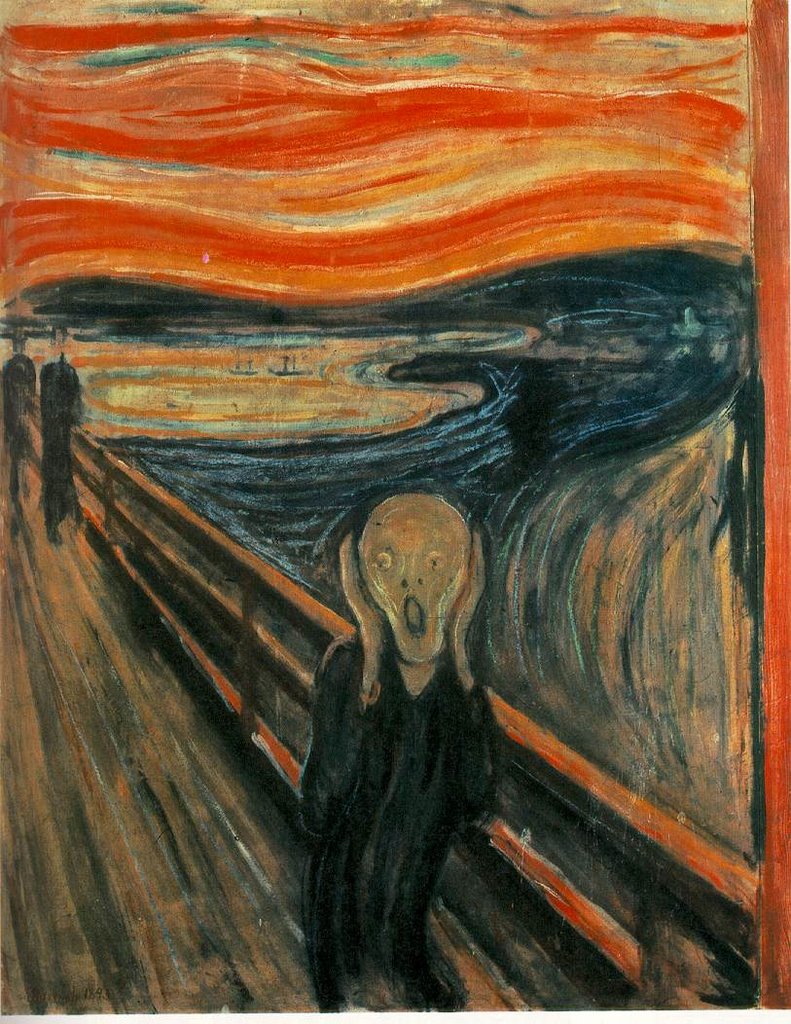
Don's vault - a large steel room, with access through a single door requiring Narang's palm print to deactivate the locks, the vault contains money, diamonds, cocaine, the infamous disc (a red diary in the original) with all those contacts, some ancient Asian sculptures, and - WAIT A MINUTE - is that Edward Munch's "The Scream"? The one that was stolen at gunpoint in August 2004, only to be recovered earlier this year? So we finally know who had it all that time the international hunt for the masterpiece was on...

Bachao - Don mera peechcha kar raha haiSecond thing of note - when Don spots Kamini (Kareena Kapoor) they are both in a nightclub in KL. The scene is incredibly reminiscent of the club scene from Dil Chahta Hai - lots of flashing strobe lights, a dance floor packed with clubbers, alcohol, and pulsating music....hmmm....that beat seems familiar.....hey wait a minute - it sounds like the one from Koi Kahe Kehta Rahe in the club scene in Dil Chahta Hai. Interesting way to build in a signature Mr. Akhtar...

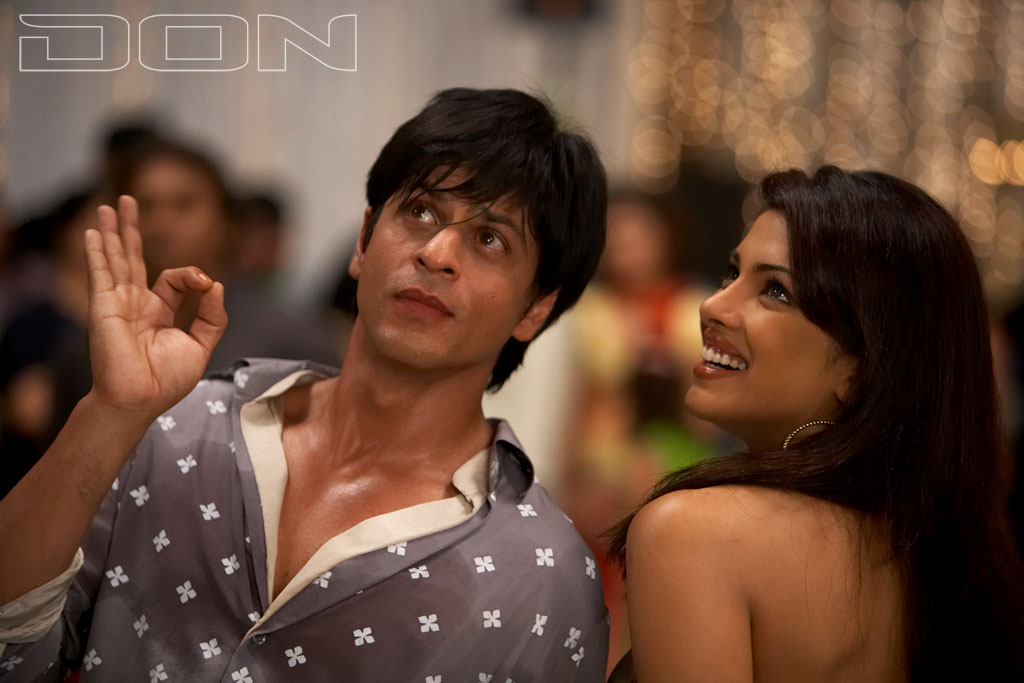
Third thing - Priyanka Chopra. This woman has come a long way, from being a wooden Ms India to a pretty competent screen presence (note the absence of the word actress) Chopra is beautiful, and also very photogenic. She also plays a convincing Roma, out to avenge her brother's death at Don's hands by infiltrating Don's gang. There were several moments when she was on screen that wolf whistles went off all over the cinema (at one point, a particularly distressed man kept wailing, "Sexy" at the screen until he was, I presume, either escorted out or passed out, because the noise died out after some point - I just hope he didn't stop because he had managed to "gratify" himself...)

Laakhon taare aasman mein, ek magar dhoonde na mila...Khaike Paan Banaraswalla - this song made the original movie, and in many ways also cemented Amitabh Bachchan's fan following in his own home state of Uttar Pradesh. Sadly, while King Khan does his best to emulate a paan chewing rustic from the Gangetic plains, high on bhaang and also on the tambaaku in his beeda, this is where you miss the old Bachchan. Khan throws some fairly energetic moves, while Chopra does a good job as well, but you can't help but remember the original. Having said that, I had never thought this particular song would do well as a karaoke number, but at one point, half the audience was going, "Hai, Hai, Haaai" with Don when he sang about ek kanya kuvaanri & ek meethi kataari.

Oh yeah - another good point in the movie is Arjun Rampal. Akhtar coaches out a believable performance from him; there are some creepy moments when he's locked in a coffin, and also when he's hunting down DCP Da Silva. Rampal's also looks convincing in the fight scenes, though his geeky IT consultant image jars just a bit.

Whistle Quotient - highest for Kareena Kapoor for her Yeh Mera Dil number, followed closely by Priyanka Chopra in a bathing suit. Isha Khoppikar didn't get much attention, but seriously, what do you expect when the woman's wearing a maternity frock?!

Isha, girl, you gotta talk to my designer next time...
Disbelief Quotient - pretty low, with the exception of Don flying through mid air like a Patriot missile to zoom in the guy with a parachute. Thankfully, the high wire walk by a lame man with two kids is replaced by a much more believable scene...

Overall Result - go watch it, for some good fun, good thrills and very slick production. Picture mast hai baap...

Images courtesy official movie website

Edward Munch's The Scream courtesy Wikipedia

Saturday, October 14, 2006

Thelma & Louise do Bollywood

Warning: This piece contains plot spoilers

There is a school of thought that believes that the true measure of whether a movie is great cinema or merely passing fare is whether or not there is that one screenshot that captures the ultimate essence of the entire film; one that becomes the leitmotif of the film. Hindi cinema has several such moments - scenes that have become emblematic of the film as a whole, as well as signposts along the filmmaker's career. Scenes such as Waheeda Rehman sleeping on the couch in Chaudhvin Ka Chand, Nargis hunting for food in the mud in Mother India, Manisha Koirala's burqa snagging on a tree and her flinging it aside in Bombay.

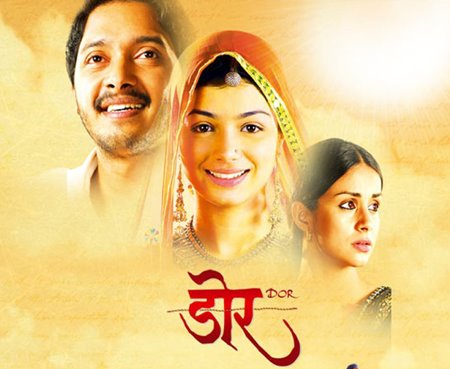
And today, I saw a similar scene - when Mira threw off her odhni in Dor.

One of the smaller, lower budget movies of the year, Dor is the latest offering from Nagesh Kukonoor, Indian cinema's NRI engineer turned India-returned filmmaker. After giving us some seriously low budget films like Hyderabad Blues, Kukunoor's growing stature has given him more funding, while each successive film has shown his maturing into a talented filmmaker.

Dor, is his most mature & well crafted movie. Compared to the raw amateurishness and boisterous enthusiasm (coupled with the pretty stilted acting) of his earlier ventures, his latest cinematic venture is a brilliantly executed work in understated, subtle film making. With a low-profile but competent cast, some extremely simple but powerful landscapes, and a very tight script, Kukunoor delivers a film that is worth seeing several times.

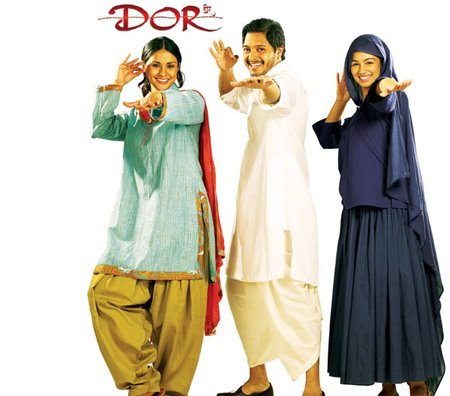
The film traces the journey of two women, Zeenat (Gul Panag) from Himachal Pradesh, Mira (Ayesha Tankia) from Rajasthan, on their journeys of separation, loss, friendship & liberation. Both women are married to husbands whom we see leaving for Saudi Arabia at the start of the movie. When it emerges that while in the Gulf, Mira's husband has died, ostensibly at the hands of Zeenat's husband, one woman is widowed while the other is left knowing her spouse is to be executed for murder. Zeenat's only hope is to obtain a pardon from the victim's wife, and for which she undertakes the arduous journey to the desert state to track down Mira and convince her to sign the pardon.

Dor has been labelled a feminist film, in the sense that the narrative is entirely focused on the two women who are central to the plot. From the start through to the end, the male characters in the film serve only to progress the plot, but are also merely incidental to it. Kukunoor almost takes Thelma & Louise and injects into it a distinctive "Indian-ness", in terms of aesthetics, plot as well as character development. Both Zeenat & Mira face very different circumstances, both from their western counterparts as well as from each other, differing in language, religion & perspective, but each is ultimately Indian. Kukunoor fleshes out the disparities between them easily, both through narrative and cinematography - Zeenat & Mira are as different as their respective homelands of verdant Himalayan mountains and the arid Rajasthani desert, but this difference does not detract from their instant recognition of a companion soul in the other.

Kajra re, kajra re, mere kaale kaale naina...Kukunoor also manages to inject his story telling with a healthy dose of cross referencing to mainstream Bollywood, lending a unique intertextuality to Dor. Several references through dialogue, many of them to contemporary films like Munnabhai MBBS & Bunty aur Babli, and the use of Hindi film songs (You are my Soniya, Kajra Re) also help Kukunoor develop aspects to his characters that would have been challenging to flesh out otherwise. You can immediately recognise in Mira every small town girl that learnt the steps to famous songs, to be performed at family festivals in front of cousins and at wedding sangeets, while the Behroopiya's mouthing of filmi dialogues marks him out in five seconds as that small town performer who entertains in villages with his impersonations. Furthermore, this intertextuality is both a testimony to the over-arching influence of popular cinema in the lives of millions, as well as a fitting tribute to Bollywood. Kukunoor has done well in not going down the route of many "auteurs" who look down on their mainstream counterparts; on the contrary, he uses them intelligently to sustain the sparseness of his own narrative.

The film thus etches the characters of Zeenat & Mira as much through dialogue & situation as through visualisation and imagery. If Zeenat's overt fearlessness, but inner hesitation, is most clearly etched out as she stands cornered by two men in a doorway, silently clutching a small stone to defend herself, Mira's tender innocence is seen most clearly as she dances quietly in a dusty alley to You Are My Soniya, dressed only in the dull blue of the widow. Later, her distress at having to take a decision that affects another human's life, when she herself has been denied the freedom to make decisions about her her own life, is beautifully acted out. Kukunoor chooses to utilise all the elements of cinema at his disposal, rather than relying only on verbalising everything that is to be portrayed. Thus, we see Mira's desolation in her clutching a pink shawl retrieved from her deceased husband's belongings, while Zeenat's independence is seen in her striding confidently through mountains on her own, unaccompanied, to go visit her in-laws or work on her house, hammer in hand.

This, then is what good cinema is about. This is what we have expected from our new breed of directors but have not seen much of until now. Kukunoor is to be lauded on reaching a stage of maturity in his film making through a relatively brief filmography. From Hyderabad Blues to Dor, he has crossed a big gap and has given us one of the best movies of the year, if not decade. Dor is a tribute to the strength of the individual will to make its own decisions and bear their consequences; to the power of humanity and to the complexity of human relations. This is a definite 6 out of 5 - go watch it or you'll miss out on some of the best cinema in years. And when its out, go buy the DVD and watch it again.

A final comment on the closing sequence. Kukunoor's intextuality continues, with a tearful departure on a small train station. Zeenat is leaving, and takes with her Mira's pardon. Unlike when Mira's husband was going, this is a solitary departure, alone, without the strictures or support of family ties.

Here, we are treated to a scene of greater pathos - Mira hands the pardon to Zeenat through the grilles of the train window. With that pardon, she hands across not only her forgiveness, but her desire for revenge, and in a sense, her one and only friend. For surely a married Zeenat will leave her to her own private desolation? What we see instead is a desi version of Thelma & Louise, with Zeenat holding out her hand for Mira to catch. But in this case, because this is a Hindi movie which is to have a happy ending, we are not looking at two friends about to drive off a cliff, but at two friends who are looking into the future.

It is virtually impossible to not think of Dilwale Dulhaniya Le Jaayenge, when Simran must beg her father to let her go with Rahul. Unlike Simran, Mira must not beg for freedom from her constraints as personified by anyone; her boundaries are made amply clear to her in her own widow's garb. Seeing in front of her a future, a life and a friendship, Mira chooses to run and board her own life.

And as she does so, she lets her dull blue widow's odhni fly away.

Images courtesy Apun Ka Choice

Thursday, October 12, 2006

Orhan & his Istanbul

The Swedish Academy announced today that it had awarded the 10 million Swedish kroner Nobel Prize for Literature to controversial Turkish author Orhan Pamuk. Of the many writers who were out there and notable contenders for the Nobel, I could not think of a more suitable winner than Pamuk.

The award citation read, "In the quest for the melancholic soul of his native city, (Pamuk) has discovered new symbols for the clash and interlacing of cultures."

Perhaps this, then, is Pamuk's greatest legacy. Born in a staunchly nationalist Turkey, the memories of Ottoman decline fresh in its mind, and the glory of Kemal Ataturk at the forefront of the national consciousness, Pamuk could be the Cassandra of modern Turkey. His has been the voice of prophecies and quiet introspection, and one that has been incredibly divisive internally. His work has attracted much attention, and a great deal of criticism, with some considering Pamuk to represent a vision of Turkey that is palatable to the West, but which it actually is not. His mention of the massacres of Kurds & Armenians has not gone down well in Turkey either. Pamuk has recently been victim of a lawsuit, brought to court by nationalist Turkish lawyers for insulting the Turkish nation state by accepting the genocides. In fact, its probably no coincidence that Pamuk won the prize in the same year that he faced the lawsuit - many Turks would probably also feel that the lawsuit itself might be the only reason for his winning the award at all.

Pamuk has continually chosen to depict the dichotomies of tradition and modernity and their conflicts within Turkish consciousness in most of his work. His work has focused on more easily identifiable themes, such as the syncretism of Istanbul and its transition from a centuries old capital to a simple commercial city in Istanbul or My Name is Red. He has also chosen to delve deeper into the issues of identity formation and constructivist identities that operate at multiple levels in The White Castle, Snow & The Black Book. There is also a recurrent mystic quality to his writings, whether in his descriptions of art as a means to reach God in My Name is Red, or in the power of books to transform lives (The Black Book, The New Life).

But for me, none of this is anything more than an intellectual exercise.For me, as a non - Turk, non - European, perhaps some of the complexities in his writing are inaccesible. I am definitely impartial to most of the controversies surrounding his work. Pamuk became one of my favourite authors, and the reasons for that were simple. He opened my eyes to his beloved city, Istanbul.

A city that has long fascinated me, I was intrigued by a place that is poised between Europe & Asia, historically, geographically, culturally. I wanted to see how Istanbul, for many centuries a great city, has dealt with no longer being the centre of the known world, where different cultures, empires, societies would meet in the original melting pot.

Pamuk helped answer some of those questions for me. Through his writings, I could trace the transition that Istanbul & Turkey have undergone over the past forty years - from a slow decline of Ottoman tradition, to the steady growth of European style secularism, with recent years seeing a resurgence of Islamism. His work helped me discern the fine divisions that existed between different factions within Turkey and their views of how Turkey should be; how it veered towards a modern, outward looking nation that is increasingly global & consciously European in outlook, against the backdrop of a strong Ottoman legacy, a distinctly Asian heritage and a syncretic society that saw many religions and ethnicities coexist within a distinctly Islamic framework.

The first Pamuk novel I read was his classic, My Name is Red. A historic murder mystery, set in medieval Istanbul, it brilliantly etches the strongly divergent views on art & representation between the Islamic & European worlds. At the centre of the narrative is this discord, of how long established traditions are threatened by new trends brought east by Genoese merchants, of how the quest for modernity can be so easily shattered by the tyranny of tradition. My Name is Red sketched for me a view of an Istanbul that was redolent of power and grandeur, but that was laced with a seamy underside of political intrigue & stifling traditional conservatism, as well as a city that was essentially divided between its European & Asian halves, psychologically as well as geographically.

I read My Name is Red & Istanbul before I visited Istanbul. But Pamuk's writing had painted a glorious picture for me, had opened my eyes to the multifarious realities that make up that uber-city, had prepared me for the schizophrenia that was to confront me at every step. I learnt not to blink at the sight of a woman in a full chador, only her eyes visible, walk down Istaklal Caddesi and pass several open air cafes, their tables occupied by several gorgeous young women, blond, in low cut tops, chatting and smoking cigarettes. I learnt to expect Turks to look Caucasian, Arab, Persian. I learnt that the architecture in Istanbul was a glorious cacophony of different styles, the older Ottoman heritage clearly showing its Mongol ascendancy, while more recent constructions spoke of rococo & Baroque influences. I learnt that it was normal for people to live in Asia and work in Europe, and cross that great divide twice a day on their way to work.

Pamuk's writing taught me, before I had even stepped foot in his city, that if you were in Istanbul, your name, too, would soon be Red. And for that alone, I applaud Pamuk on his Nobel prize - rarely has an award been so well deserved.

Tuesday, October 10, 2006

Woh Lamhe - Movies in the Hills

I went to see Woh Lamhe as part of my holiday experience (whenever I'm back in India, I will try to see at least two films in a cinema, and don't even try counting how many I see on television) Funnily enough, I went to see this particular one on Karva Chauth, that classic festival that remains an all time Bollywood favourite for songs, family gatherings and situations of love and separation. Since on this auspicious (?) occasion, people tend to stay at home with their families, I had the somewhat dubious privilege of sitting in an almost empty theatre to watch the latest offering from Mahesh Bhatt.

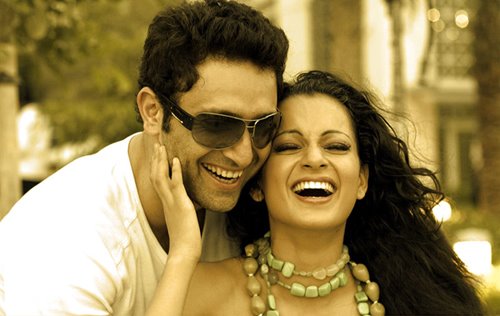
Woh Lamhe stars newcomers Shiney Ahuja & Kangana Ranaut, both of whom were also seen earlier this year in the moderate hit, Gangster. The film is a fictionalised account of the real life relationship between Mahesh Bhatt (the producer of this movie) and erstwhile Bollywood star Parveen Babi. Bhatt himself claimed that this movie was his way of "letting her go", after Babi's death in her Mumbai apartment last year. (Though it has to be said that the story has been rehashed several times, including in the classic, Arth).

To be fair though, in many ways, the Bhatt - Babi love story has been one of those almost mythical stories that have evolved in Bollywood. Something everyone knew, but nobody ever talked about. Babi's rise to success, from a newcomer from Junagarh to everyone's heart throb, her sudden illness, which many thought was drug addiction, and finally her disappearance for several years, only to return to the spotlight a ravaged, depleted woman.


Woh Lamhe tells that story, in a slightly fictionalised & updated form. Kangana Ranaut plays Sana Azim, an established Bollywood star from Junagarh(!), in an abusive & exploitative relationship with another film star. She meets struggling filmmaker Aditya Garewal at an event, Garewal provokes her to get some attention, and finally, many twists and turns later, the two end up working on the same movie. Garewal's intentions are only to use Azim as a stepping stone to success, but he ends up falling in love with her. The rest of the movie deals with the trauma of finding out that Azim is suffering from paranoid schizophrenia, and how the relationship flounders until finally Azim dies at the end of the movie, having successfully attempted suicide.

Now, this is not the most happy of films to watch - in fact, it can get quite heavy at times. Having said that, I was pleasantly surprised by several things about this movie. The script is decidedly mature, dealing with several issues, including schizophrenia, marital/relationship rape, and adult relationships. The script is reasonably tight, and the editing doesn't really make the movie seem too long. The soundtrack is also pretty good - I've been humming "Kya Mujhe Pyaar Hai" and I think its going onto my iPod very soon. More importantly, the songs aren't forced into the script for the sake of it, which makes them seem more natural.

Finally, a word about the lead pair. Both Kangana Ranaut & Shiney Ahuja are fairly new to the screen, and taking on such an emotionally fraught film can't have been easy. Having said that, both are reasonably good at their roles, but are definitely still young actors. Shiney is best when he doesn't speak - he can emote quite well with his eyes, but his dialogue delivery lets him down. He will have to learn that there is more to verbalising than shouting, and more importantly, trying to tone down the gruffness in his voice. Otherwise, he runs the risk of sounding like a Jat munda from inner Delhi. Ranaut is also quite immature as an actor, but doesn't shy away from getting into character.

Overall verdict? Probably deserves a 3/5 rating, with a good soundtrack, tight editing and clean dialogues.

Image courtesty Apun Ka Choice

Friday, October 06, 2006

Blogging Them Movies, & Then Some

I got an email alert today, notifying me that I'd been tagged by my fellow Bollywood blogger, Filmiholic (who's world, rumour has it, is totally filmi). Funnily enough, in a situation that reveals quite how small the blogging universe really is, Filmiholic was tagged by another blogging contact. Let's call him the romancing, wining & dining Bombay boy - seriously, his love life keeps me more entertained than my own...

So the key issue at hand here, and one that people have asked for my reflections on, is that query that lurks in the subconscious of every slightly megalomaniacal blogger:

Which movie characters should have had blogs and in what ways would their blogs have changed the movie plots?

Now, this is by no means an easy question. To start with, it requires me to think about ALL those movies that I've seen, and actually am able to remember. Then I'd have to think about ALL those different situations in which the plot development was NOT to my liking, and think about whether or not there would be scope for improving the obviously lacking story with a spot of blogging (hmmm....is that why its called blogspot?!)

Now there are two ways I could go about this - I could either go away, spend time thinking through a lot of different movies, ponder the issue ad inifinitum, and like the Indian Parliament, eventually establish a committee to review the problem and develop a cross party consensus on the matter (much like the much debated and ill fated Womens' Bill) The other, and probably speedier alternative, is to convince you that ANY movie could do with a bit of blogging, though whether the impact on the overall plot would be to our liking or not remains questionable.

Let's start with that classic (well, maybe not really) Hindi college film (well, before Rang De Basanti) Kuch Kuch Hota Hai. Anjali & Rahul & best friends, Anjali falls in love with Rahul, Rahul falls in love with Tina, Tina & Anjali are good friends, Anjali can't tell Rahul she loves him because he tells her first that he's in love with Tina, Tina & Rahul get married, Anjali leaves college to go home and never comes back. Tina & Rahul get married, Rahul gets Tina pregnant (well, maybe not in that order, but who knows) Tina gives birth to little Anjali, Tina dies, Rahul brings up little Anjali all by himself (well, maybe with a little help from his mom, Farida Jalal) and then years later runs into an Anjali that is mature, though still in love with him, even if she is trying to hide it by marrying a totally inappropriate Salman Khan (I mean, he's FLIRTING with him prospective mother-in-law! Seriously, how gross is that?!)


Add a little more grey hair please..
What if instead of running away, Anjali had started a blog (perhaps even imaginatively calling it, "I Love Rahul"?) She could have started it out as an anonymous poster, and even got all those girls that were in love with Rahul/Shah Rukh to post as guest columnists or "anonymous commentators", responding to imaginatively titled posts like "Why I love Rahul's high-lycra-content t-shirts" or "Gap - the only casuals brand for my man". Eventually Tina would emerge as the most hated woman on that site ("We love to hate Tina for her legs/hair/lips/skin/dress sense/lack of dress sense/sense of humour/lack of sense of humour/phoren-returned accent/fill in with appropriate hateful attribute") Finally, similar to Darr, we'd have the most psychotic group of stalkers baying for Tina's blood. Given that she died in the original movie anyway, we could add some more drama to her death through a gruesome murder in a misty forest, an abandoned little Anjali that is found and adopted by big Anjali, who rears her as her own until many years later, after she's old and wizened and so is a heartbroken Rahul, they run into each other. They start chatting, little Anjali comes into the scene, Rahul sees a locket that belonged to Tina on little Anjali's neck (perhaps little Anjali could be played by Rani Mukherjee to add that extra frisson of melodrama) and there is a thunderstruck revelation. Thunderclap, multiple camera frames and dramatic music later, there is a tearstruck reunion between father & daughter, and big Anjali & Rahul live on happily ever after (we could even use the song, "Tere Liye, hum hain jeeye, hoton ko seeye...")

What do you mean I'm being paranoid about your stalkers?!
Would that make Kuch Kuch Hota Hai a better movie? I think not.

And while we're at it, what if the guys from Brokeback Mountain had started blogging as well?! Ennis could start a blog titled, "Loved & Lost - How I tried to Quit Him", while Jack could start one called "Why Heath scored over Hathaway". They could write about hot and steamy nights out on the lake, on how "fishing" was no longer enough for them, why denim is the ultimate look for the new man and why the best way to use aftershave is after you've made sure you've moisturised after shaving. There could be special columns on the sexiest way to wear a Stetson, why you should always buy those plaid shirts a size too small (the better to have them hug your torso with) and why you could never be seen outside your house without a properly knotted bandana - think of "Queer Eye for the Cowboy". Soon, after becoming the latest storm in the gay blogging world with racy posts on their sexual escapades (Things That Go Hump in the Night, The Pup in my Tent), they could choose to run away from their restrictive lives and go live in San Francisco and run a cowboy themed men's boutique called "Bucking Bronco" or "Ride'Em Hard", or a steakhouse called "Montana", serving only the best beef the Mid West has to offer.


Love is a Force of Nature....and they say Bollywood has corny lines

Alternatively, what if the blog had been kept not by either of the leads, say by Heath Ledger's disgruntled wife? She could have started writing anonymously, tired of being the poor, overworked store clerk taking care of the babies while her husband was off with his boyfriend. She could have soon become the latest rage of the womens' blogging world, gaining sympathy and support through a variety of forums, being listed on Technorati & BBC World as the voice of the oppressed woman, get a feature listing on Slate, and finally an appearance (anonymous, of course) on Oprah.

Or if our blogger was actually the bitchy wife, Anne Hathaway (who frankly got away with being bitchy because (a) she's hot, (b) they were living off her poor ole Daddy's money and (c) she's hot)? What then would our blogging twist to the tale offer? Would she write a blog about her machine implements? About how she never suspected her rough & ready husband might like it up where the sun doesn't shine? About how even though she was married with a poor ole chile, all she really dreamt about was going out to a rodeo one last time, and sleeping with as many dirty blond cowboys in a haystack behind Big Jim's Saloon?

Yeah - I reckon this 'ere new fangled blogging thing ain't really helping this movie none, neither. Goddamn, I wish I could quit you, blog!


End point being - keep the blogging out of the movies (unless you actually MAKE one about blogging, like they did for email in You've Got Mail.)

But, let this not be the only view on the matter. So here's to some more bloggers: Beth, Maja, Velu & HeartCrossings. I'd personally love to see what these guys have to say...

Tuesday, October 03, 2006

Homeward Bound

I'm on the morning flight from London to Delhi today!

With a cool three weeks of holiday to be spent in India, I'm excited, happy and already looking at a packed social calendar. The best thing is that I will be spending Diwali with my parents - something I haven't been able to do since 2002. It's not as if I haven't seen them in the interim; but being able to spend the festivals with family is a big thing (if you don't believe me, might I point you towards the multi-million dollar Hollywood industry that each year produces several major Christmas movies extolling the importance of family values, togetherness, peace on the earth and goodwill to men?)

So the next few weeks of blogdom will be written from India - how cool is that?!

Sunday, October 01, 2006

Dilwale Dulhaniya Le Jayenge

Just found a brilliant piece of writing on Salon - its a movie review from 2004, written about that fantastic movie, "Dilwale Dulhaniya Le Jayenge". I love that movie, and catch watch it a million times (perhaps not continuously, though)

Dilwale Dulhaniya Le Jayenge
Definitely check it out - its so worth it!

By the way, did anyone else cringe in My Big Fat Greek Wedding when the (non-Greek) boyfriend tells his (Greek) girlfriend that he wants to marry her with her family's approval?! Talk about stealing a scene!


Photo courtesy: Yash Raj Films

Saturday, September 30, 2006

Water under the Bridge

This week saw the announcement of the submissions from several different countries for the Best International Film category at the Annual Academy Awards. India has chosen to submit Rang De Basanti, while Canada has submitted Water. There is speculation around whether Almodovar will make it as Spain's entry yet again for his Penelope Cruz starrer, Volver, while German movie The Lives of Others is a hot favourite for winning this year.

Water managed to make it through as a Canadian entry on a technicality. After last year's Italian entry, Private, was declared ineligible because it featured dialogue in Arabic & Hebrew, but not Italian, this year's rules have allowed films to use any language, so long as the primary language is not English. With this increased flexibility, and thanks to Deepa Mehta, the film's director, being a Canadian citizen, Water has been officially submitted as Canada's entry.

Alas, an Oscar nomination, or even an award, does not a good movie make. Water is a movie that started out with great hope, but ended up lacking impact. The real tragedy is that Water failed despite some excellent actors, good cinematography and a powerful soundtrack.

Set in pre-Independence India, Water focuses on the lives of widows in a charitable home in Varanasi, where they are sent, once their husbands die, to live lives of denial, penitence and restraint. The entry of a young & feisty child-widow, Chuhiya (played remarkably well by Sri Lankan child actor Sarala) throws the lives of the other residents into turmoil, challenging long standing convictions and traditions. The situation is further complicated by the arrival of a young idealist, who falls in love with one of the widows. Several complications & one dead body later, the movie ends with the child-widow being sent off with the idealist on a train where Mahatma Gandhi has been preaching to the masses.

Water was a movie with great promise, and could have been a great movie. It is let down by several factors - most strikingly the lead cast. Both Lisa Ray & John Abraham cannot communicate in Hindi, and when Hindi, especially the lilting cadence of eastern UP, is chosen as the language of the film, finding actors who are convincing is critical. Unfortunately, Ray's inability to articulate herself, or frankly emote, makes the movie appear completely trivial and amateurish. I was frankly surprised by Mehta's casting - its one thing to cast Ray in a movie like Bollywood Hollywood where not much regard for the craft of acting is necessary, but in movies purportedly as dramatic as Water, I would expected better casting.

This incredible goof up in casting is made even more infuriating by the presence of some excellent actors, whose craven under-utilisation makes your teeth grate in frustration. Actors like Seema Biswas, Kulbhushan Kharbanda & Raghubir Yadav make noteworthy appearances in the movie, but despite their heroic efforts are unable to save the movie from descending into abject inanity. The scene where Kalyani, played by Ray, chooses to drown herself in the river is totally devoid of any sentiment, primarily because I found it quite challenging to feel any emotion watching a mannequin swathed in white immersing itself in dark blue water.

What really grates is that it didn't have to be this way. Mehta is capable of making good movies. Earth, the second of her Elements trilogy and based on Bapsi Sidhwa's novel, Cracking Earth, was a good example of her abilities, as was her earlier venture, Sam & Me. Water, just goes to prove that no matter how politically controversial, only good filmmaking can make a good film. Mehta had originally cast the superb Nandita Das & Shabana Azmi in the lead roles, but after her first attempts to film in India were unsuccessful, she chose to recast the entire film. In an interview she claims this is because the original faces had become "too famous", something that made them unable to play her characters. Somehow, I'm not convinced, and methinks this was one fatal mistake.

Water - give it a miss, and pray that those Oscar walas do as well.

Friday, September 29, 2006

What I'm Listening To

Another favourite - though this is of the "I just broke up with you and I will never find true love again" ilk. Listen to it at your own risk...

Snow Come Down

I think you feel, the way I feel
Though you don't want to say
I think you feel, the way I feel
Though it's not the easy way

Wouldn't you like to be with me
Watching the snow come down
Watching the snow....

I don't want to cause you any pain
I just want to love you
I don't want to fuck up anything
I just want to love you
And, I know you think I'm kinda strange
I just want to love you

Everytime I see your face
I can hardly breathe
Everytime I see your face
I feel stupid and happy

Wouldn't you like to be with me
Watching the snow come down
Watching the snow....

I don't want to cause you any pain
I just want to love you
I don't want to fuck up anything
I just want to love you
And, I know you think I'm kinda strange
I just want to love you

I'd sure like to be with you
Watching the snow come down
Watching the snow....

I don't want to cause you any pain
I'd give you the world
I don't want to fuck up anything
I wanna be your girl
And, I know you think I'm kinda strange
I just want to love you
I just want to love you....

Ahhh---Watching the snow come down
Watching the snow come down
Watching the snow...


Lyrics by Lori Carson

Back from Dubai

So I finally made it back to London from the world of sand, dust, shiny new buildings, and enough air conditioning to make the most moisturised Hollywood actress turn into a prune from dehydration. I can't believe how happy I am to be back in London - I guess I always forget when I'm away from this place how much of a home its slowly become for me. The only other place I feel that way for is Delhi...

Anyway - I will write a post on Dubai in a little while. Let's just say that being there reminded me a bit of Amitava Ghosh's novel, In an Antique Land, with its strange mix of Arab, Western & South Asian culture.

Space Age City - a view over Dubai Marina

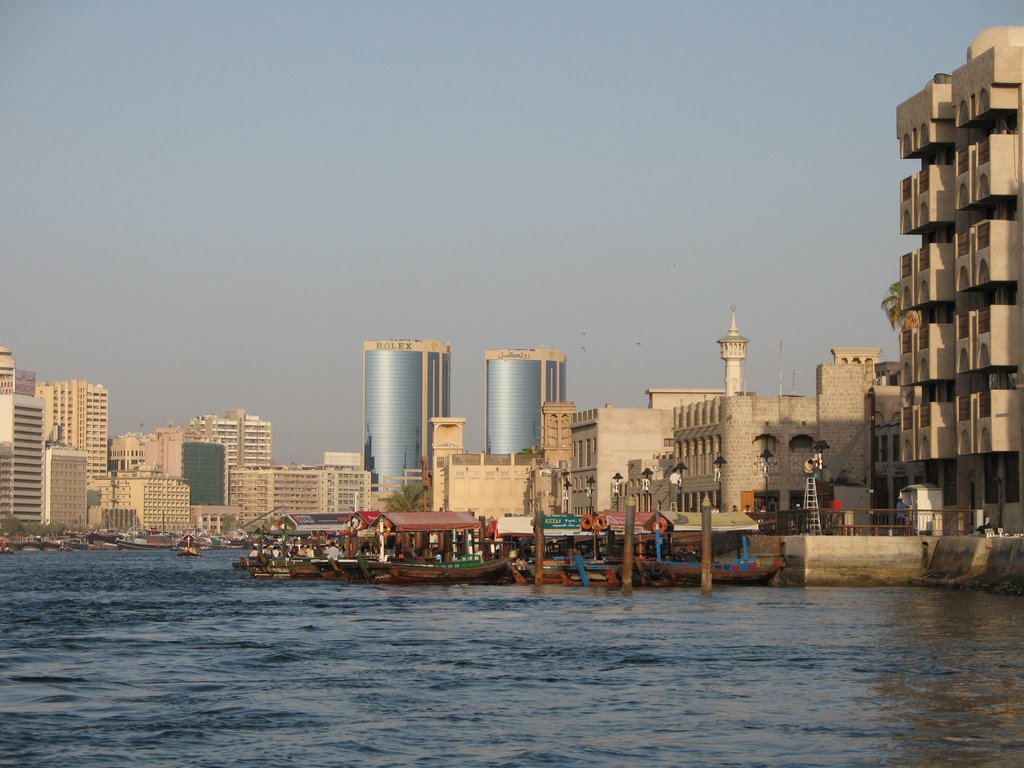
View from an Abra - taking the ferry across Dubai Creek

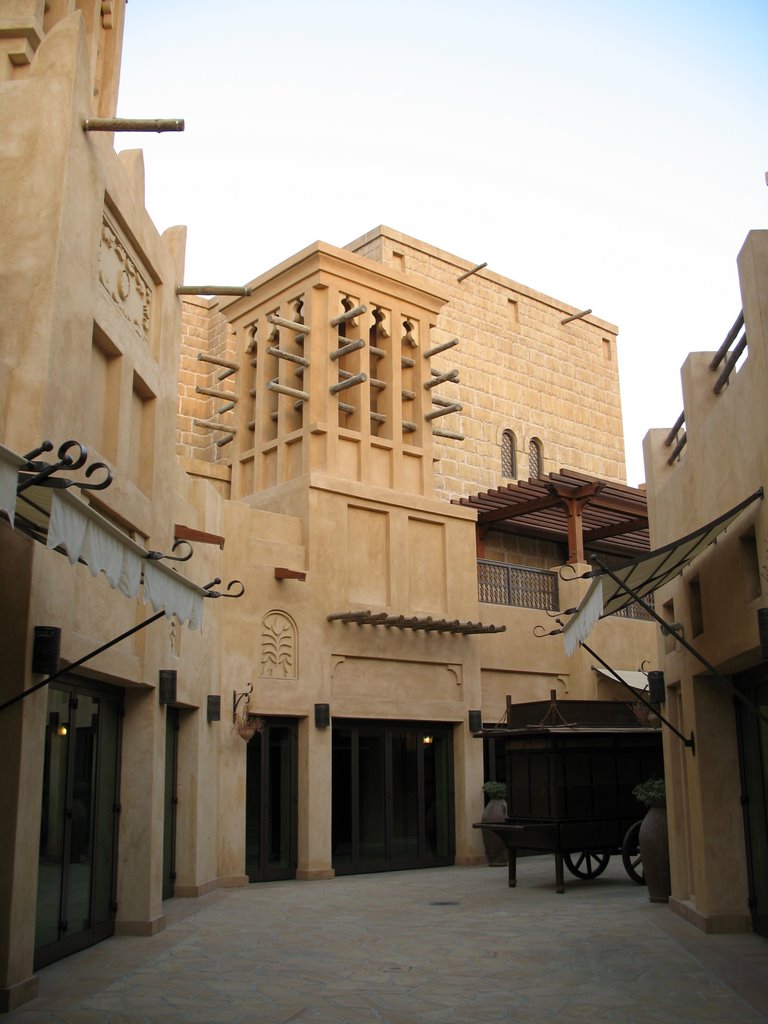
Courtyards - within the Souk Madinat Jumeirah

Shiny

Saturday, September 16, 2006

Off to far away lands

I'm en route to Dubai for work, so I doubt that I'll be able to get around to frequently posting. I'm hoping to be back in London by the end of next week, so keep visiting to read about my impressions of the Middle East, or at least the bright and shiny new side of it... the last time I was in Dubai was ages ago on a transit flight, so I'm looking forward to seeing what the bright new city state can offer.

Tuesday, September 12, 2006

That funny guy called Watanabe

It was probably during the winter of 2004 that I first discovered Murakami.

You could really blame it on an old friend of mine, whom I haven't seen in years. Despite our inability to meet up, we occasionally exchange rambling emails in which we talk about our lives, loves & losses, and which I will admit I save in the event that should someone ever try to publish a compendium of my more significant correspondences, these emails must surely be included. In these potentially historic emails, we often talk about the books we're reading at the moment, those we aspire to read, and those we strongly recommend the other stay away from. These emails have often provided both of us with some unexpected finds. I was able to redirect my friend to look up some more obscure Albanian writers, or that Kundera that is often overlooked on the bookshelf. In return, my friend mentioned Murakami.

In all honesty, he'd mentioned the name several times, but I hadn't really paid attention. I finally did make my way across to the local bookstore, where I couldn't help notice that Norwegian Wood was on sale. There really wasn't much of an excuse to not buy it, so I did.

To quote Casablanca, the movie, that was the beginning of a beautiful friendship. Norwegian Wood was perhaps the first book, after a long hiatus, where I actually felt the author speaking out to me from the pages. Very few books have that honesty in the narration that really stand out, to the point that you can almost hear them speak directly to you through their characters. Only a few books have that feel: Anil's Ghost by Michael Ondaatje, The Madwoman of Jogare by Sohaila Abdulali, Paula by Isabel Allende...

And so I was hooked. I went almost as soon as I finished Norwegian Wood to track down some other classics. I must have spent two weeks reading Murakamis from cover to cover: The Wind Up Bird Chronicle, Sputnik Sweetheart, The Wild Sheep Chase, and then Dance, Dance, Dance.

And then the agonising wait for Kafka on the Shore. It was hard to explain that frisson of anticipation that ran down my spine as soon as the posters came up on the Tube during autumn last year. All I could do was look forward to December, when his latest work would hit the bookstores in the UK, and I could go satiate my Murakami desire. Kafka, when it finally came out, did not disappoint. Perhaps the most mature of all his surreal works, the story was a poignant achievement in the art of telling a story of a young man coming of age.

So sometime back, when my sister asked me why I read so much Murakami, I had to sit back and really give it a lot of thought. Finally though (long after the sister had left) I came one with one word to explain it- simplicity.

Perhaps what I find most reassuring about picking up a new Murakami story, especially after having read so many, is that no matter what his story, no matter how or where or when he chooses to place his characters, there is a reassuring constancy about them. (It's almost like a Yash Chopra movie.) They are very different people from each other, but essentially they are gentle, gravely flawed human beings who just want to lead ordinary lives - have friends, fall in love, have sex, maybe have kids, be moderately successful, build fairly straightforward, simple, constant lives. Whether or not this comes to pass is not the issue - his characters always seem to hover at the margins of a classic story-book normal existence, but are somehow thrust towards the opposite direction, one where things are never simple, where complications arise and cannot be explained away, where things are never easy to understand or to resolve.

In a sense, the actual situations that the characters find themselves in are almost irrelevant in the grander scheme of things. Once we've determined that the person we're talking about is a middle aged man, who has had a few girlfriends, is in a job that pays reasonably, but with which he is somewhat dissatisfied (nothing serious, just that back of the head uncomfortable feeling), we don't need to worry whether we're talking about Toru Watanabe or K. The baseline is drawn - we know this character from before, and now that we have a friend of the landscape, we can see how he deals with his often very complicated problems. Once the similarities are recognised, the differences fade away. It no longer matters whether K is in love with a woman debating her own lesbian identity, or whether Toru is in a loveless marriage.

Perhaps this, then, is Murakami's greatest legacy. He has an innate ability to create characters that are so human that we can immediately recognise them - they are shorn free of any exotic trimming that can make them different enough from us to be removed from our own reality. No matter how much you love Harry Potter, you will never be an English adolescent orphan in a private (and secret) school of magic. You could, however, very easily be K - that shy, awkward guy who is painfully in love with his best friend, but cannot tell for a variety of reasons.

And so perhaps this is why I can read almost the entire canon of a single Japanese writer, and step away from it feeling as if he has written stories that could have happened to me, to my friends, or to any one of the thousands of people I have met in my lifetime. And that is probably why I will keep going back to read him, again & again, & again.

Monday, September 11, 2006

What I'm listening to

Another Leonard Cohen classic - I'm always amazed by how he manages to convey this despondency in his songs. There's a pathos that I think most people can immediately connect to at a totally primeval level. Anyway, another beautiful piece...

Take This Longing

Many men have loved the bells
you fastened to the rein,
and everyone who wanted you
they found what they will always want again.
Your beauty lost to you yourself
just as it was lost to them.
Oh take this longing from my tongue,
whatever useless things these hands have done.
Let me see your beauty broken down
like you would do for one you love.

Your body like a searchlight
my poverty revealed,
I would like to try your charity
until you cry, "Now you must try my greed."
And everything depends upon
how near you sleep to me

Just take this longing from my tongue
all the lonely things my hands have done.
Let me see your beauty broken down
like you would do for one your love.

Hungry as an archway
through which the troops have passed,
I stand in ruins behind you,
with your winter clothes, your broken sandal straps.
I love to see you naked over there
especially from the back.

Oh take this longing from my tongue,
all the useless things my hands have done,
untie for me your hired blue gown,
like you would do for one that you love.

You're faithful to the better man,
I'm afraid that he left.
So let me judge your love affair
in this very room where I have sentenced
mine to death.
I'll even wear these old laurel leaves
that he's shaken from his head.

Just take this longing from my tongue,
all the useless things my hands have done,
let me see your beauty broken down,
like you would do for one you love.

Like you would do for one you love.

Lyrics by Leonard Cohen

Saturday, September 09, 2006

Cameron in India - a retrospective

The past week hasn't been a good one for Tony Blair. Even for someone used to getting hauled over the coals on a regular basis, the past week has seen his own loyalists closing ranks with the Brownians (Brown-ites?) and baying for his head - Blair must go, the refrain has been in Labour circles.

Add to this more recent conflagrations in Iraq, strengthening Taliban forces in Afghanistan, George Bush's admission that CIA has been using "secret" prisons in the war on terror, and you have to agree that things haven't been good for Mr Blair.

It's therefore not unusual that most mainstream media commentators in the UK have managed to gloss over a rather interesting event concerning the UK & India - the recent trip made by Conservative leader and Leader of Opposition David Cameron to India over the past week.

Normally, Mr Cameron is not that different from his contemporaries in UK politics (or indeed global politics). He has however, shown slightly quirky behaviour in the recent past, which makes him a little more interesting than the usual ilk of dull as dirty dishwater Charlie Brown-esque characters that make up UK politics. His election to the head of the Tories was accompanied by widespread media speculation around his choice of underwear, which you could argue shouldn't have been of that much importance, though I guess given how critical the issue of "support" is in a democratic setup, this should not be totally unsurprising. I shudder to think of the day when Indian journalists speculate on the choice of our national leader's underwear... it conjures images that just don't need to enter my head! Cameron has also been known to make some rather unexpected remarks - such as how antisocial elements just needed to be loved (leading to the popular "Hug a Hoodie" refrain around England; "hoodies" here referring to the unruly masses that tend to lurk in inner city hell holes wearing sweats with hood pulled up)

Cameron is, despite these incongruencies, a fairly charismatic politician. He almost reminds me of Blair when he was younger, less supercilious and definitely less enamoured of the US and its troubling worldview. Cameron has that eager, fresh-faced "I'm here for the greater good" that most young Oxfam volunteers display while on gap year projects spent helping struggling communities in Africa build solar heaters. He is young, dynamic, educated and also quite erudite. You hear him speak and come away with the niggling feeling that you weren't watching the leader of a national party speak, but rather a sophomoric foppy haired Englishman at St. something College in Oxford/Cambridge participating in some major debating competition. Interestingly, that clipped English accent lends a sense of old world to his general aura.

So from this rather jumbled old-world-new-world melee that is the head of "new" Tory, it was to be expected that a political trip to visit the global hub of IT services would be met with a complimentary blog. For that is indeed what Mr Cameron chose to do - maintain a blog to share his experiences of a foreign land with an electorate back home.

The blog, pointedly titled "David Cameron in India" carried brief passages explaining the purpose behind the blog. Most of the content is in video format, with Google videos covering different facets of the MP's visit to India. These included discussions of a more abstract nature around how factory inaugurations in India tend to be different from those in the UK, random rides in a CNG auto rickshaw (somewhat misleadingly called a "tuk-tuk" on several occasions) through Lutyen's Delhi, and general interactions with local Indian passersby who seemed more bemused than impressed (perhaps they might have thought that he was thinking of marrying into Indian politics as well.) Cameron did goof up when he insisted on referring to Rashtrapati Bhawan as the "Viceroy's Palace" - he could have softened the legacy with an appropriately placed "former", but alas, his foppish Oxbridge debating style didn't allow that. The final post from India covered his visit to the Delhi metro, his discussions with university students on their way to North Campus, and the comforts of air conditioning on an underground (obviously a reference to London's Tube, which has sweltered for three months as temperatures soared above ground)

There are two key points to take away from this event. First, we are seeing a sudden resurgence in general interest in India from the UK. Government & industry are both recognising the need to engage with India more proactively than they have been doing in the past, if they are to be able to capitalise on India's predicted economic growth. For an economy that has plateaued in recent years, the urgency to be able to somehow get a share of India's predicted astronomical growth is critical. Cameron is only being pragmatic when he speaks of building on a past heritage to strengthen current relations. His visit to India, even as only Leader of Opposition, is an important statement of British foreign policy to build on relations with India.

However, what is more interesting, at least for me personally, is how Cameron has chosen to utilise a fairly new medium to spread a political message. By using a blog to communicate with his electorate, Cameron is adding a political seal of approval to a growing international phenomenon. Blogging has in a very short span of time managed to present a significant alternative to millions of readers and internet users out there. It has taken the power of communication, and thereby the power to control what is being communicated, out of the hands of big media conglomerates & publishing houses, and has allowed individuals to seize the narrative. Perhaps I am being too post-modernist, but blogging has allowed the individual to deconstruct the meta-narrative of mainstream media and present an alternative that is comprised of millions of infinitesimal micro-narratives.

So has Cameron managed to alter the way in which politicians will communicate with their electorates? I doubt that - blogging still has a long way to go before it will be able to overtake its mainstream, corporate counterparts. More importantly, blogging is only as good as the penetration of the internet - and internet connectivity remains an issue in many parts of the world (You can take a newspaper onto a plane, but can't log onto a website on most aircraft!) Similarly, in developing countries, internet connectivity remains a challenge.

This is not to say that I think Cameron's gesture to use a blog to speak "directly" to his voters will fall by the wayside, especially in the UK. He has managed to capture a very direct forum of communication, and rival British politicians would be very short sighted to let him, and the Tory's, claim that turf for their own without a challenge. It won't be long before we hear of a Blair blog or a Brown blog (a brog?) a green Blog (a grog?) and a French blog, which could most appropriately be called a frog...

And what of India? I struggle to believe that many Indian politicians would bother with using a blog to communicate with voters - can you imagine La senora choosing to write a blog? (Maybe she'd call it Just Janpath) The only Indian politician I could have imagined setting up a blog would have been Pramod Mahajan, but we all know that he's been a victim of fratricide quite recently. And I doubt the bambino Gandhi would either. However, this is a great opportunity for any political party out there that is looking to work its way into the minds of a younger, educated electorate. Unlike the UK, India's population is incredibly young, and any political establishment that can be seen to embrace new technology would go a long way in shedding the ageing, out of touch image that characterises the political class.

Check out David Cameron's blog here

Thursday, September 07, 2006

Kahaan Se Aaya, Main Hoon Kaun?!

Almost a century after Max Mueller made Indology fashionable, the Germans have finally woken up from their slumber and looked eastwards again.

You could argue that the brief interlude that led to World War II and a lot of unpleasantness involving Austrian megalomaniacs called Hitler didn't let Germany lose the Indian touch (I mean, that whole swastika thing was hippy before the hippies were even around) but let's not go there. Recent events in India around shisha bars choosing Nazi themed decors has left a bad taste in a lot of mouths (and this without even trying the food there) so we could avoid that completely.

Getting back to the point - this post is all about how a new high gloss magazine has just recently been launched. Called, somewhat uninspiringly, "Indien Magazin", which translates literally into "India Magazine", published in German, it focuses exclusively on India & Bollywood.

The name is their only tragedy, so far as I can see (given that my knowledge of the German language is limited to a rusty one year at school, this is a totally ungrounded opinion, but hey, let's live dangerously) but you can't ignore the fact that at least their hearts are in the right place. The magazine purports to fill an important gap in contemporary German publishing - that for an informative periodical that targets a non-Indian German speaking readership wanting to learn more about India, its culture and its cinema. And as far as choosing a cover photo, you can't go wrong by picking the biggest name in the Indian fillum industry, Shah Rukh "King" Khan himself, in the biggest ever remake of the century, Don.

The magazine's first issue also has some DVD reviews, as well as retro pieces on classic cinema - there's a story about Umrao Jaan, as well as interview with Sanjay Dutt on his new movie (I'm guessing its Lage Raho Munnabhai) There also seems to be an article on the toy trains in Darjeeling (the title is a somewhat amateurish, "Full Steam Ahead into the Clouds", but the images it conjures are whimsical and definitely entertaining)

Fellow Bollywood blogger Michael already has a post on his site on it, but my German is too poor (and Altavista's Babelfish translator too random) to really make it work!

So let's see where "Indien Magazin" heads - so far, its a promising start. I'm going to see if I can figure out where to buy a copy to try to work my way through with a big dictionary and internet access readily available to run a Babelfish translation...

Check out the official magazine website here
Image from Indien Magazine